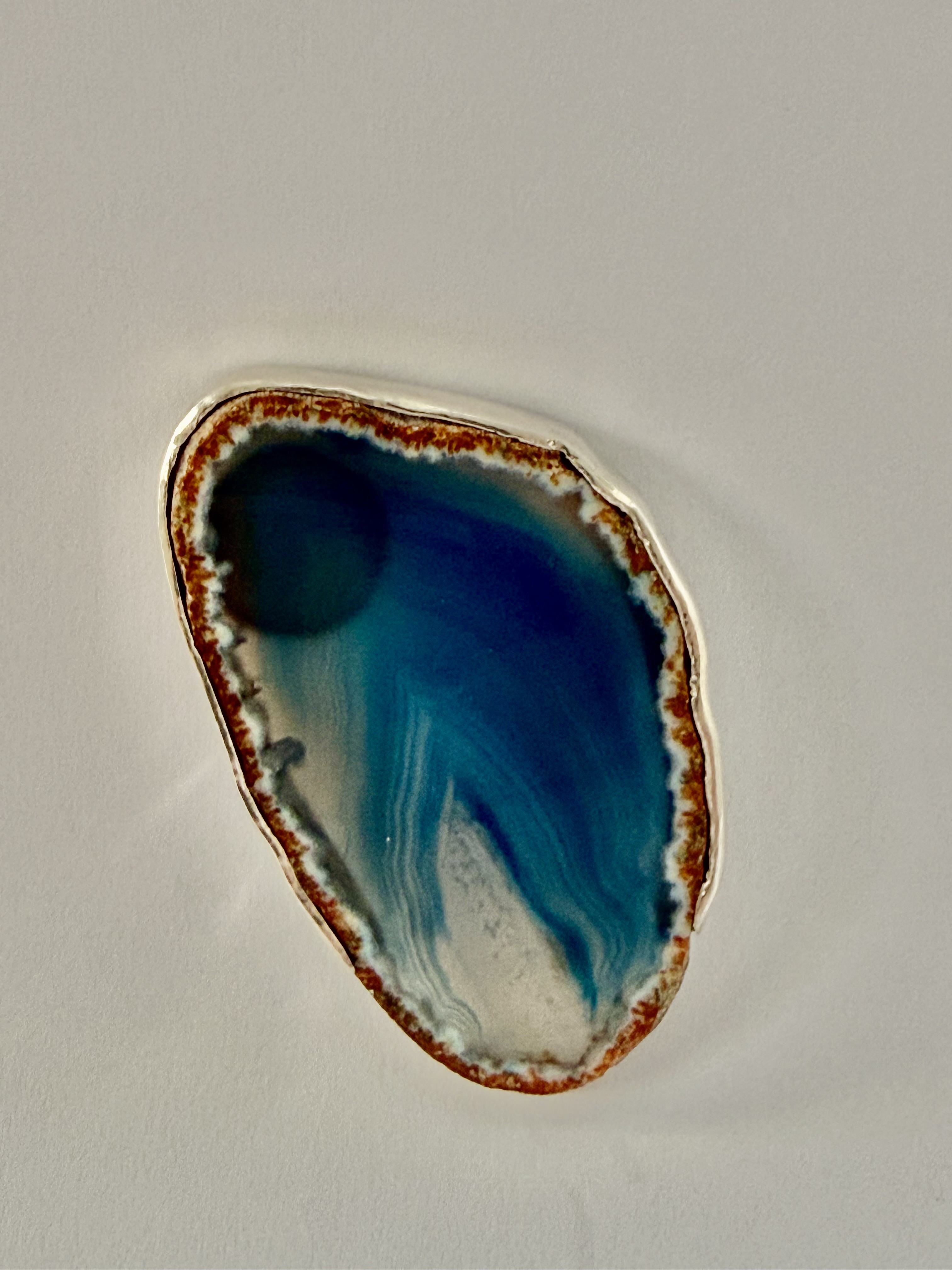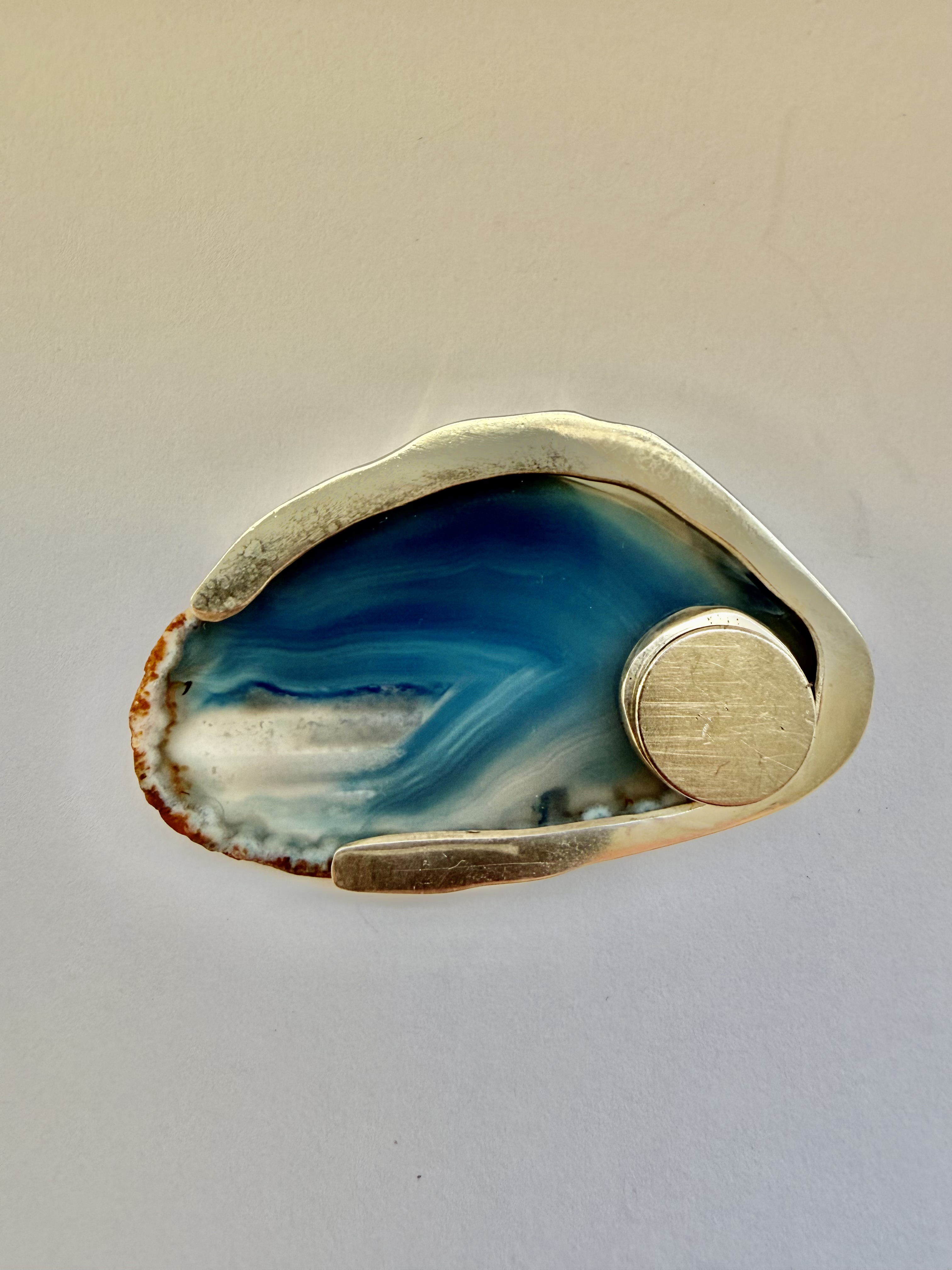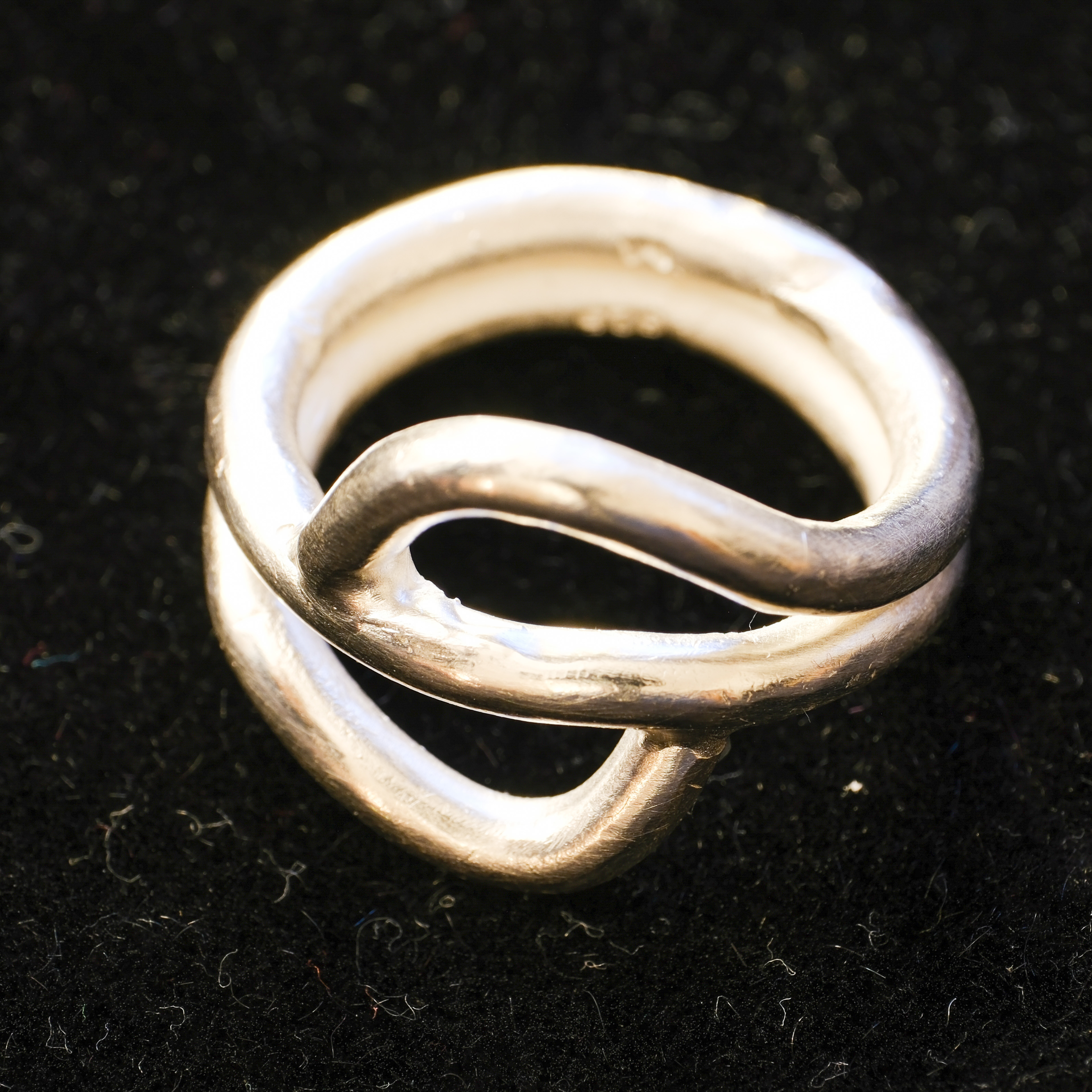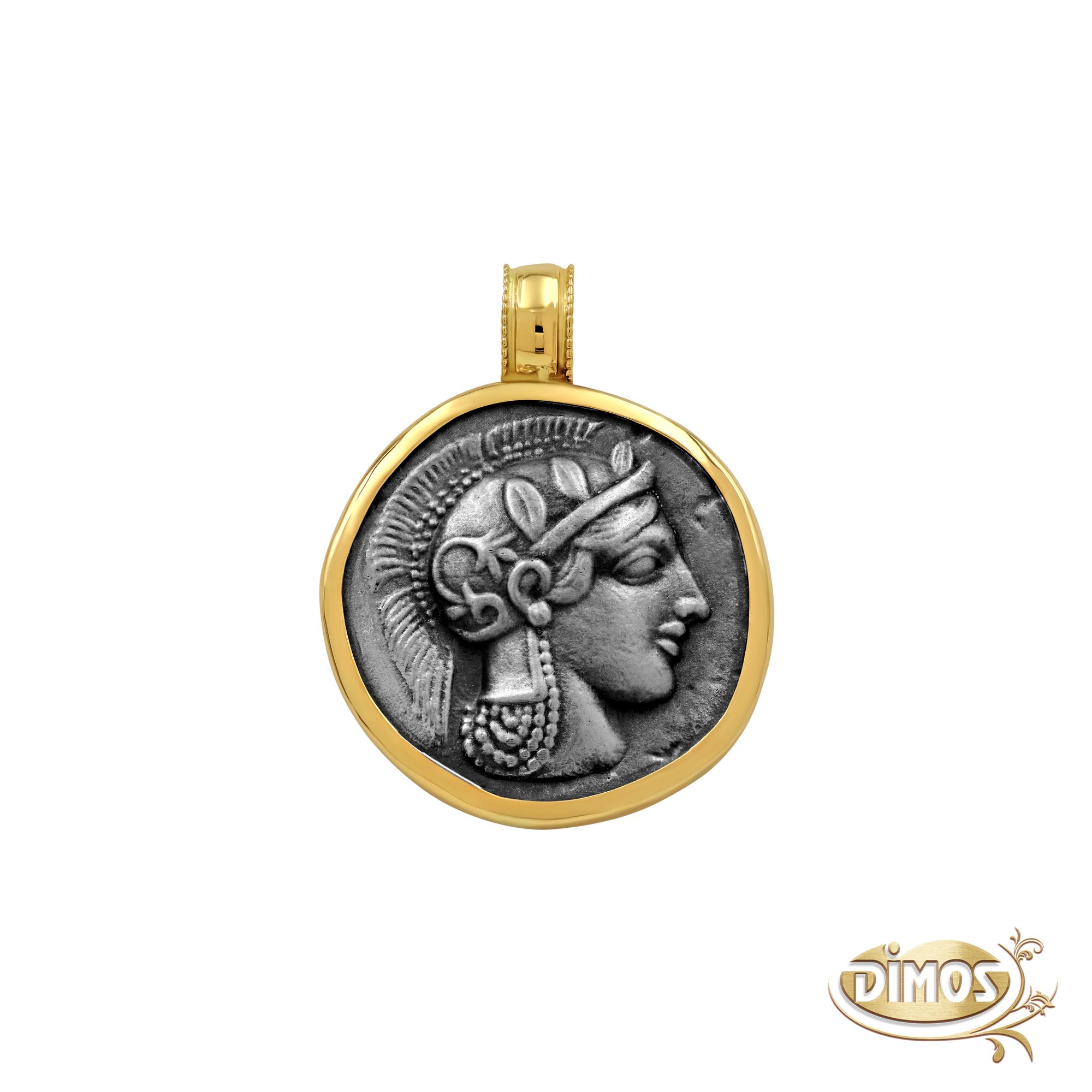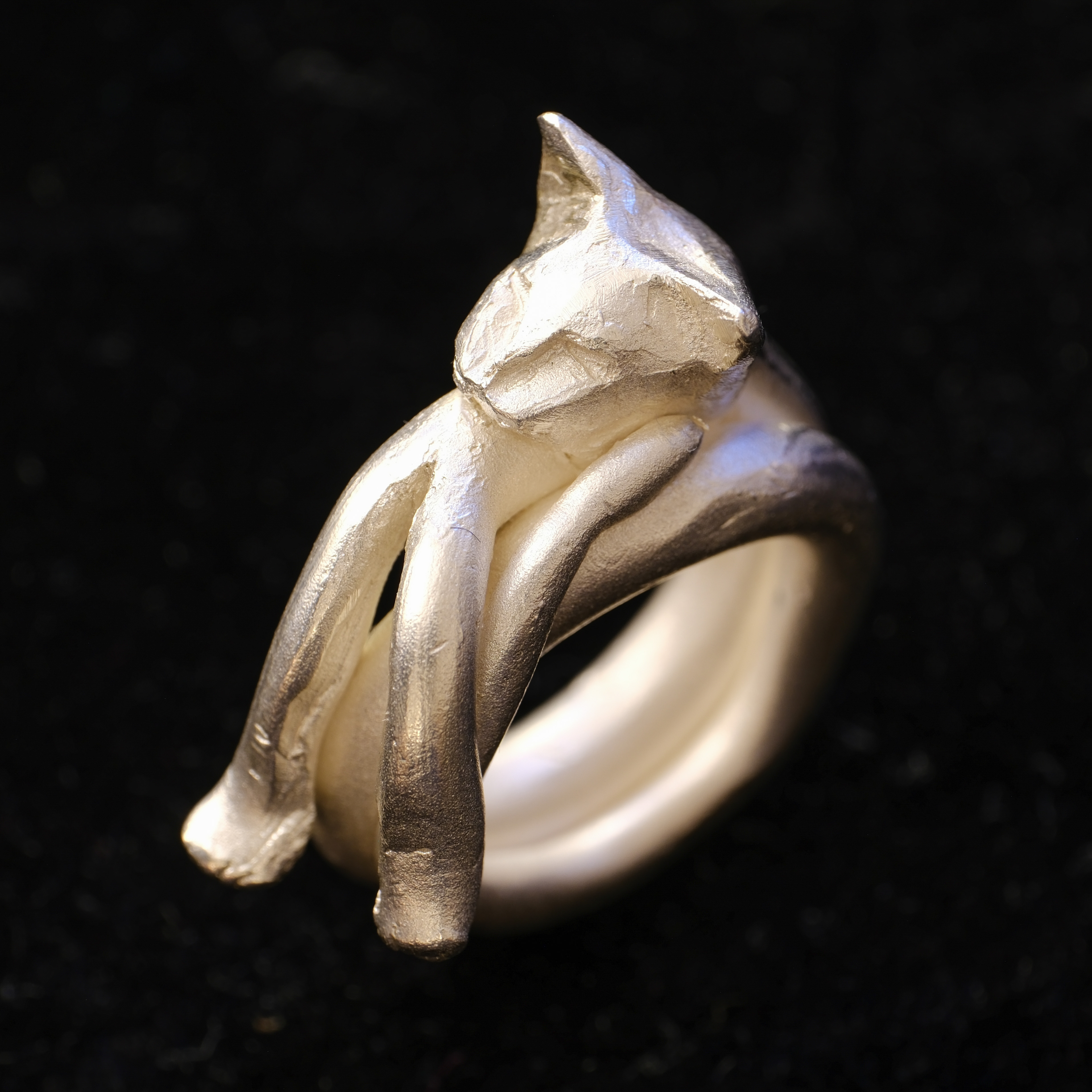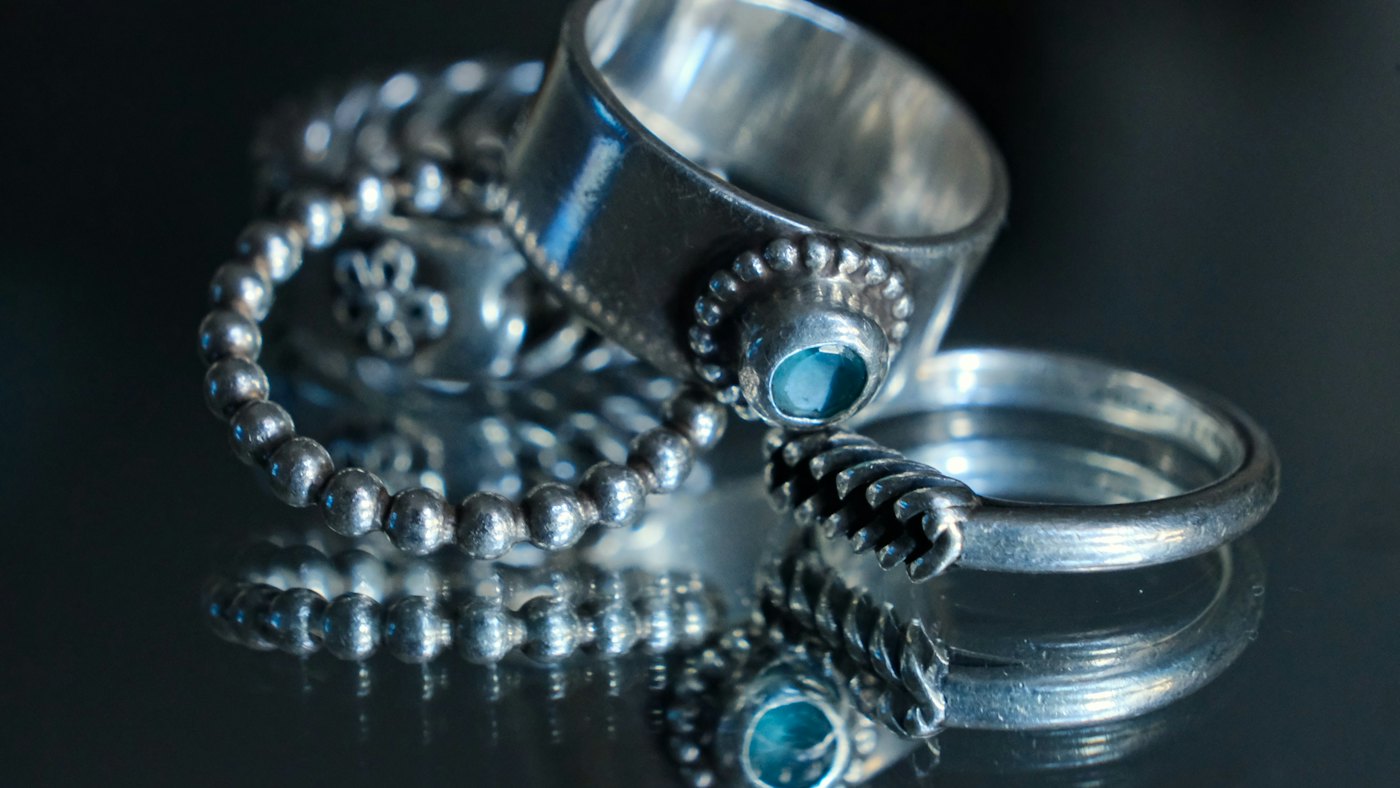
Pure silver is too soft to wear. Sterling silver is 92.5% silver, with the rest mostly copper, and is stamped 925. It is the standard for silver jewellery. Older and continental pieces are sometimes 800 or 835.
Why silver tarnishes
Silver reacts with sulphur compounds in the air and forms a dark layer of silver sulphide. This is tarnish. It is on the surface and does no damage. Wearing silver regularly keeps it bright, because the friction polishes it. Pieces that lie in a drawer tarnish fastest.
A silver polishing cloth removes tarnish in a minute. Store silver dry and closed off from air, in a small bag or box. Take it off in the swimming pool and at hot springs, and keep it away from bleach.
Some goldsmiths work with tarnish-resistant alloys such as Argentium, in which part of the copper is replaced by germanium.
Blackened on purpose
Tarnish is also used as a finish. Oxidised or blackened silver is darkened deliberately, to bring out texture and engraving. On raised parts the dark layer slowly wears bright again, which is part of the look.
What silver is good for
Silver costs a fraction of what gold costs, so it allows large, sculptural pieces that would be unaffordable in gold: wide cuffs, statement rings, heavy chains. It takes texture well and is the metal in which many goldsmiths work most freely.
And what it is less suited for
Silver is softer than gold alloys and platinum. Fine claws in silver wear and bend sooner, so it is not the first choice for holding a valuable stone in a ring worn every day, such as an engagement ring. A sturdy silver ring with a bezel-set stone is fine. Thin silver rings go out of round more easily.
Plated silver
Silver is sometimes plated with rhodium, to keep it white and stop tarnish, or with gold, which is called vermeil. Both layers wear off in time. See solid, vermeil, gold-filled and plated.
Look at silver jewellery by independent goldsmiths.