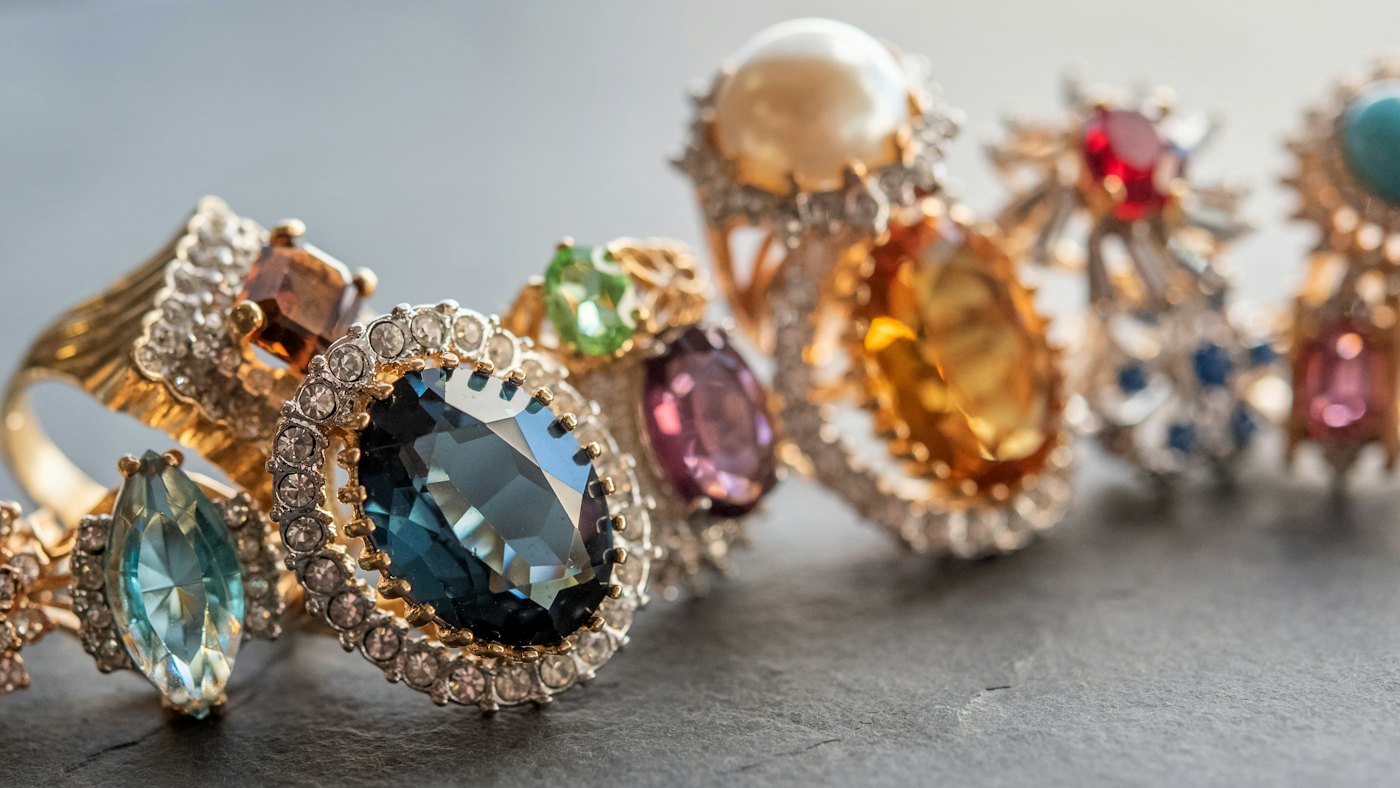
"Cut" means two things. One is the outline you see from above: round, oval, square, pear. The other is the way the facets are arranged. Together they decide how a stone plays with light.
Four families
Brilliant cuts have many triangular and kite-shaped facets that throw light back in flashes. They give the most sparkle and hide small inclusions well. The round brilliant is the best known; oval, pear, marquise, cushion and princess are brilliant cuts in other outlines.
Step cuts have long, parallel facets like the steps of a staircase. They do not sparkle but flash, in broad planes of light. They show the clarity and colour of the stone openly. The emerald cut and the Asscher belong here, as does the baguette.
Rose cuts have a flat underside and a domed top covered in triangular facets. The light is soft and the look is antique. Read more in rose cut, cabochon and raw stones.
Cabochons are not faceted at all: a smooth, polished dome. This is the cut for opaque and translucent stones such as opal, moonstone, turquoise and lapis lazuli, and for stones that show a star or a cat's eye.
Cut and apparent size
Two stones of the same weight can differ clearly in size. Elongated outlines such as oval, pear and marquise look larger per carat than a round stone, and they make a finger look longer. Shallow cuts such as the rose cut look large for their weight because little of the stone sits below the setting.
Cut and price
The round brilliant costs the most per carat, because more of the rough stone is lost in cutting it and demand is highest. Other outlines of the same weight and quality are usually cheaper.
Cut and setting
Sharp points and corners, as on a pear, marquise or princess, are the places where a stone chips. A good setting covers them, for instance with V-shaped claws. A bezel, a rim of metal all the way round, protects any outline.
The right cut also depends on the stone. A goldsmith looks at the rough or the cut stone and at the hand it is for. Describe your piece and mention the shapes you like.