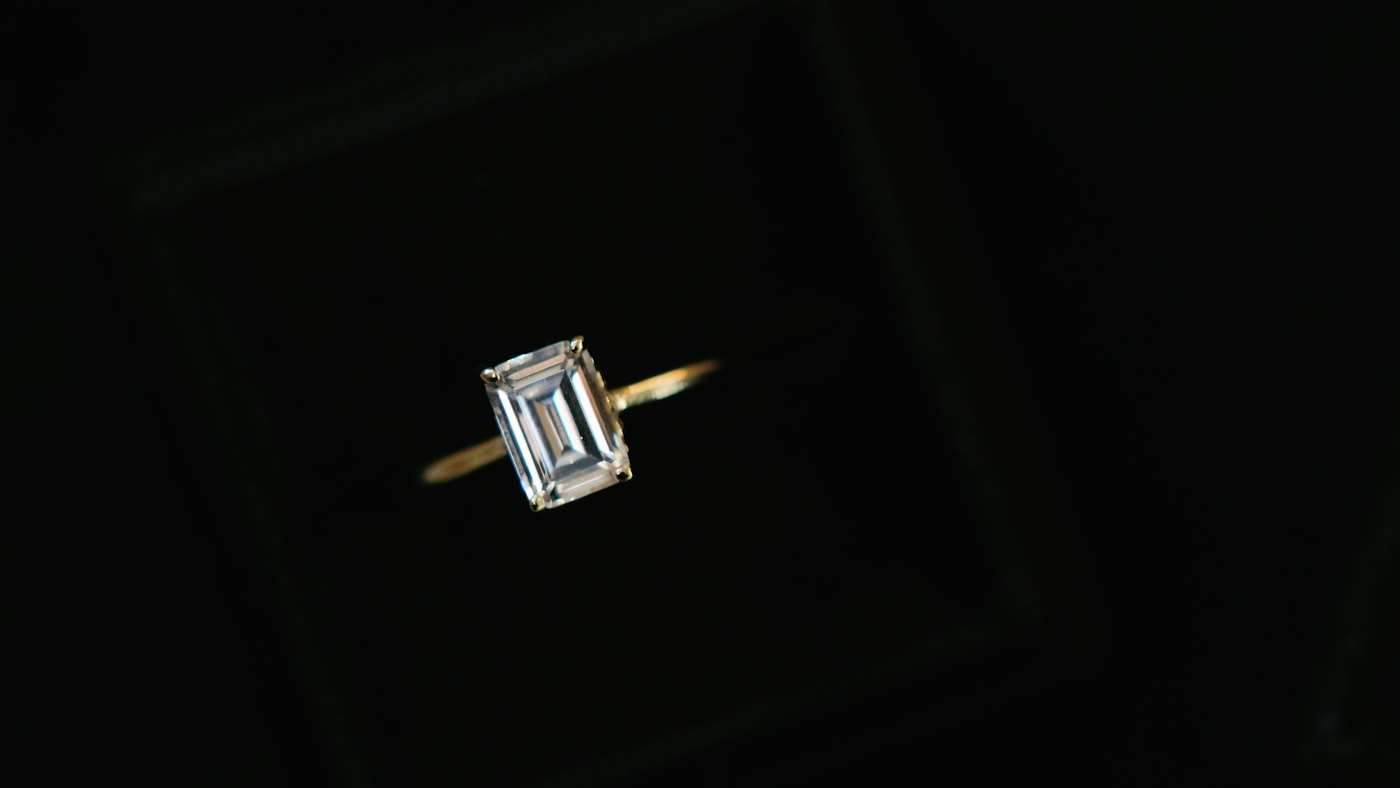
A step cut has long facets that run parallel to the edge of the stone, like the steps of a staircase. Looking in from above is often compared to a hall of mirrors: broad, calm planes of light and dark instead of many small flashes.
Emerald cut
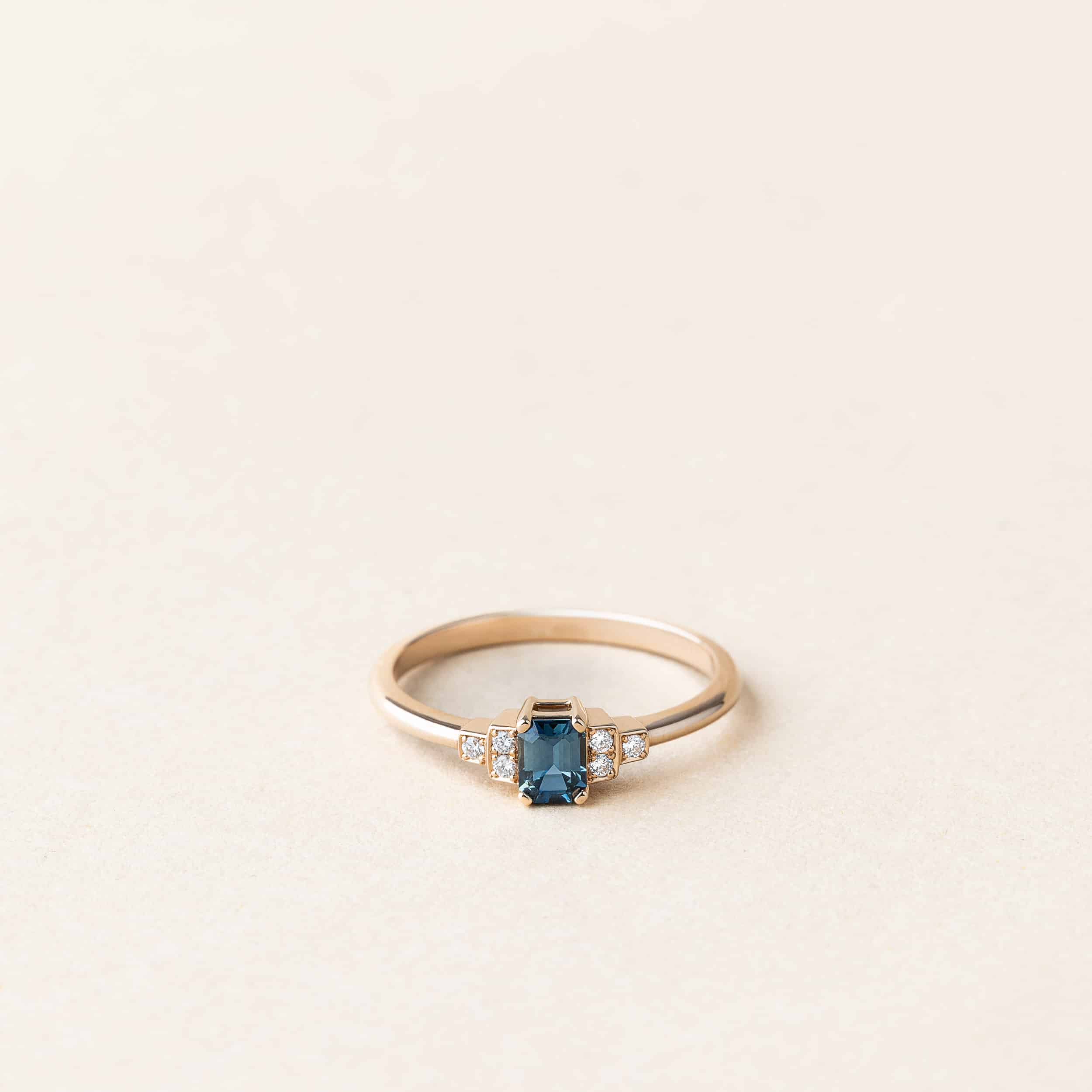
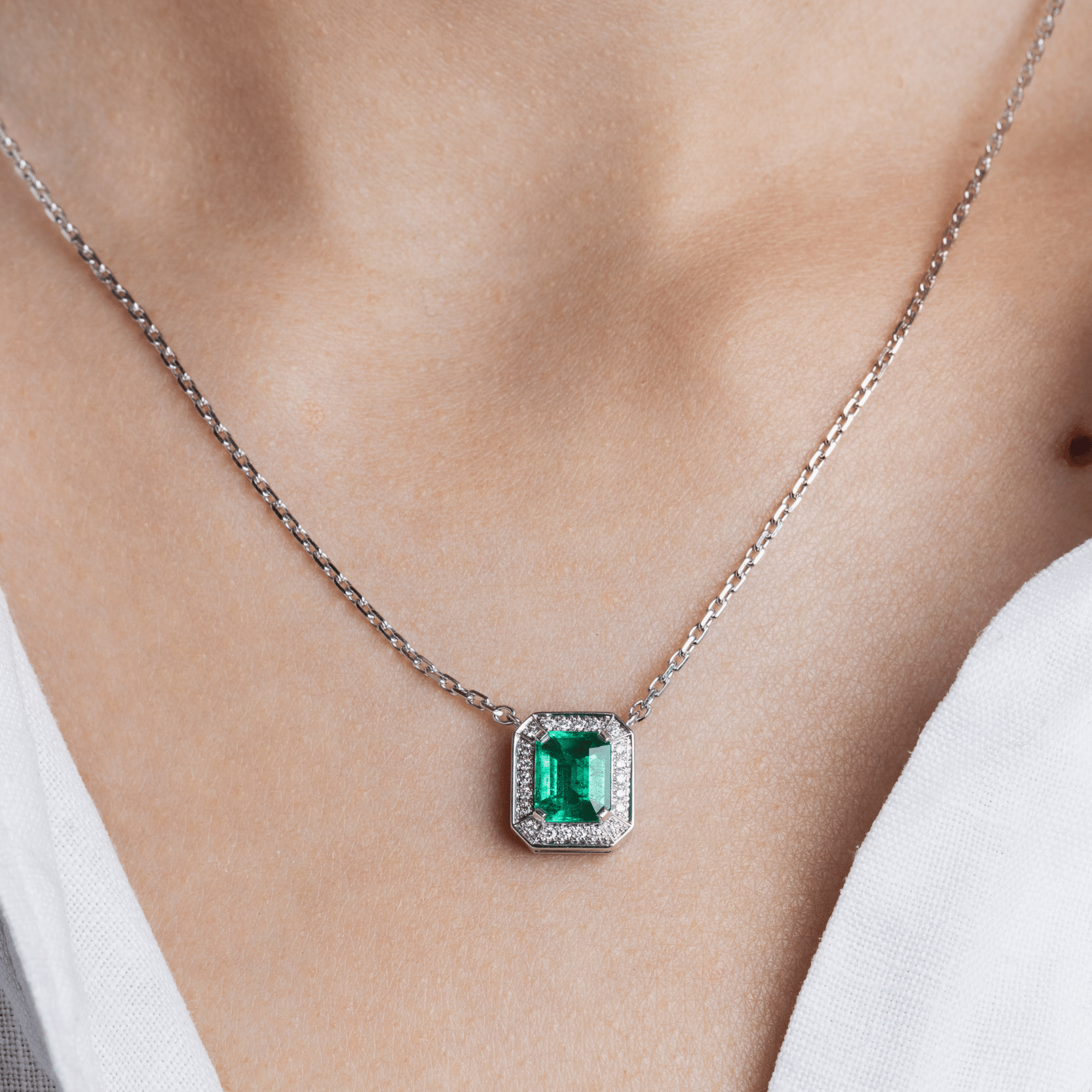
A rectangle with cut corners. The cut was developed for emerald: the cut corners and the open facets put less stress on a brittle stone. For diamond and other stones it became a style of its own, strongly associated with Art Deco.
Asscher
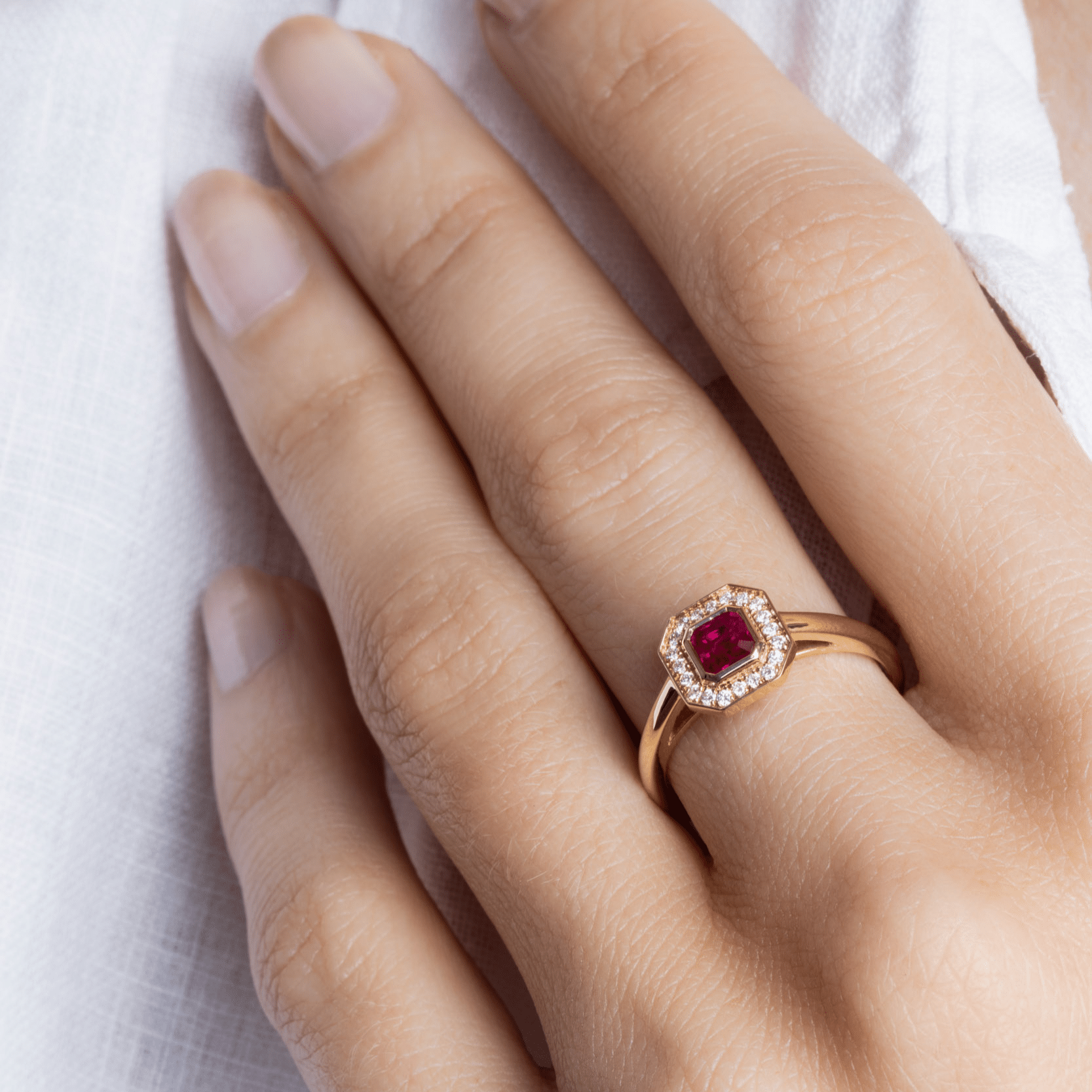
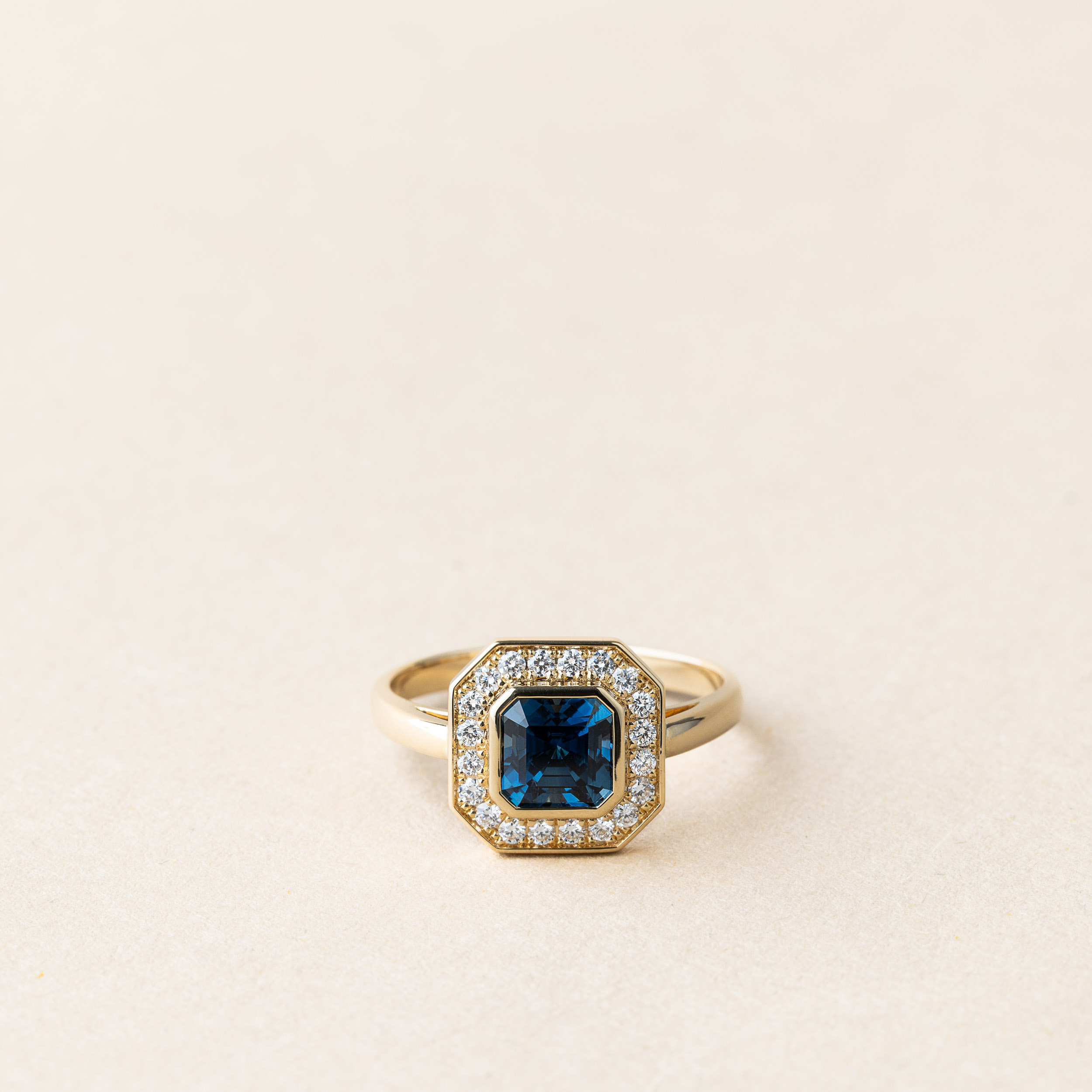
A square step cut with deeply cut corners, so that the outline is almost an octagon. It was developed in 1902 by Joseph Asscher in Amsterdam. Seen from above it shows a pattern of concentric squares.
Baguette
A slim, rectangular step cut, mostly used as a side stone next to a larger centre stone, or in a row in a band.
Clarity and colour show
A brilliant cut hides small inclusions in its sparkle. A step cut hides nothing: you look straight into the stone through a large, open table. Choose a higher clarity than you would for a brilliant, VS2 or better for a diamond, and see the stone before you decide. A tint in the colour is also visible a little sooner.
Size and price
An emerald cut looks large for its weight because of its long outline and big table. Step cuts usually cost less per carat than a round brilliant of the same quality. Part of that saving goes into the higher clarity you need.
Settings
The cut corners make step cuts less vulnerable than a princess or a pear. They look good in a plain four-claw setting, in a bezel, or flanked by two baguettes. For all cut families, see stone cuts.