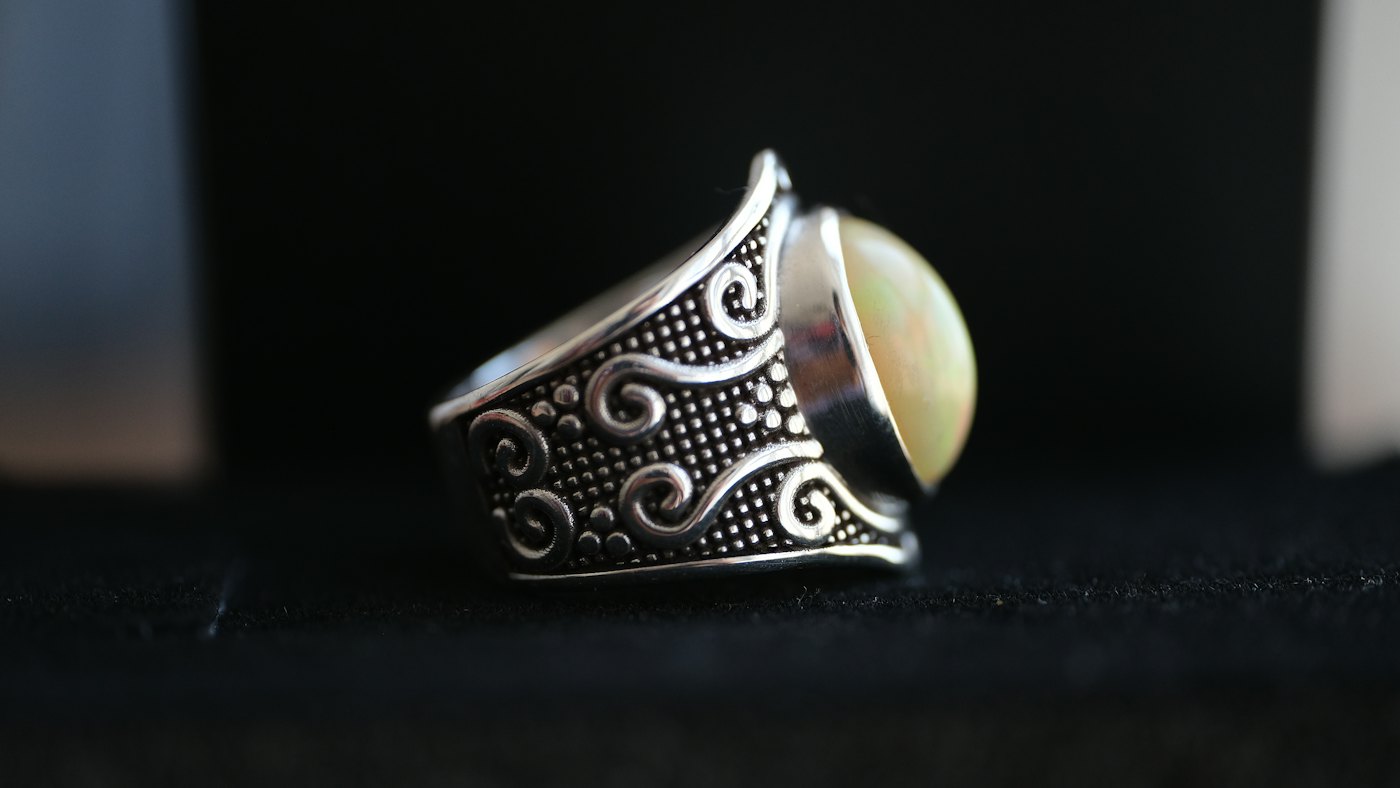
Independent goldsmiths often choose stones that are not cut for maximum sparkle. These three give a piece a character that a brilliant does not have.
Rose cut
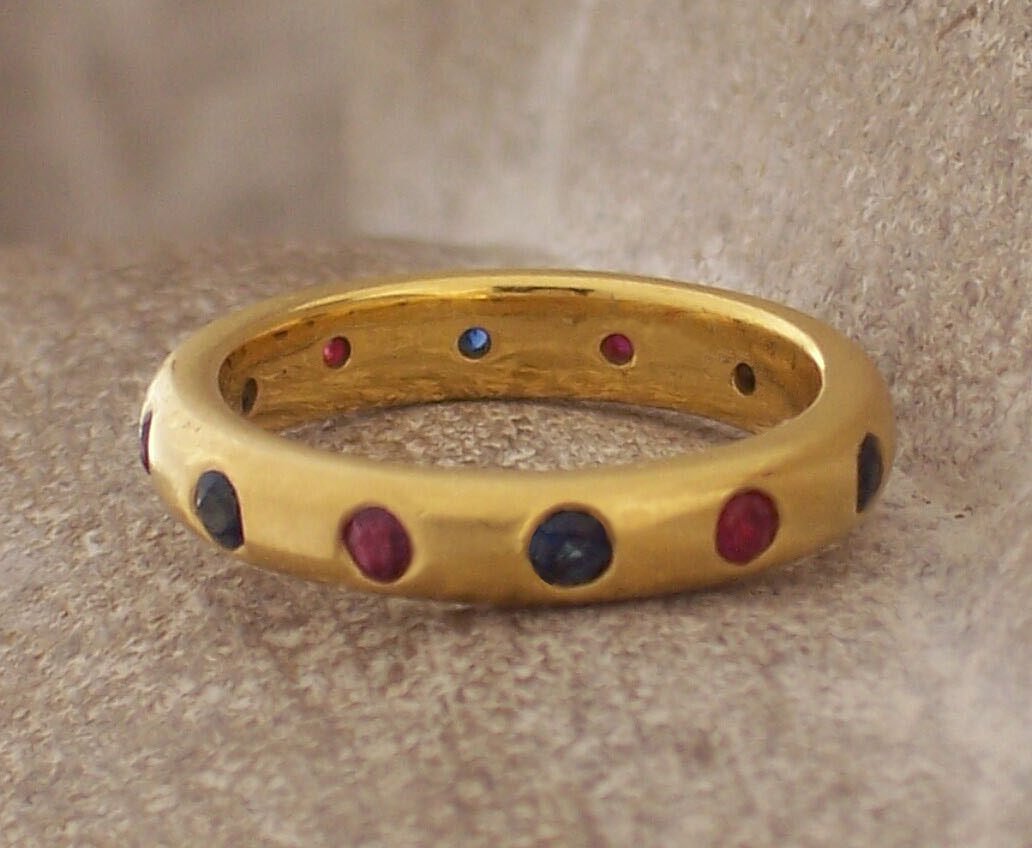
The rose cut has a flat underside and a domed top covered in triangular facets, like the bud of a rose. It dates from the sixteenth century, long before the brilliant existed. It gives a soft glow in place of bright flashes. Because the stone is shallow, it looks large for its weight and sits low on the finger, which is practical. Rose cuts are much used for grey and speckled "salt and pepper" diamonds and for sapphires in unusual colours.
Cabochon
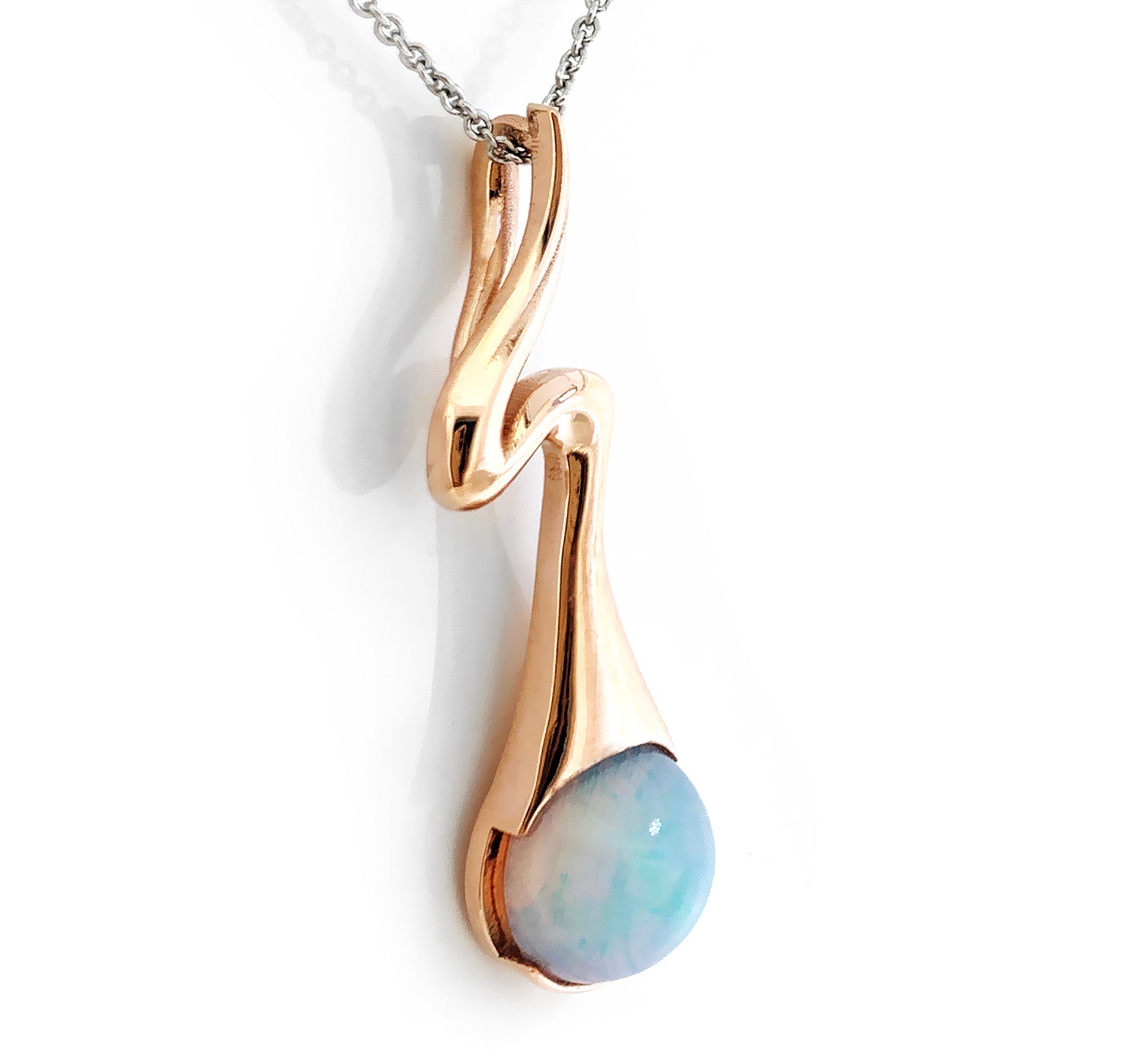
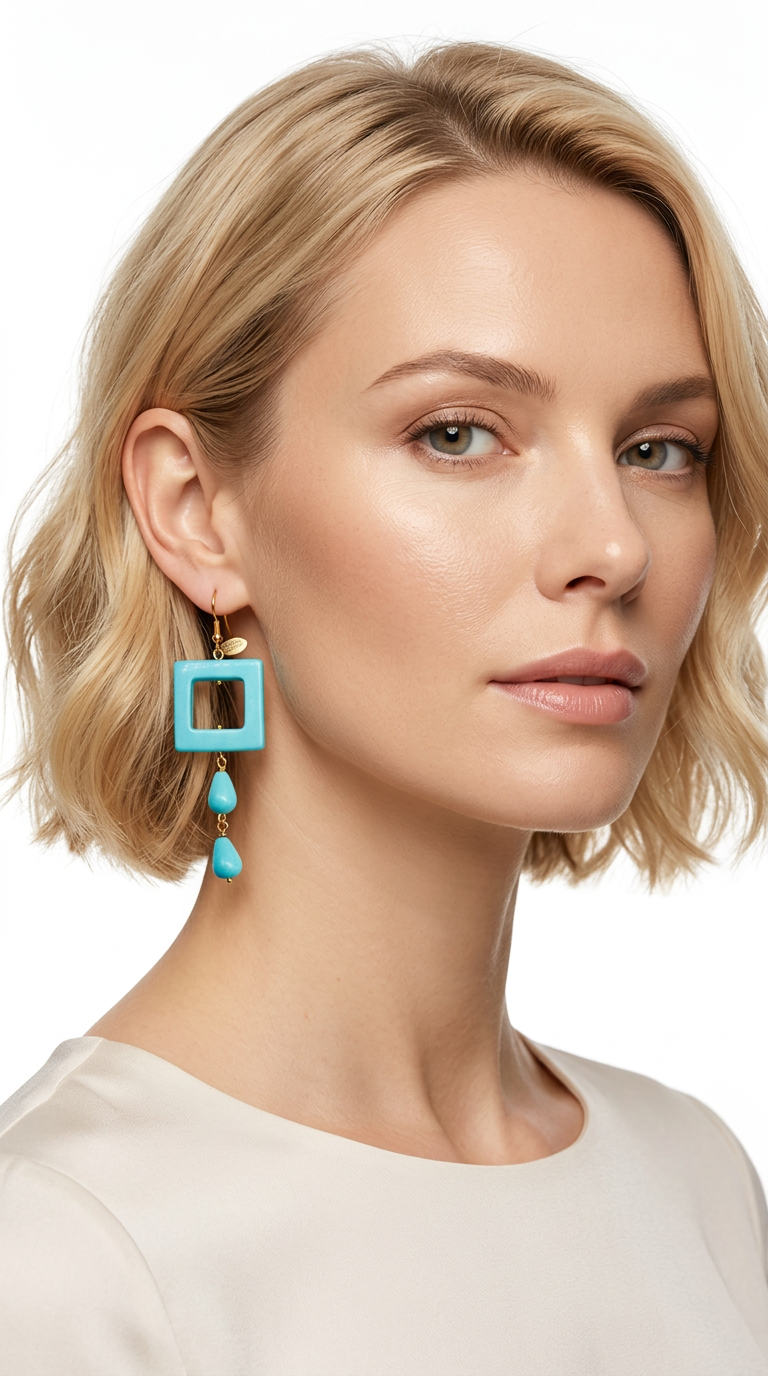
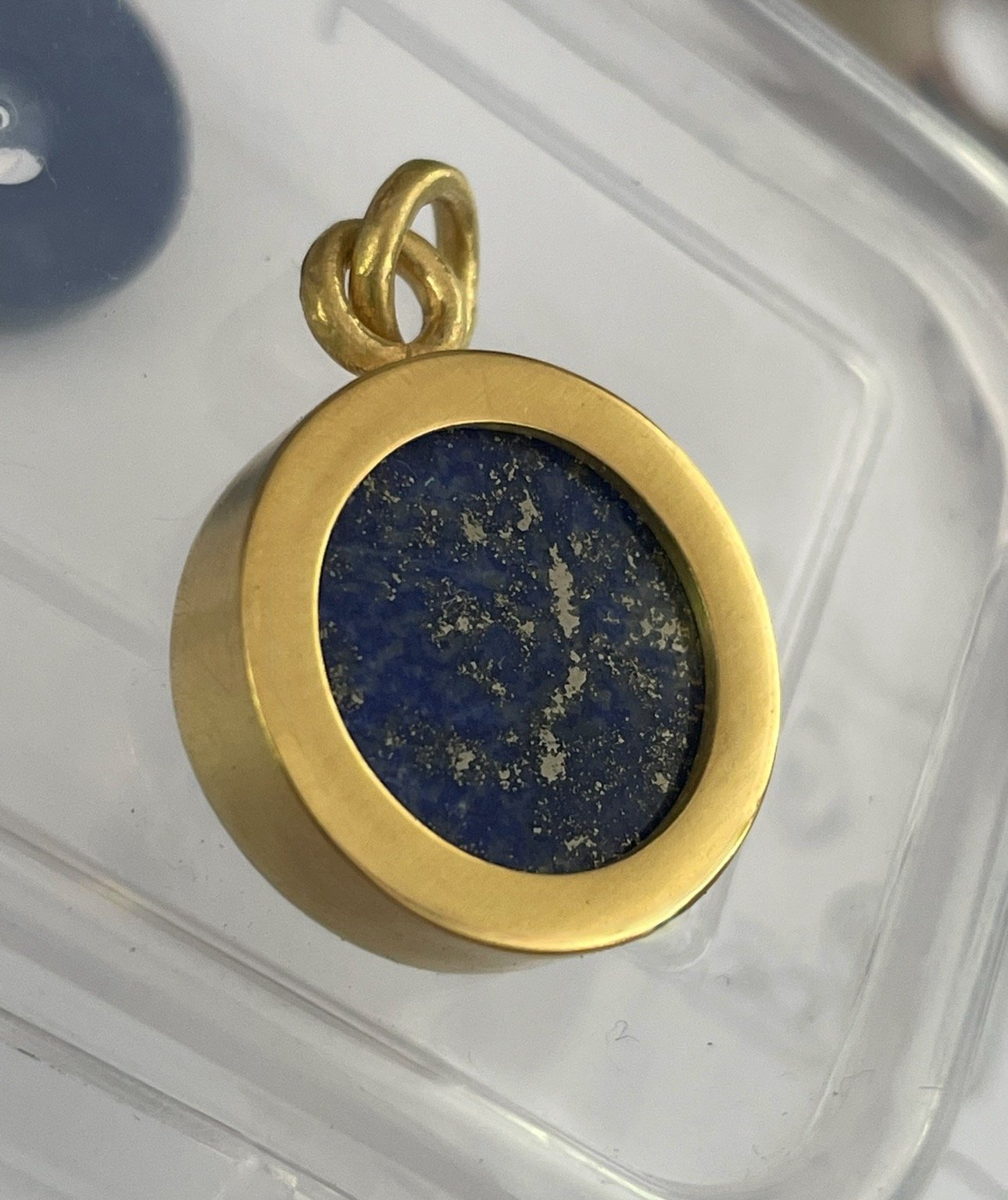
A cabochon has no facets: a smooth, polished dome with a flat or slightly curved back. It is the natural choice for stones whose beauty is in their colour or pattern and not in their transparency: opal, moonstone, labradorite, turquoise, lapis lazuli, onyx. Effects such as the star in a star sapphire or the band of light in a cat's eye only appear in a cabochon. Transparent stones are cut this way too, for a calm, antique look.
Raw stones
A raw or rough stone is set as it was found: an uncut crystal, sometimes only cleaned. Every one is unique, and the setting is made around the stone. How well it wears depends on the stone: a raw diamond or sapphire can take a lot, a raw tourmaline or opal much less. See which stones can be worn every day.
Setting
These stones are often set in a bezel, a rim of metal that follows the outline. It protects the edge and suits irregular shapes. Claws work too and let in more light.
Judging them
The four Cs and the grading report were designed for brilliant-cut white diamonds. They say little about these stones. Here it comes down to what you see and what it does to you. Ask the goldsmith for photos or a video in daylight. For all cut families, see stone cuts.