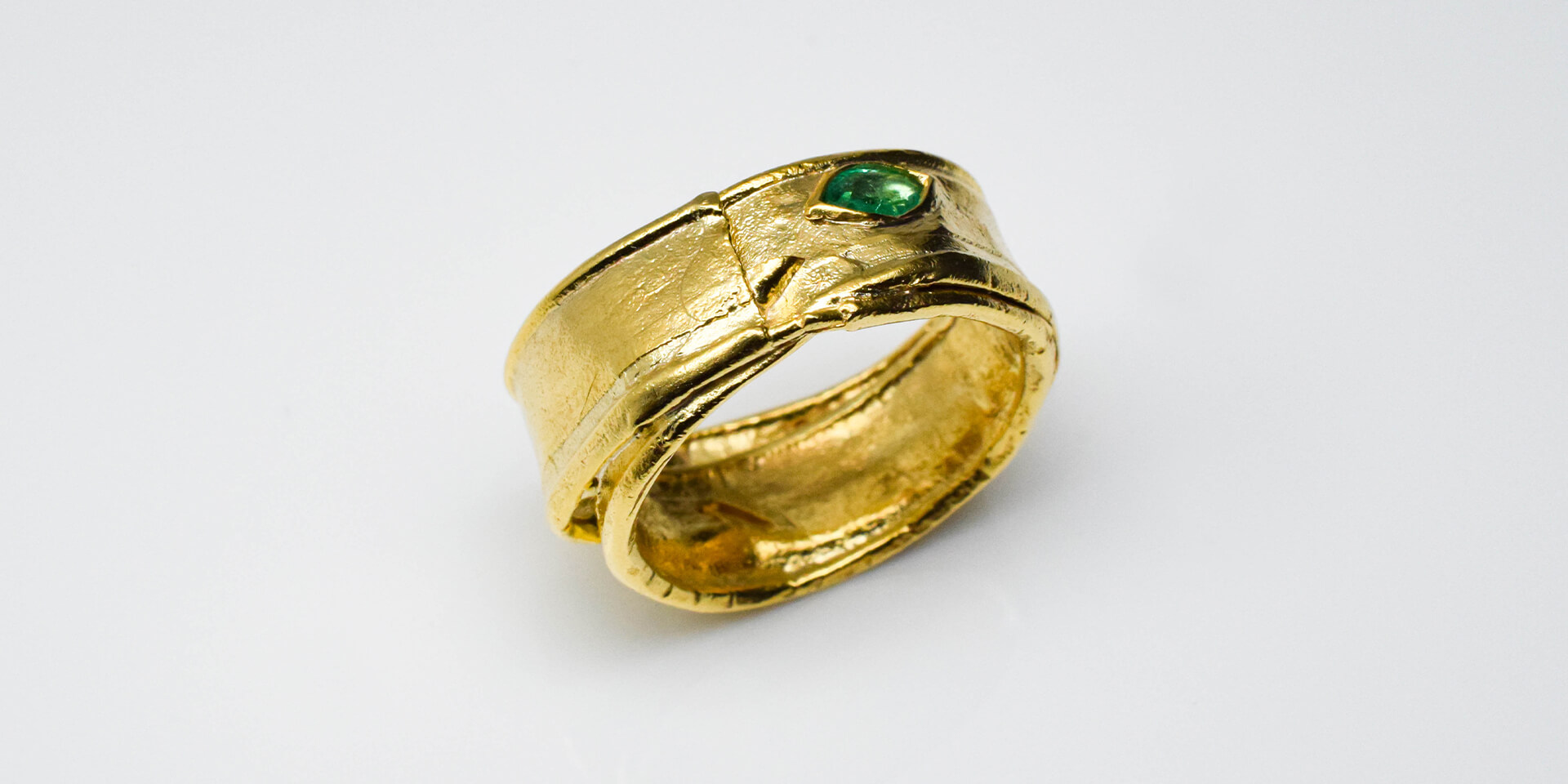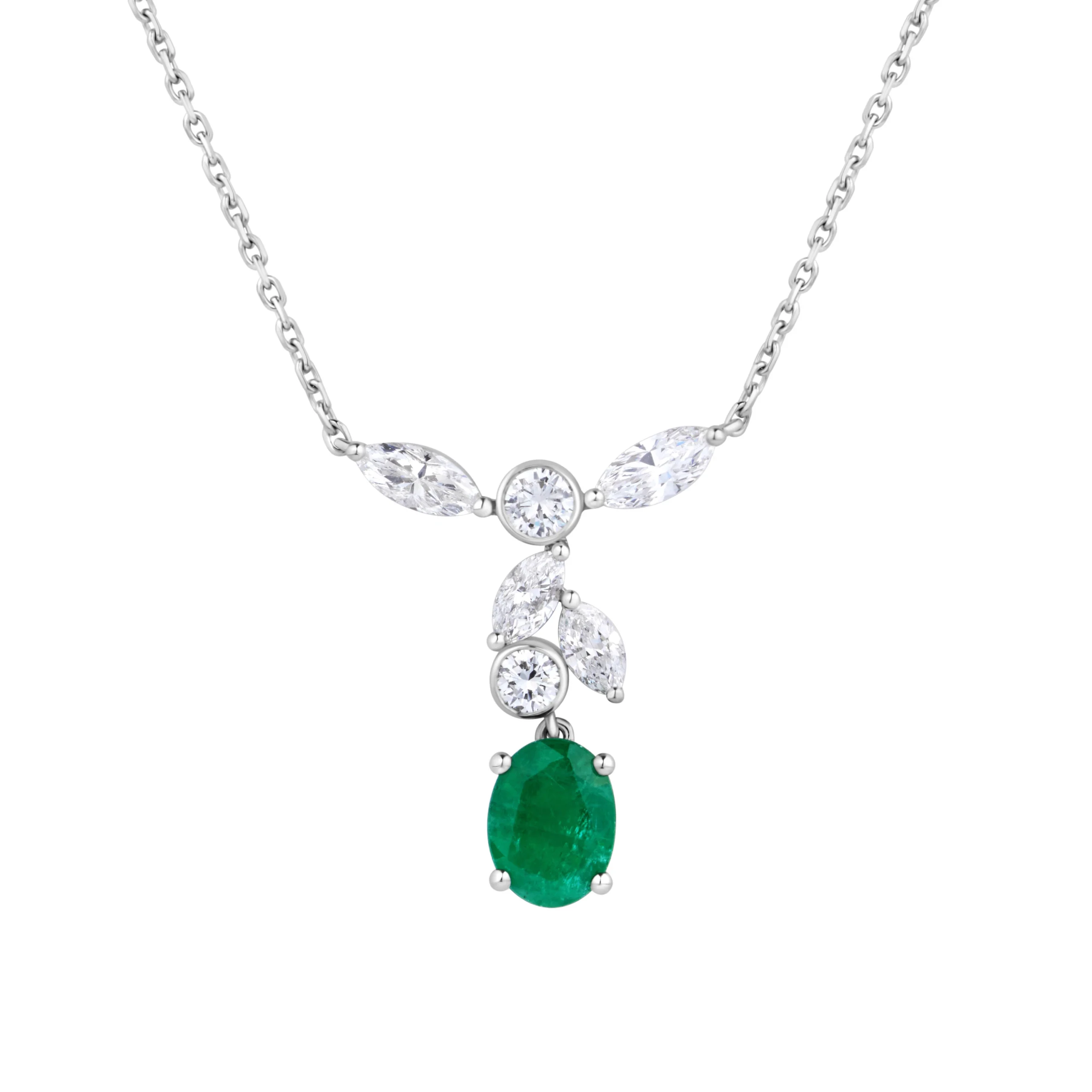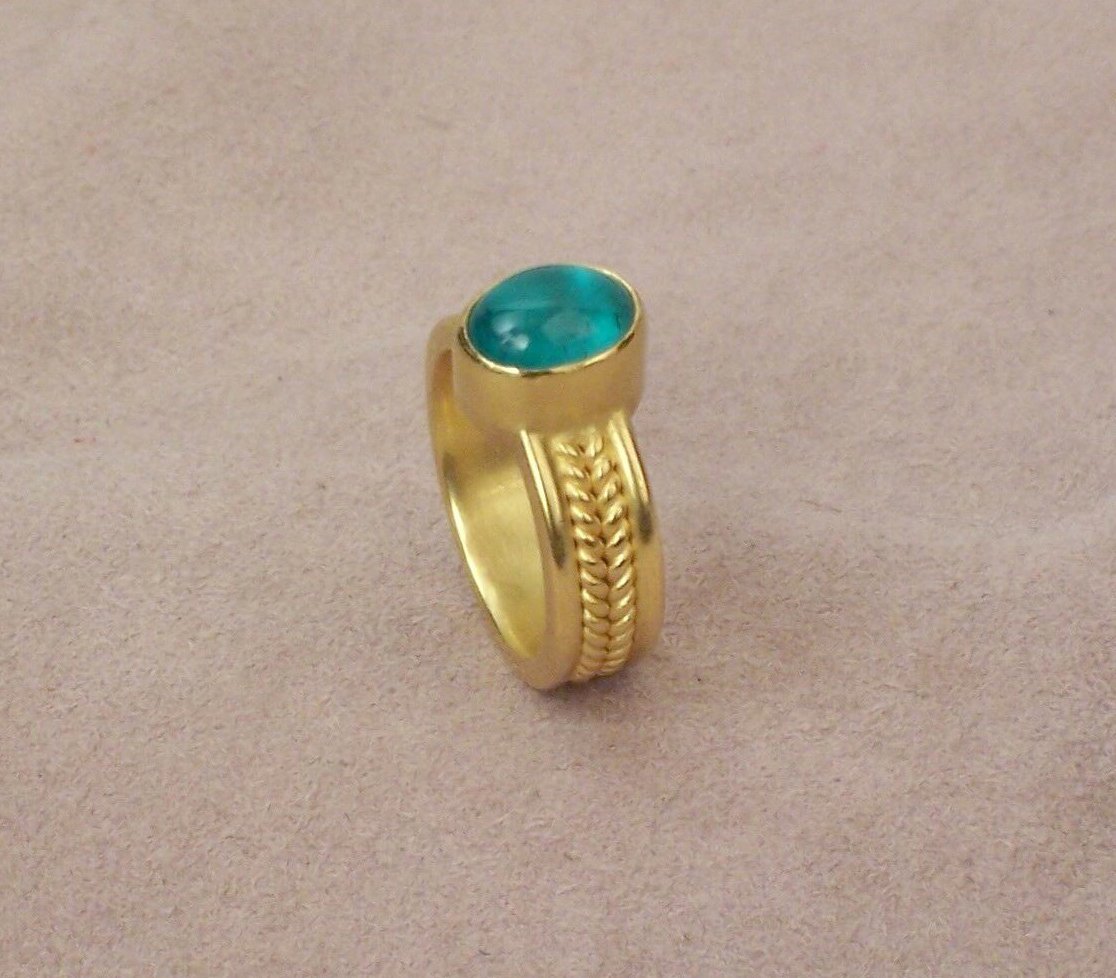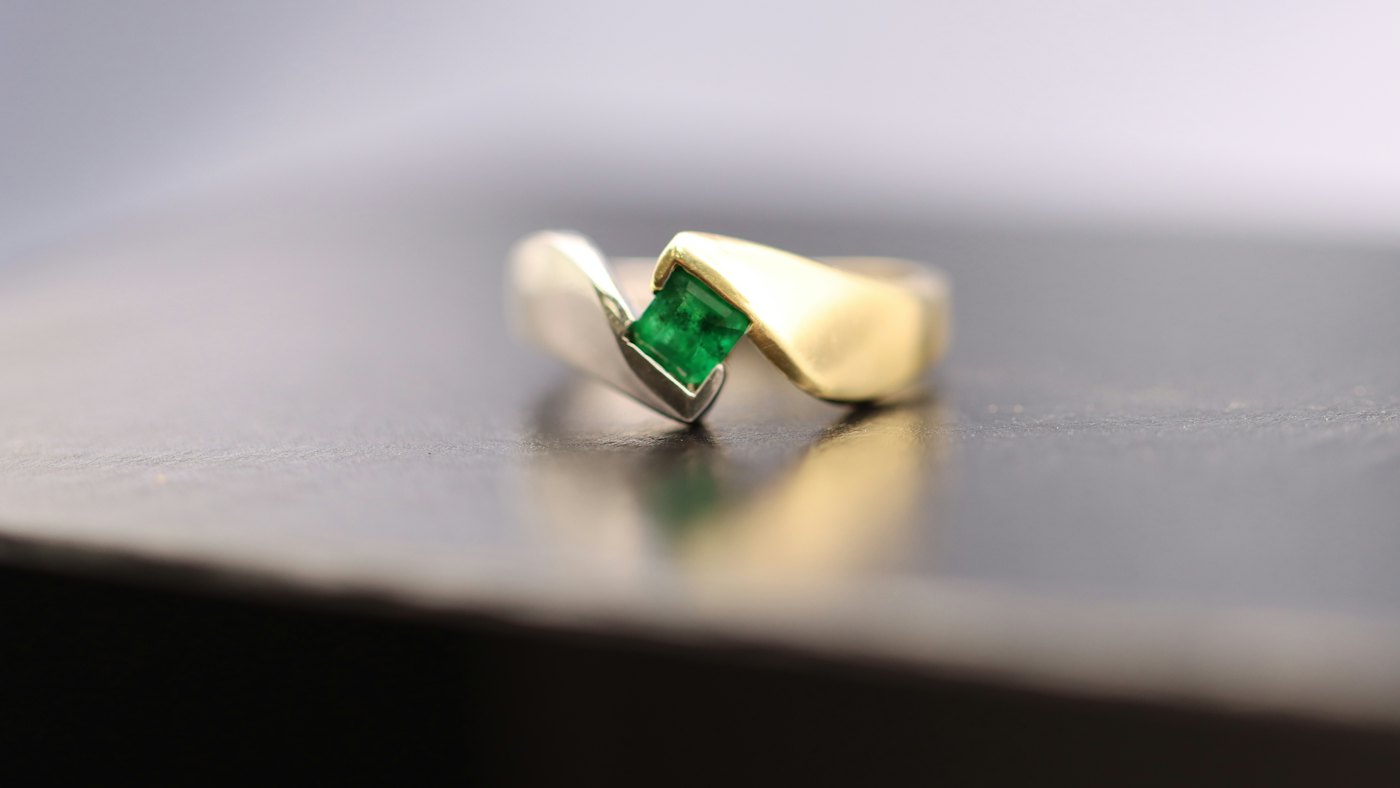
Emerald is the green variety of the mineral beryl, coloured by chromium and vanadium. Aquamarine and morganite belong to the same family. No other stone has quite this green.
The garden inside
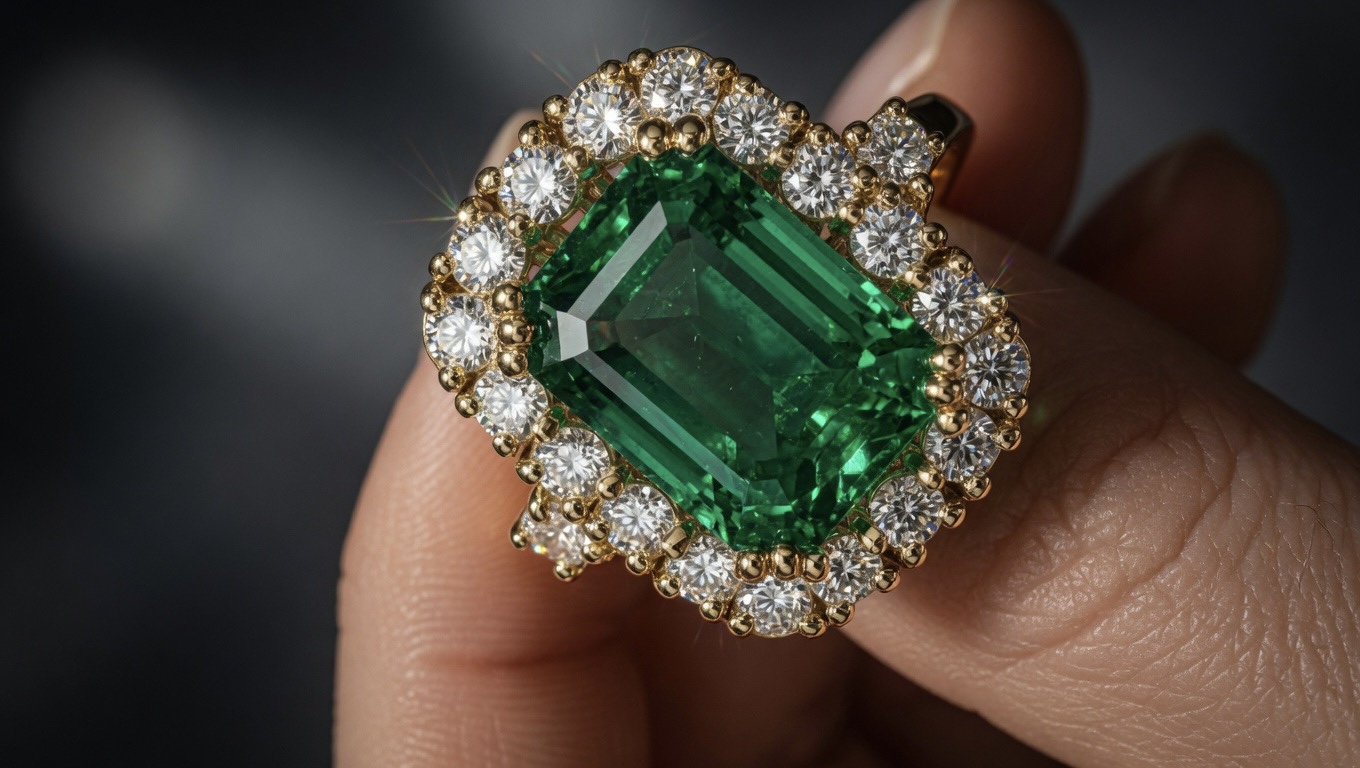
Almost every emerald has visible inclusions. The trade calls them the "jardin", the garden, and accepts them as part of the stone. A clean emerald of good colour is rare and costly. Colour matters most: a vivid, slightly bluish green that is neither too light nor too dark.
Oiled, and that is normal
Most emeralds are treated with oil or resin, which fills fine fissures and makes them less visible. This is accepted practice, but the degree matters. Laboratory reports describe it as none, minor, moderate or significant, and the price follows. The oil can dry out over the years. A goldsmith or a specialist can have the stone re-oiled.
Harder than it is tough
Emerald has a hardness of 7.5 to 8 on the Mohs scale, which sounds safe. But the inclusions make it brittle, and a knock can chip or crack it. That is why emeralds are often set protectively, in a bezel or with sturdy claws, and why the emerald cut with its cut corners was developed for this stone.
Care
Never put an emerald in an ultrasonic cleaner or under steam, and keep it away from heat and strong detergents: all of these can remove the oil or worsen fissures. Lukewarm water, a little mild soap and a soft brush are enough. Take an emerald ring off for sport, gardening and washing up.
Colombia, Zambia, Brazil: what origin does
Origin matters more for emerald than for almost any other stone. Read the general picture in does origin matter?
Colombia is the classic source, with the mines of Muzo, Chivor and Coscuez. Colombian emeralds formed in a way found nowhere else, in veins in black shale, and they contain very little iron. The result is a pure, warm, glowing green. Under the microscope they typically show three-phase inclusions: a tiny cavity holding liquid, a gas bubble and a salt crystal. At equal quality a Colombian emerald carries a clear premium.
Zambia is the second great source, centred on the Kagem mine. Zambian emeralds contain more iron, which gives a cooler, slightly bluish green, often in a darker tone. They tend to be cleaner than Colombian stones and cost noticeably less per carat. A fine Zambian emerald is a better stone than a mediocre Colombian one.
Brazil produces large quantities, generally lighter in colour, along with some fine stones. Ethiopia has supplied attractive material since 2016. Smaller sources with a reputation for vivid colour in small sizes are the Swat valley in Pakistan, the Panjshir valley in Afghanistan, and Sandawana in Zimbabwe. Russia's Ural mountains were historically important.
Origin cannot be seen with the naked eye. It is established by a laboratory and stated on the report as an opinion. Judge colour and clarity first, and let origin decide between stones you already like.
Look at emerald jewellery by independent goldsmiths, or describe your piece.