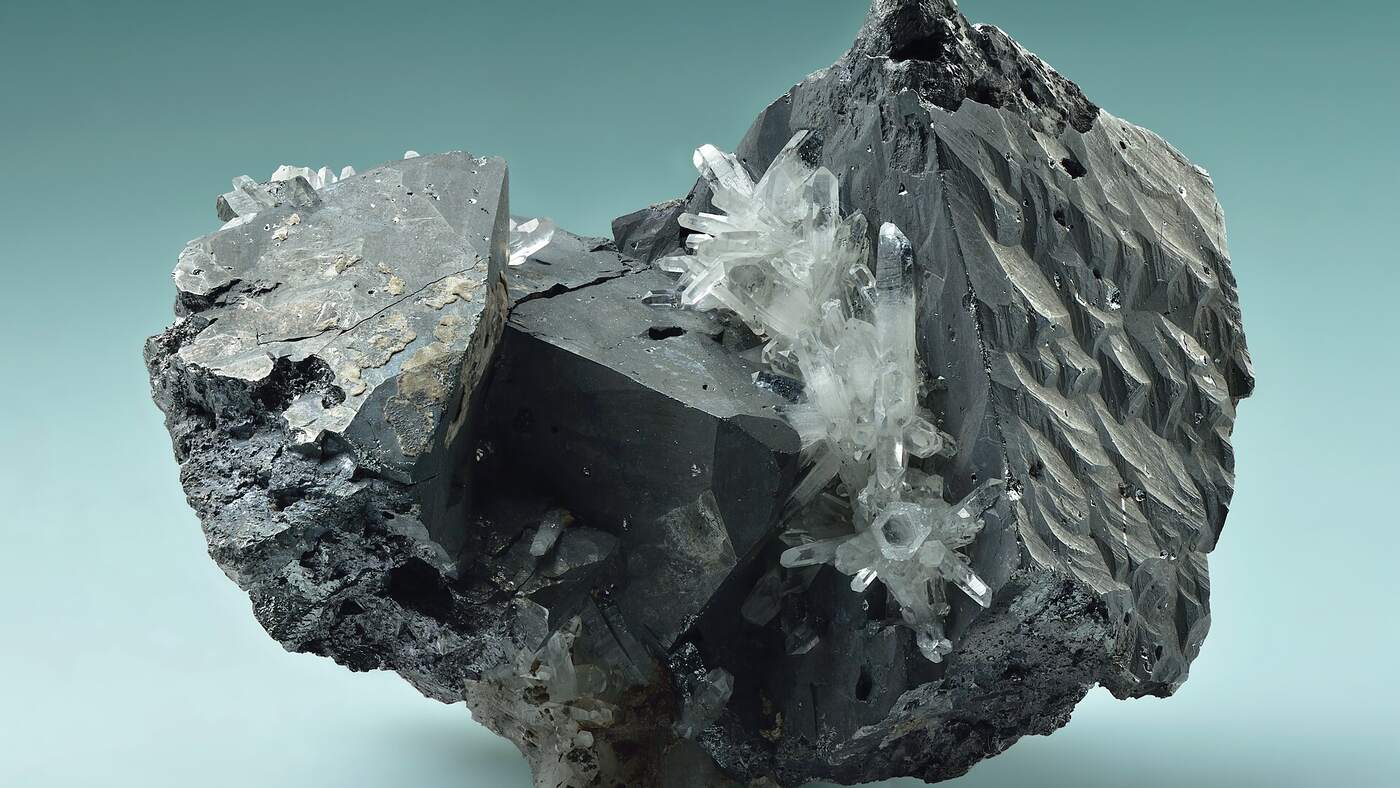
A gemstone is a crystal: its atoms are stacked in a pattern that repeats in all directions. There are seven such patterns, the crystal systems, and every mineral belongs to one of them. The system is listed on the properties card of each stone in this knowledge base. It sounds academic, but it explains three things a buyer notices.
The seven systems
- Cubic: three equal axes at right angles. Diamond, garnet, spinel, fluorite, sodalite.
- Tetragonal: like a stretched cube. Zircon.
- Hexagonal: a six-sided prism. Beryl (emerald, aquamarine, morganite), apatite, moissanite.
- Trigonal: three-fold symmetry. Corundum (sapphire and ruby), quartz (amethyst, citrine, chalcedony), tourmaline, hematite.
- Orthorhombic: three unequal axes at right angles. Topaz, peridot, tanzanite, chrysoberyl, iolite.
- Monoclinic: one axis tilted. Moonstone, jade, kunzite, malachite.
- Triclinic: no right angles at all. Labradorite, amazonite, turquoise, kyanite.
Opal, obsidian and moldavite are amorphous: glass, with no crystal structure. Pearl, coral, amber and jet are organic and are not crystals either.
One colour or several
In a cubic stone, light travels the same way in every direction, so the stone shows one colour from every angle. In all the other systems light is split in two and the two rays can be absorbed differently, which is why tourmaline, iolite, tanzanite and kunzite change colour as you turn them. Gemmologists call it pleochroism, and it is why the cutter's choice of orientation matters so much for those stones.
Sparkle
That same splitting, called double refraction, is why zircon and moissanite show doubled facet edges under a loupe, while diamond, spinel and garnet, being cubic, show crisp single edges. It is one of the quickest ways to tell diamond from its lookalikes.
Cleavage
Many crystals have planes along which they split cleanly, set by the way the atoms are stacked. Diamond, topaz, kunzite, fluorite and the feldspars all have cleavage, and a knock in the wrong direction can split them however hard they are. Quartz, tourmaline, corundum and spinel have none worth mentioning, which is part of why they wear so well. See which stones can be worn every day.
Why the rough looks the way it does
The system also shapes the crystal you see before cutting: diamond grows in octahedra, quartz in six-sided points, tourmaline in long striated prisms, garnet in rounded dodecahedra. A goldsmith who sets raw stones is working with exactly these shapes.