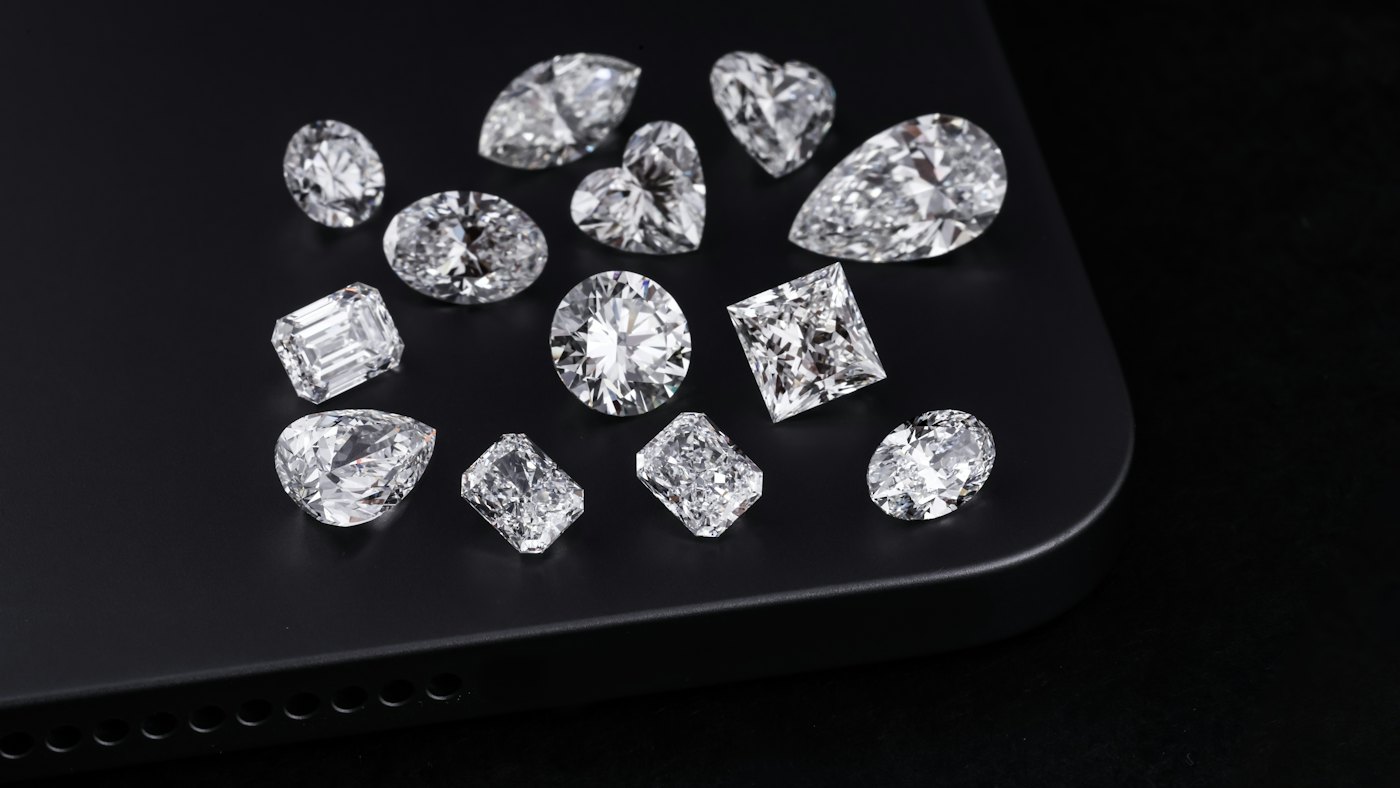
A lab-grown diamond is diamond. It is crystallised carbon with the same hardness, the same brilliance and the same chemical composition as a mined stone. The difference is where it formed: in a reactor in a few weeks, instead of deep in the earth over a very long time.
How they are made
There are two methods. HPHT (high pressure, high temperature) imitates the conditions in the earth. CVD (chemical vapour deposition) grows the crystal layer by layer from a carbon-rich gas. Both produce stones that are then cut and polished exactly like mined diamonds.
Not an imitation
Do not confuse lab-grown diamond with imitations. Cubic zirconia and moissanite are different materials that only look like diamond. A lab-grown diamond cannot be told from a mined one with the naked eye or a loupe. Laboratories can tell them apart with specialised equipment.
Graded the same way
Lab-grown diamonds are graded on the same four Cs. The report states clearly that the stone is laboratory-grown, and the report number is usually laser-inscribed on the girdle of the stone. Read more in diamond grading reports.
Price and value
A lab-grown diamond costs clearly less than a mined stone of the same quality, so the same budget buys a larger or better stone. The other side: prices have fallen as production grew, and the resale value is low and uncertain. Buy it for what it is, not as an investment. That applies to most mined diamonds too.
Which to choose
People choose lab-grown for the price, or because they want a stone without a mining history. Others choose a mined stone for its natural origin, or reuse an heirloom stone, which needs no new production at all. A goldsmith can work with all three. Say which you prefer when you describe your piece.