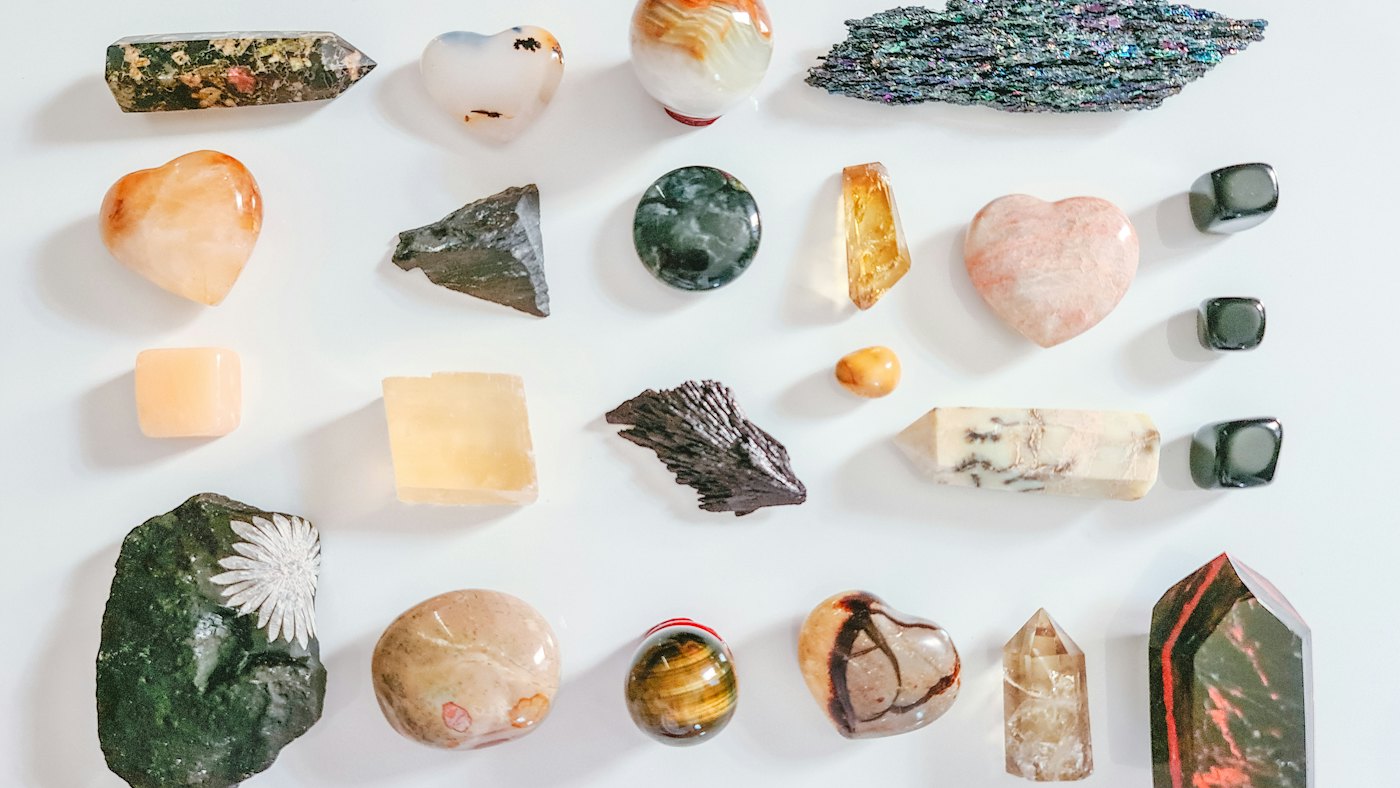
A stone in a ring meets door handles, keys, sand and worktops. A stone in an earring or a pendant has a much easier life. When you choose a stone, first ask where it will be worn.
The Mohs scale
The Mohs scale ranks minerals from 1 (talc) to 10 (diamond) by what scratches what. It is a ranking, not a measure: diamond at 10 is many times harder than corundum at 9.
| Stone | Hardness |
|---|---|
| Diamond | 10 |
| Sapphire, ruby | 9 |
| Spinel, topaz | 8 |
| Emerald, aquamarine, morganite | 7.5 to 8 |
| Tourmaline, garnet | 6.5 to 7.5 |
| Amethyst, citrine (quartz) | 7 |
| Tanzanite, peridot | 6.5 to 7 |
| Moonstone, labradorite | 6 to 6.5 |
| Opal | 5.5 to 6.5 |
| Turquoise, lapis lazuli | 5 to 6 |
| Pearl | 2.5 to 4.5 |
Why 7 is the line
Ordinary dust contains quartz, which has a hardness of 7. Stones softer than that slowly lose their polish through everyday contact and cleaning. Stones of 8 and above keep their shine for decades.
Hardness is not toughness
Hardness is resistance to scratching. Toughness is resistance to breaking, and it is a different property. Jade is not very hard but extremely tough. Emerald is hard but brittle because of its inclusions. Even diamond can chip from a knock in the wrong direction. Opal and tanzanite need care on both counts.
What this means for your choice
- A ring for every day, such as an engagement ring: diamond, sapphire, ruby or spinel are the safe choices.
- A ring for regular wear: stones around 7 to 8 do well in a protective setting, such as a bezel that surrounds the edge of the stone.
- Earrings and pendants: almost anything is possible, including opal, moonstone and pearl.
Softer stones are not forbidden in rings. They ask for a design that protects them and an owner who takes the ring off for rough work. A goldsmith can advise on both. Describe your piece and say how you plan to wear it.