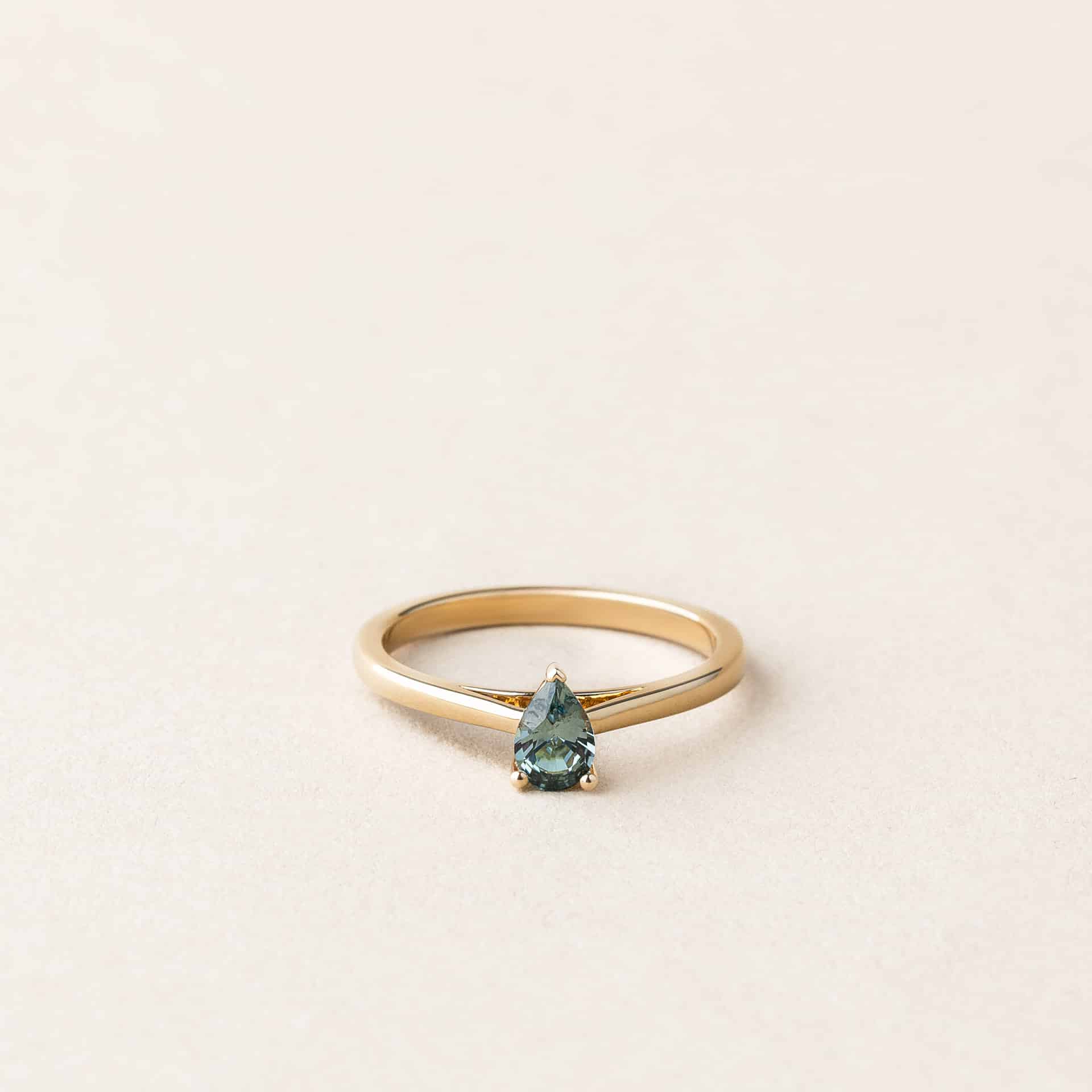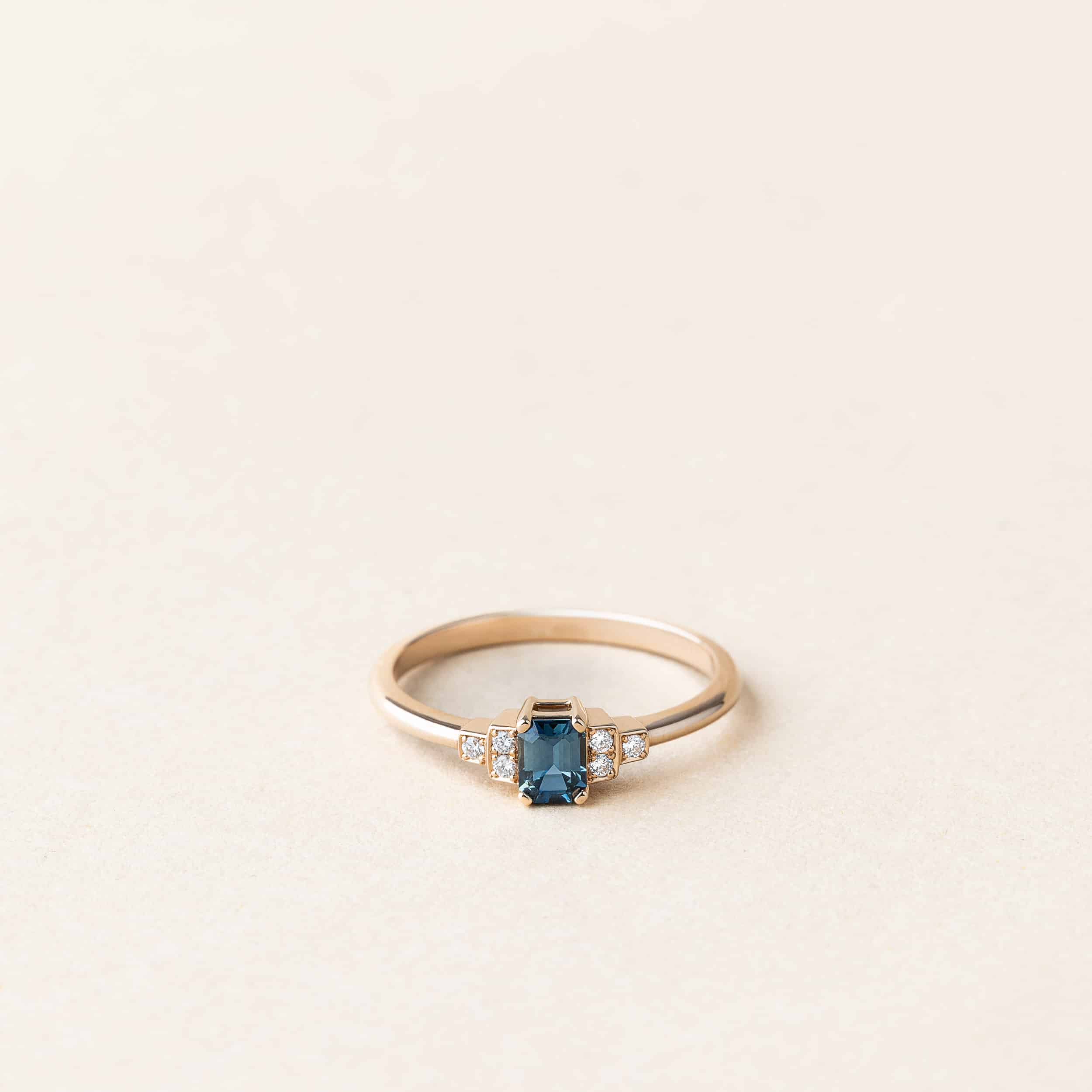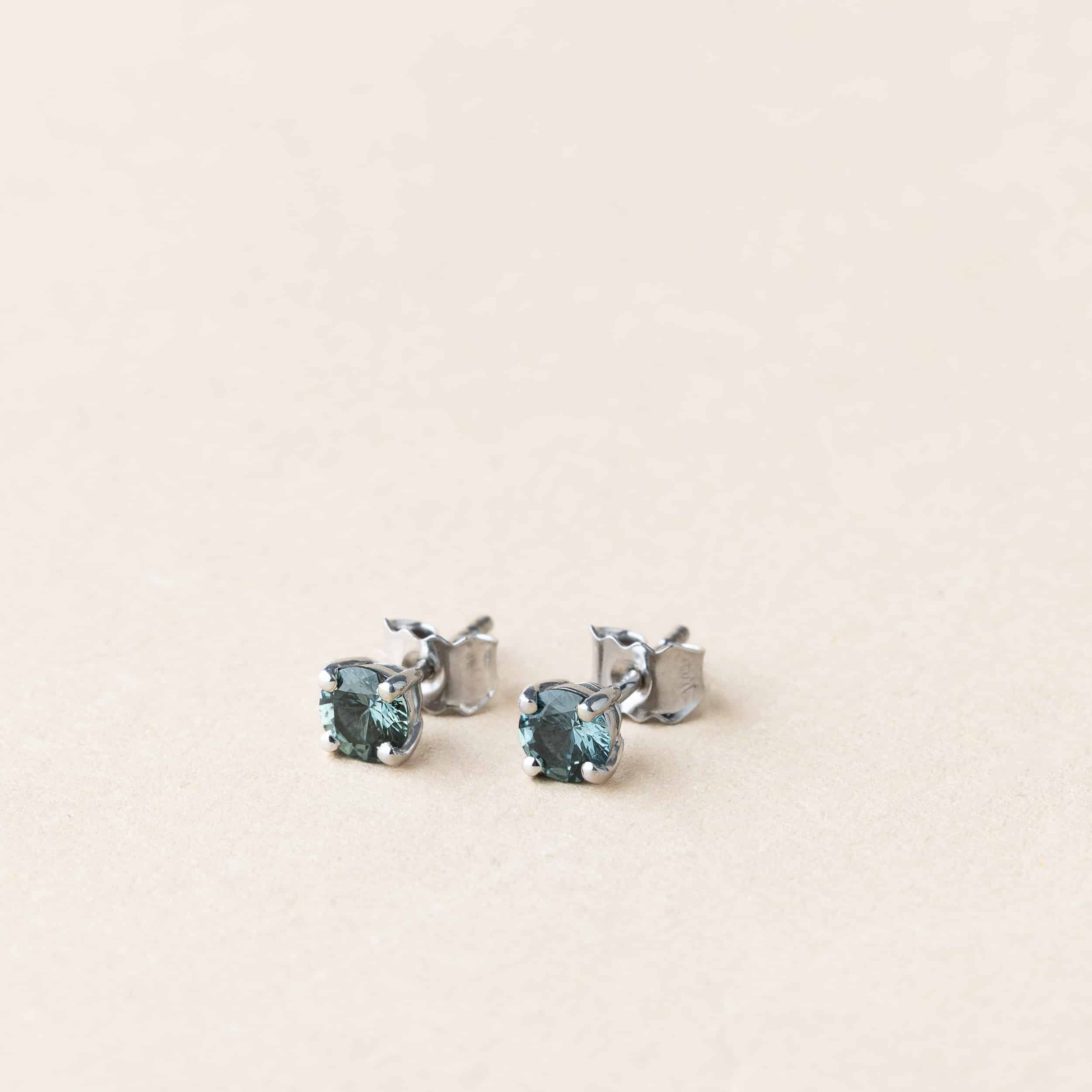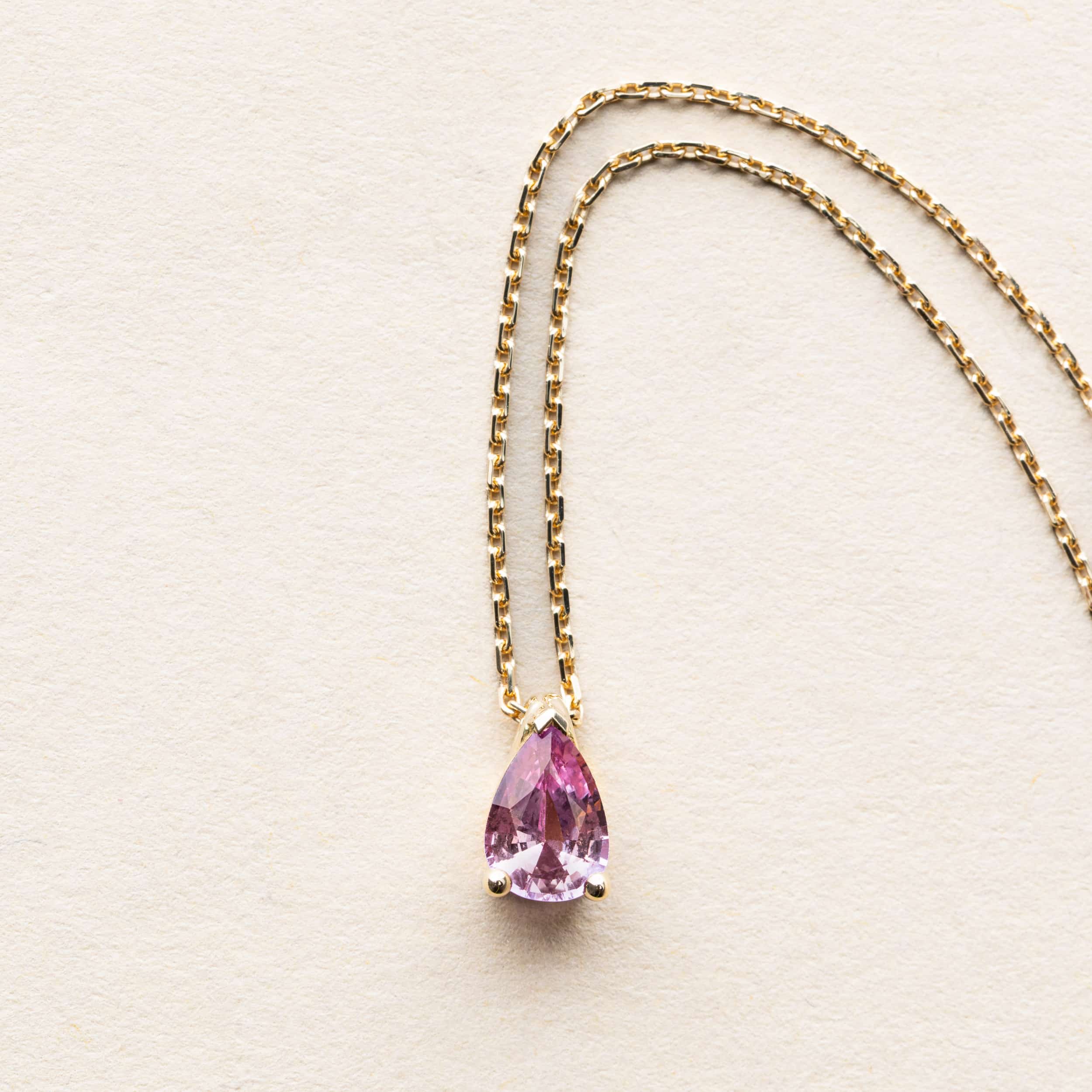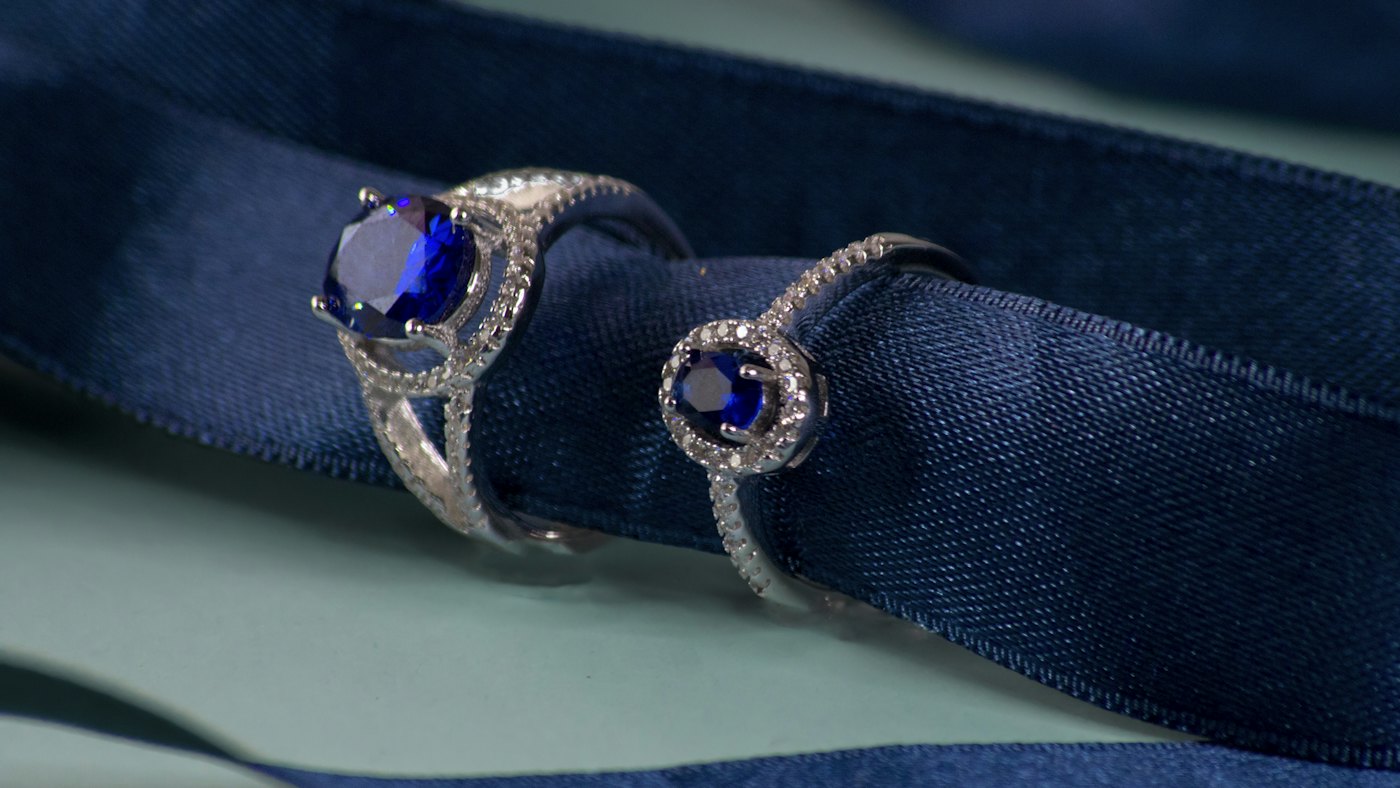
Sapphire is the mineral corundum. It is best known in blue, but it comes in almost every colour: pink, yellow, green, teal, purple, colourless. Only red corundum has its own name: ruby. The rare pink-orange variety is called padparadscha.
Made to be worn
With a hardness of 9 on the Mohs scale, sapphire is the hardest coloured gemstone in common use. It stands up to daily wear, which makes it a good choice for an engagement ring. See which stones can be worn every day.
Colour decides the value
With sapphire, colour counts more than anything else: the hue, how saturated it is, and how evenly it is spread. A vivid, medium-dark blue is valued most. Very dark, inky stones and pale, greyish ones cost less. Teal and parti-coloured sapphires, which show more than one colour, have become popular with independent goldsmiths because every stone is different.
Heating is normal
Most sapphires are heated to improve colour and clarity. The treatment is permanent and accepted in the trade, as long as it is disclosed. Unheated stones of fine colour are rarer and cost considerably more. Other treatments, such as diffusion or filling, lower the value and must always be stated. For an expensive stone, ask for a report from a gemmological laboratory that states the treatment and, if determined, the origin.
Kashmir, Burma, Ceylon and the rest: what origin does
For fine blue sapphire, origin affects the price strongly. Read the general picture in does origin matter?
Kashmir is the legend. The mines high in the Himalayas were worked mainly in the 1880s and were soon largely exhausted. Kashmir sapphires have a soft, velvety cornflower blue, caused by extremely fine inclusions that scatter the light. They hardly ever come to market, and then at auction.
Myanmar (Burma) produces a rich, deep royal blue with good clarity, second only to Kashmir in reputation.
Sri Lanka (Ceylon) has supplied sapphires for more than two thousand years. The blue is typically lighter and brighter, with a lot of life, and the island is known for large stones and for the rare pink-orange padparadscha.
Madagascar has been a major source since the 1990s. Its stones cover a wide range and the best can resemble Ceylon, Burmese and even Kashmir sapphires, which makes origin determination difficult.
Thailand, Cambodia and Australia produce sapphires from iron-rich basalt: darker, inky blue, often with a greenish tint. They are the affordable end of the market. Australia is also a source of the teal and parti-coloured stones that many independent goldsmiths work with.
Montana in the United States produces small, bright stones in blue, teal and pastel colours. Those from Yogo Gulch are known for an even cornflower blue that needs no heating.
For most sapphires, the colour you see matters more than where the stone was found. Origin becomes a factor for fine stones, where it is established by a laboratory and stated as an opinion.
Choosing one
Ask the goldsmith to show you stones in daylight, because sapphire changes with the light. Look at sapphire jewellery by independent goldsmiths, or describe what you have in mind.