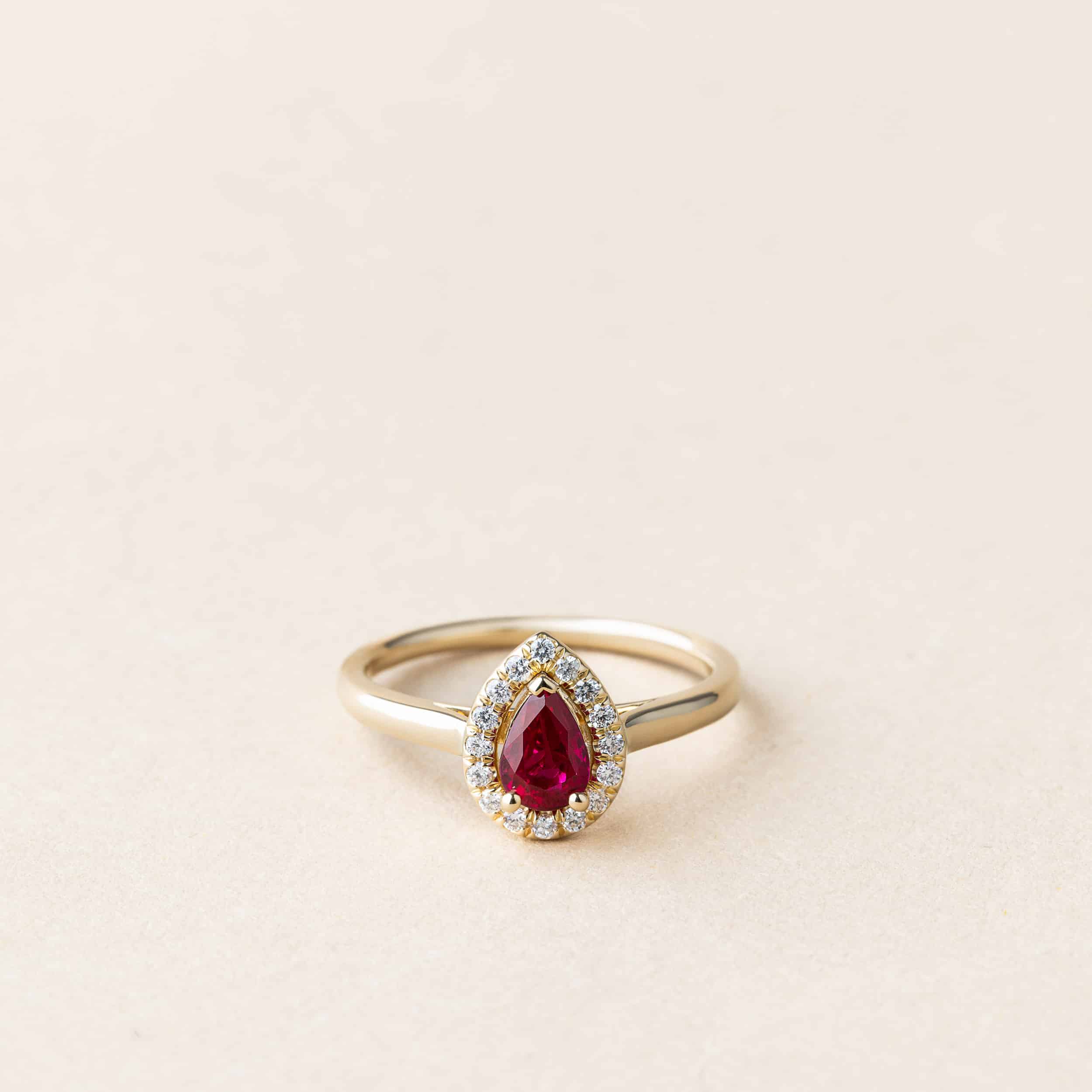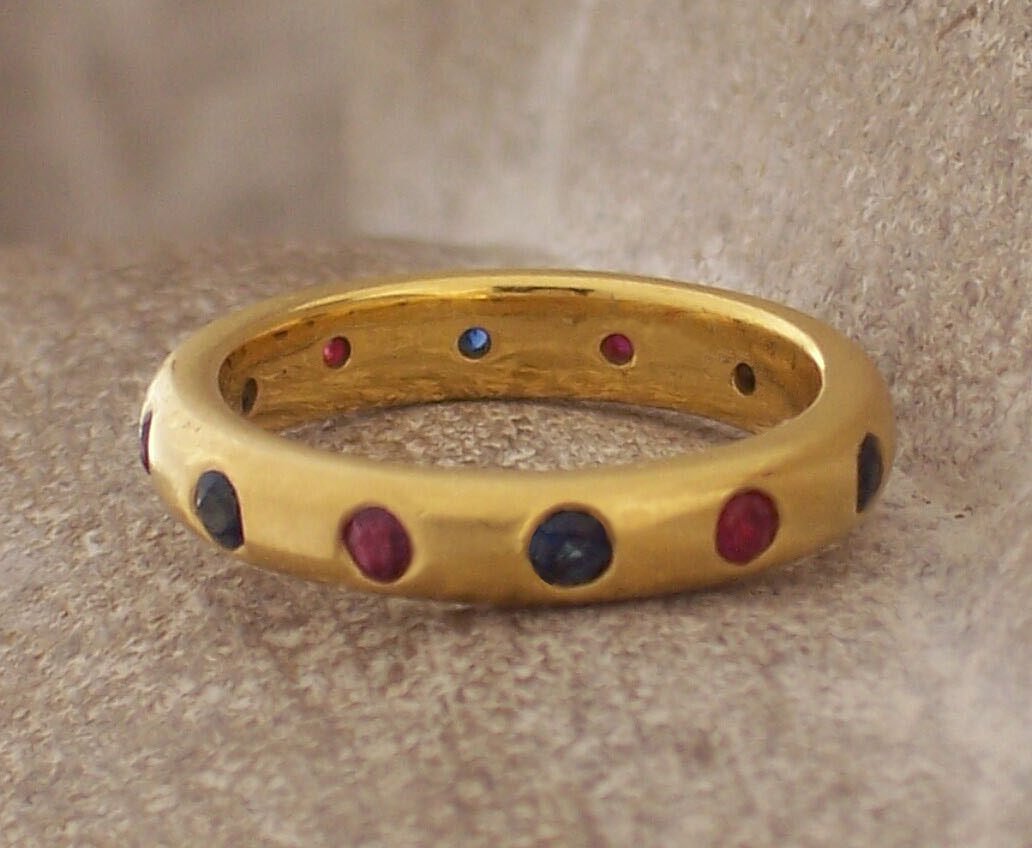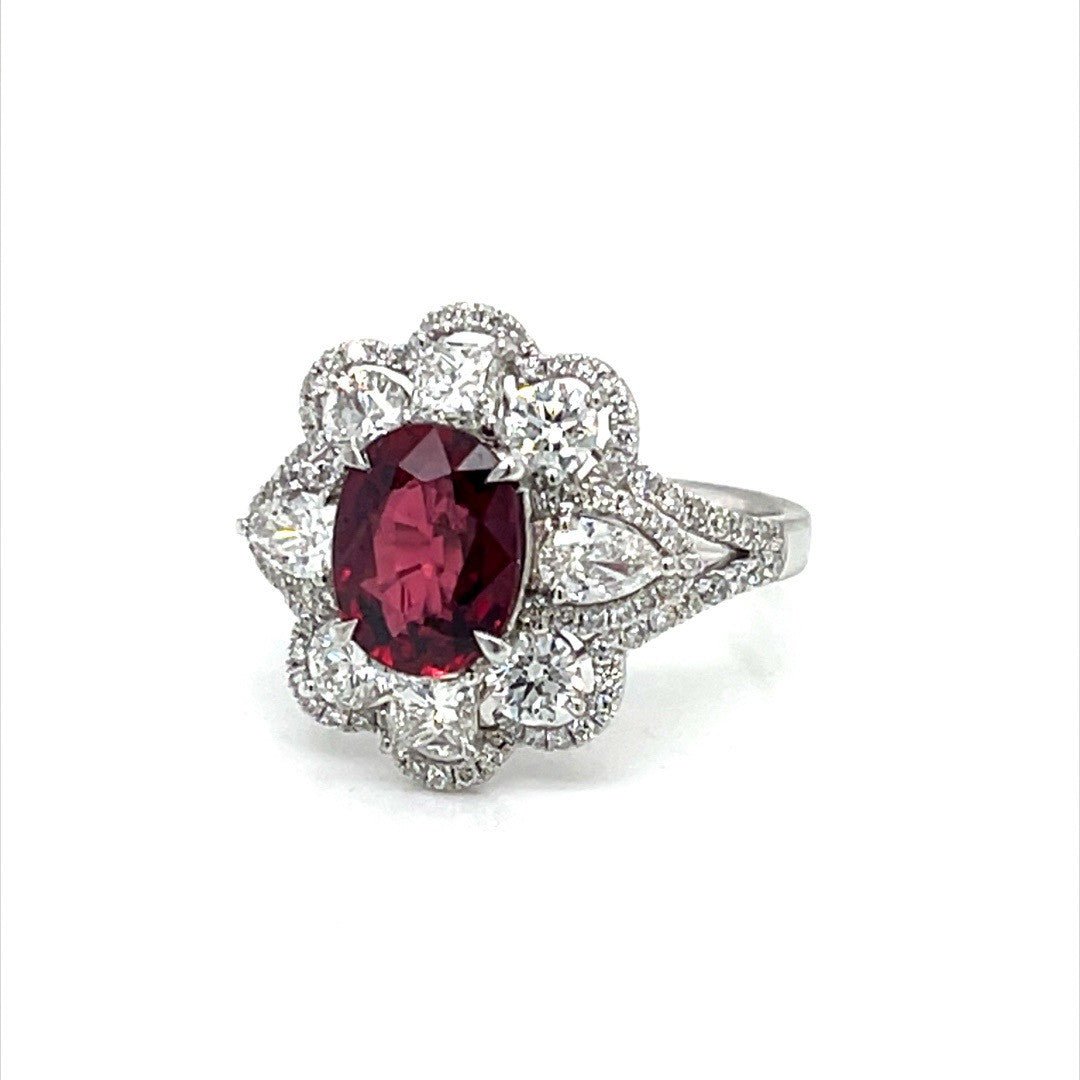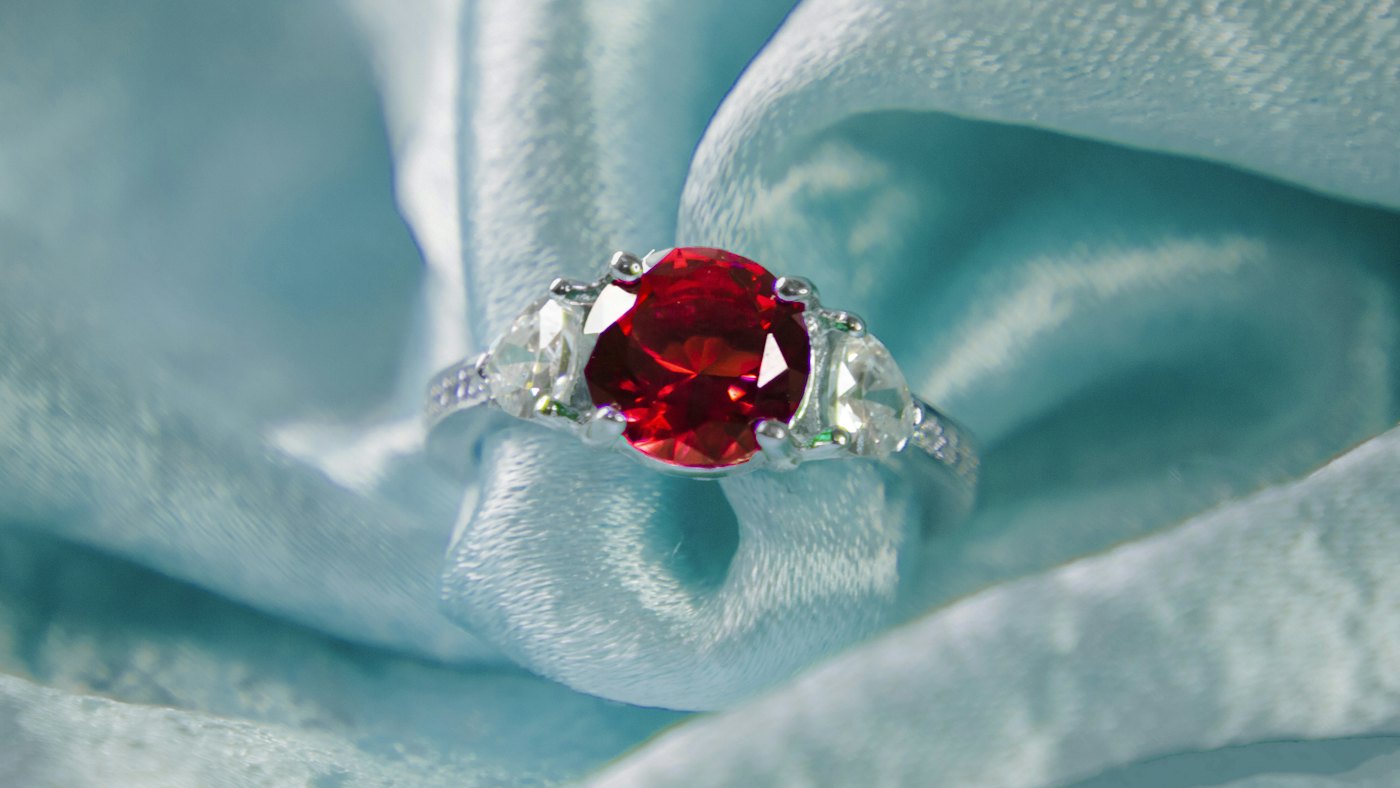
Ruby and sapphire are the same mineral, corundum. Traces of chromium turn it red, and only the red stones are called ruby. Where pink sapphire ends and ruby begins is a matter of judgement, and laboratories do not always draw the line in the same place.
Hard enough for every day
Ruby has a hardness of 9 on the Mohs scale, just below diamond. It is suited to rings that are worn daily.
What makes a ruby valuable
Colour first: a pure, saturated red, neither too dark nor too pink. The trade calls the finest colour "pigeon's blood". Almost every ruby has inclusions; a completely clean stone is a reason to look twice. Large rubies of fine quality are very rare, rarer than diamonds of the same size, and the price per carat rises steeply with size.
Treatments: one normal, one to avoid
Heating is common and accepted for ruby, as it is for sapphire, provided it is disclosed. Something else entirely is the lead-glass filled ruby, also called composite ruby. Here low-grade material is filled with glass to make it look transparent. These stones cost very little and are fragile: heat from a goldsmith's torch, and even household acids such as lemon juice, can damage them. They must be sold as what they are. If a large, clean ruby is cheap, ask about this first.
Burma, Mozambique, Thailand: what origin does
For ruby, origin is a real price factor. Read the general picture in does origin matter?
Myanmar (Burma), above all the Mogok valley, is the classic source. Burmese rubies grew in marble and contain very little iron. That lets them fluoresce strongly: in daylight the stone seems to glow red from within. Fine Burmese rubies command the highest prices of any coloured stone. Rubies from Mong Hsu, also in Myanmar, are nearly always heated.
Mozambique has been the most important source since large deposits were found around Montepuez in 2009. These rubies contain more iron, so they glow a little less, but the best are a pure, saturated red, and clean stones of good size are available. At equal quality they cost considerably less than Burmese stones.
Thailand and Cambodia produced most of the world's rubies in the twentieth century. They come from iron-rich basalt and are typically darker, with a brownish or purplish tint, and are almost always heated.
Other sources include Vietnam, Tajikistan and Afghanistan, all with marble-type rubies that can resemble Burmese stones, and Madagascar, Tanzania and Greenland.
The trade in Burmese rubies has at times been restricted by sanctions. For an expensive stone, ask for a laboratory report that states treatment and origin, and ask the goldsmith what is known about the route the stone took.
Look at ruby jewellery by independent goldsmiths, or describe the piece you have in mind.