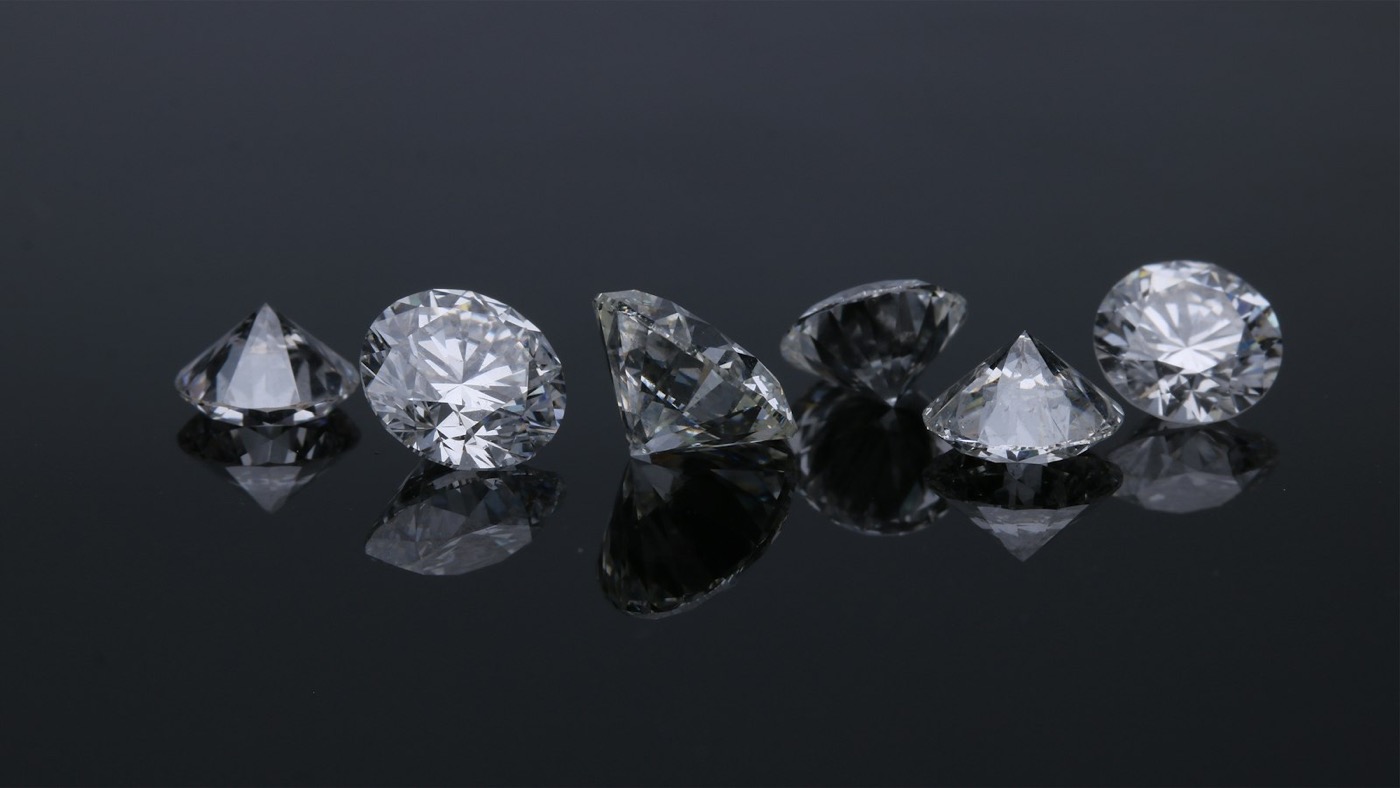
A diamond's colour is graded today on the GIA scale from D, colourless, to Z, light yellow. Before that scale spread in the 1950s, the trade used names, and those names live on: on older certificates, in valuations, in auction descriptions of famous stones and in the mouths of older dealers, especially in Antwerp, Amsterdam and Scandinavia. Knowing them saves confusion when you inherit a ring with a paper that says "Top Wesselton VS".
Where the names come from
Most are the names of South African mines and sources whose stones were known for a particular colour. Diamonds from the Jagersfontein mine were prized for a bluish white, so "Jager" became the top of the scale. Stones found in river gravels were whiter than those from the mines, hence "River". Wesselton is a mine at Kimberley whose stones were a good white. "Cape" stood for the yellowish stones typical of the Cape Province mines. "Crystal" and "Silver Cape" filled the steps in between. The scale was never fully standardised, so one dealer's Wesselton was another's Top Crystal.
The old names and the letters
The table follows the correspondence adopted by CIBJO and the Scandinavian nomenclature, which is the closest thing to an official mapping.
| Old name | GIA letters | Description |
|---|---|---|
| Jager | D | Exceptional white +, with a bluish cast |
| River | D, E | Exceptional white |
| Top Wesselton | F, G | Rare white |
| Wesselton | H | White |
| Top Crystal | I | Slightly tinted white |
| Crystal | J | Slightly tinted white |
| Top Cape | K, L | Tinted white |
| Cape | M, N | Tinted colour, faintly yellow |
| Light yellow | O to R | Tinted colour |
| Yellow | S to Z | Tinted colour, plainly yellow |
The old scale has fewer steps than the new one. A stone sold as Wesselton could be an H today or a G that a careful grader would have called Top Wesselton, and a stone graded on old paper cannot be assumed to be at the top of its band.
"Blue-white" and other terms that are out
"Blue-white" was once the highest praise for a diamond and later the most abused term in the trade, applied to anything colourless or fluorescent. It is banned in the CIBJO rules and in American trade regulation, and a seller who uses it today is either old-fashioned or careless. The same goes for "commercial white", "fine white" and the rest of the vague vocabulary. The letters exist so that a grade means the same thing in Antwerp and in Tokyo.
The old clarity terms
Clarity had its own older vocabulary. "Loupe clean" is today's flawless and internally flawless. VVS, VS and SI are the same grades as now, sometimes without the 1 and 2. "Piqué", French for pricked, covered the visible inclusions now graded I1 to I3; "first piqué", "second piqué" and "third piqué" turn up on Belgian and Dutch papers. Read more about what a grading report says.
What to do with an old certificate
An old paper is a description of the stone by someone at some time, not a guarantee. If the diamond has value, have it regraded by an independent laboratory; the fee is small compared with the difference between a Wesselton that turns out to be a G and one that turns out to be an I. A goldsmith can send the stone in for you, unmounted, and set it again afterwards. See also the four Cs and valuation and insurance.