Chasing and repoussé are two halves of one technique for creating relief in sheet metal. Repoussé means pushing the metal out from the back. Chasing means working it from the front. The goldsmith goes back and forth between the two until the form is complete.
How it is done
The sheet is fixed onto a bowl of pitch, a mixture that is firm enough to support the metal and soft enough to give way under it. With a small hammer and steel punches of many shapes, the goldsmith drives the metal into the pitch, a fraction of a millimetre at a time. The piece is then warmed, lifted off, turned over, and worked from the other side. The metal hardens as it is worked and has to be softened by heating, again and again.
No metal is cut away and none is added. The form comes entirely from stretching and moving the sheet, which keeps an even thickness. A goldsmith may use dozens of punches on one piece, many of which they made themselves.
What it is used for
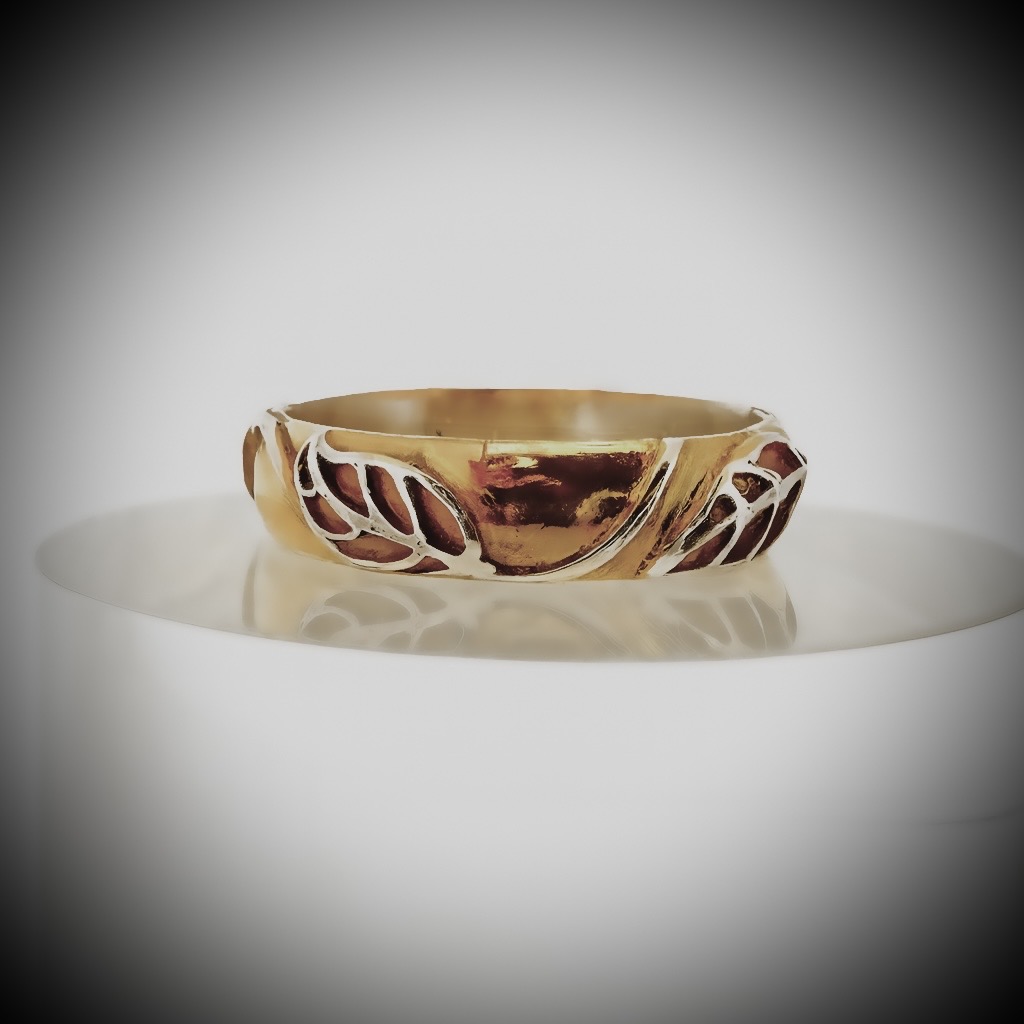
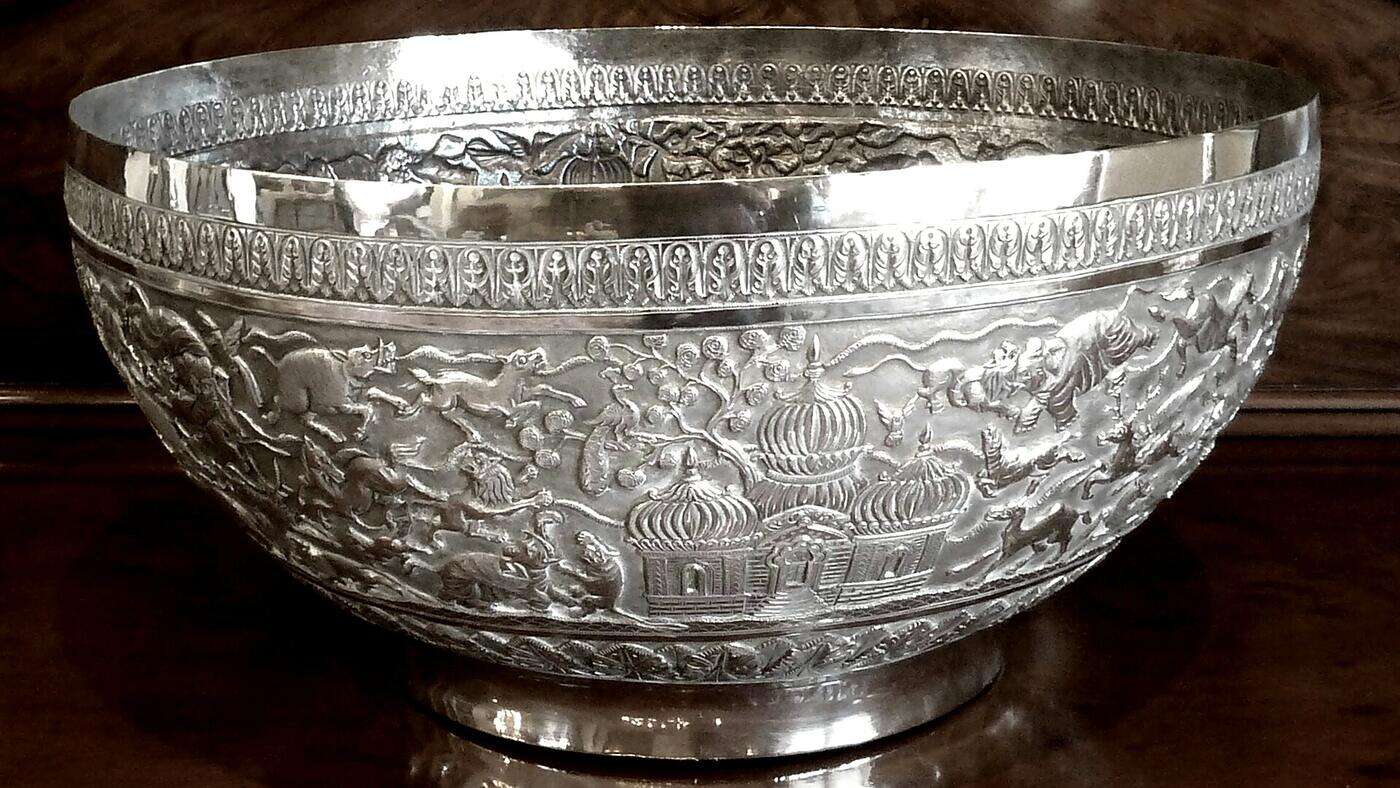
Figures, flowers, leaves, faces and flowing ornament, on lockets, brooches, pendants, cuffs and vessels. The mask of Tutankhamun and the Statue of Liberty were both made with repoussé, at opposite ends of the scale.
How it differs from casting and stamping
A cast relief is solid and heavy. A stamped relief is made in a press from a steel die, in series, and is even and a little lifeless. Hand-chased work is hollow and light, and it shows the marks of the tools: crisp lines, a lively surface, small irregularities. Turn the piece over: in chased work the back shows the relief in reverse.
Wear
Because the relief is hollow, it can dent from a hard knock, and large domed forms in thin silver are the most vulnerable. Treat it with some care and it lasts for generations.
See chased jewellery.