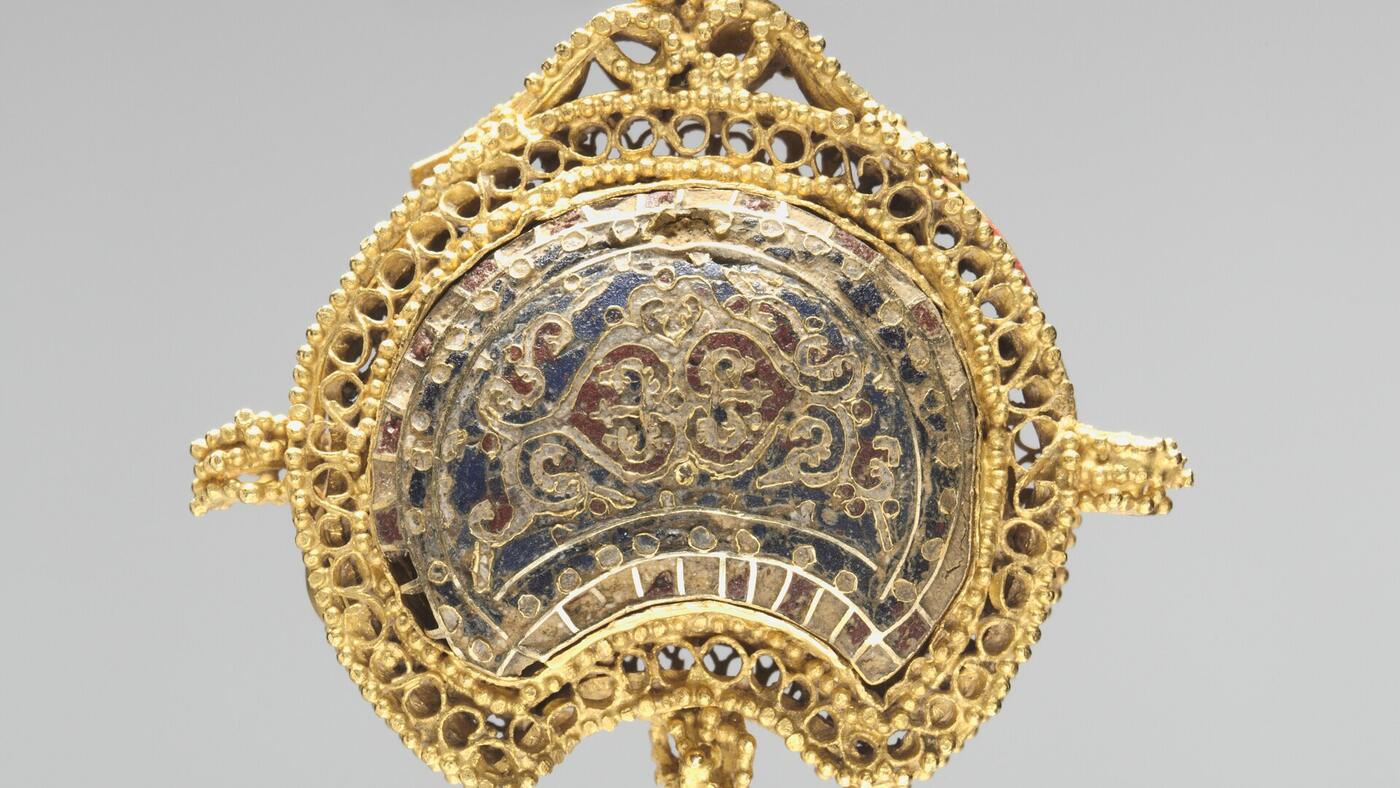
Enamel is glass. Finely ground glass powder is laid onto metal and fired in a kiln at around 800 degrees Celsius, where it melts and bonds to the surface. The colours do not fade: enamel that is centuries old is as bright as when it was made.
The main techniques
Cloisonné. Thin wires are fixed to the surface to form small cells, which are filled with enamel in different colours. The wires remain visible as fine metal lines.
Champlevé. Hollows are carved or etched into the metal and filled with enamel, leaving the metal between them standing.
Basse-taille. A pattern is engraved into the metal and covered with transparent enamel, so that the engraving shows through and the colour is deeper where the cut is deeper.
Plique-à-jour. Enamel is held in an open framework without a backing, so that light passes through it like a stained-glass window. It is the most fragile and the most difficult.
Painted enamel. Fine enamel colours are painted onto an enamelled ground and fired in layers, as in miniature portraits.
Real enamel and "cold enamel"
Much of what is sold as enamel in fashion jewellery is coloured resin, sometimes called cold enamel. It is not fired, it is softer, and it can scratch, yellow and lift over time. Real, fired enamel is hard and glossy like glass. If it matters to you, ask: vitreous enamel is the term for the real thing.
Wearing and care
Enamel is as hard as glass and as brittle. It resists scratches well but can chip or crack from a knock or when the metal beneath it is bent. That makes it better suited to pendants, earrings and brooches than to rings that take blows, unless the enamel lies protected in a recess. Never have an enamelled ring resized without telling the goldsmith, because the heat and the bending can destroy the enamel. Repair is possible but demanding.
See enamelled jewellery.