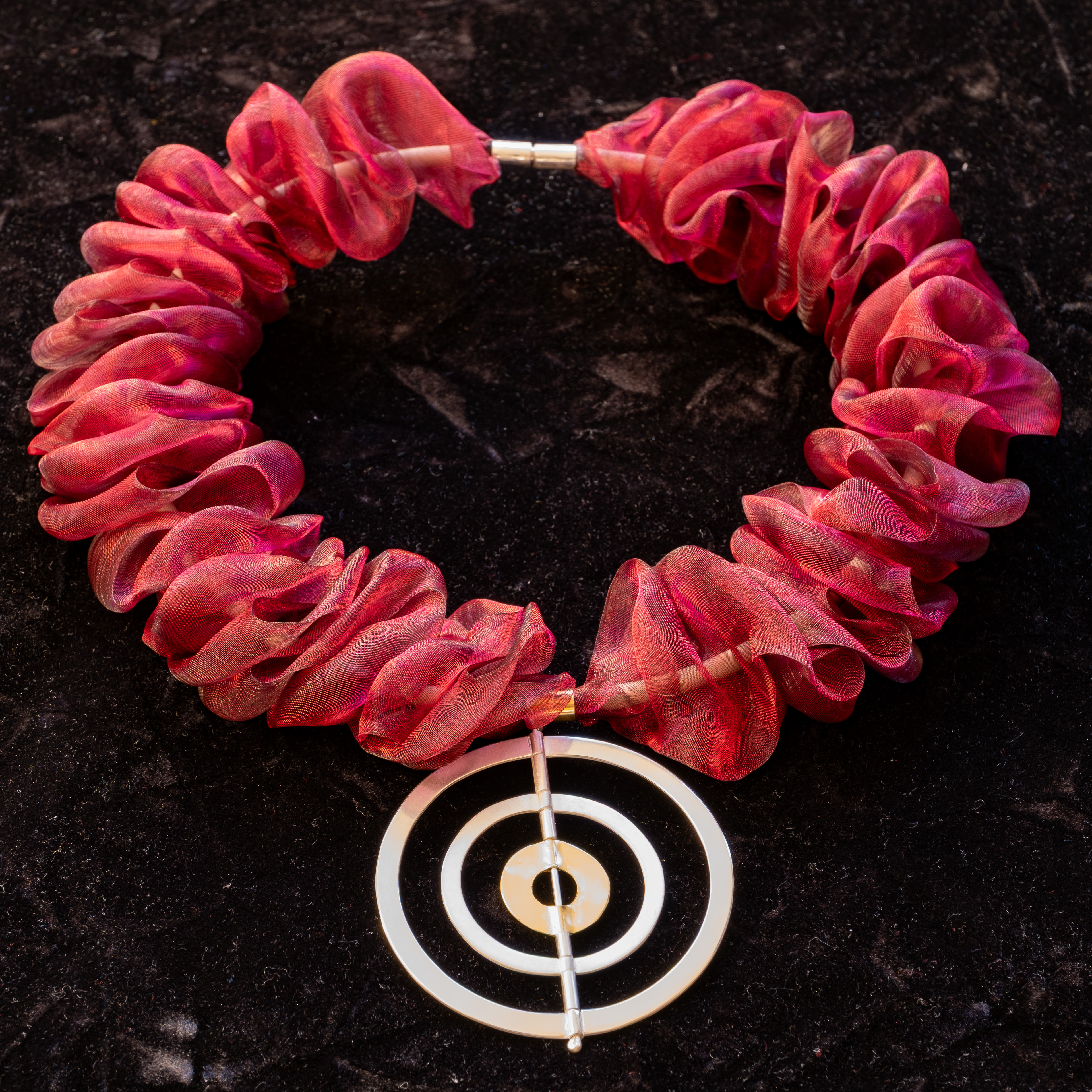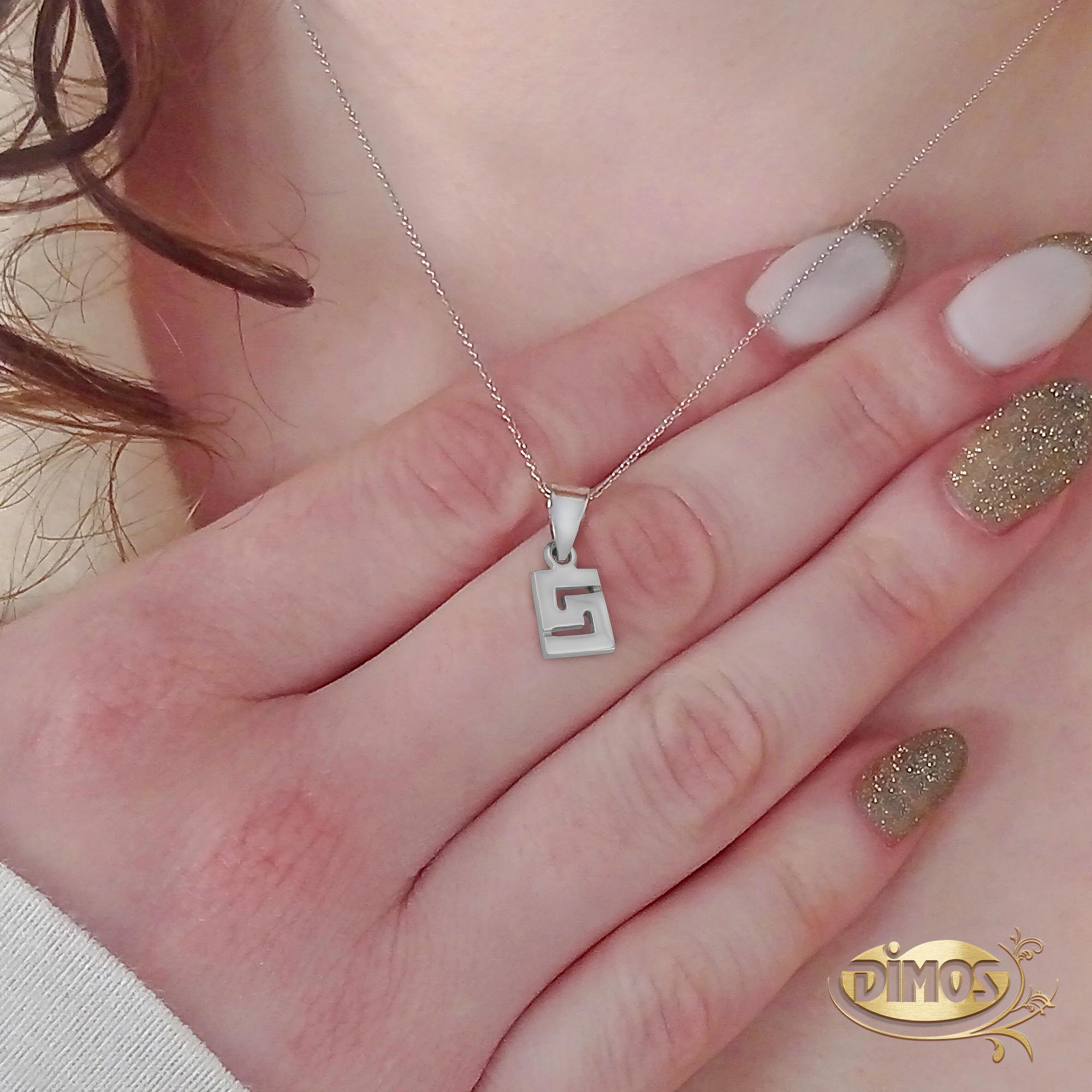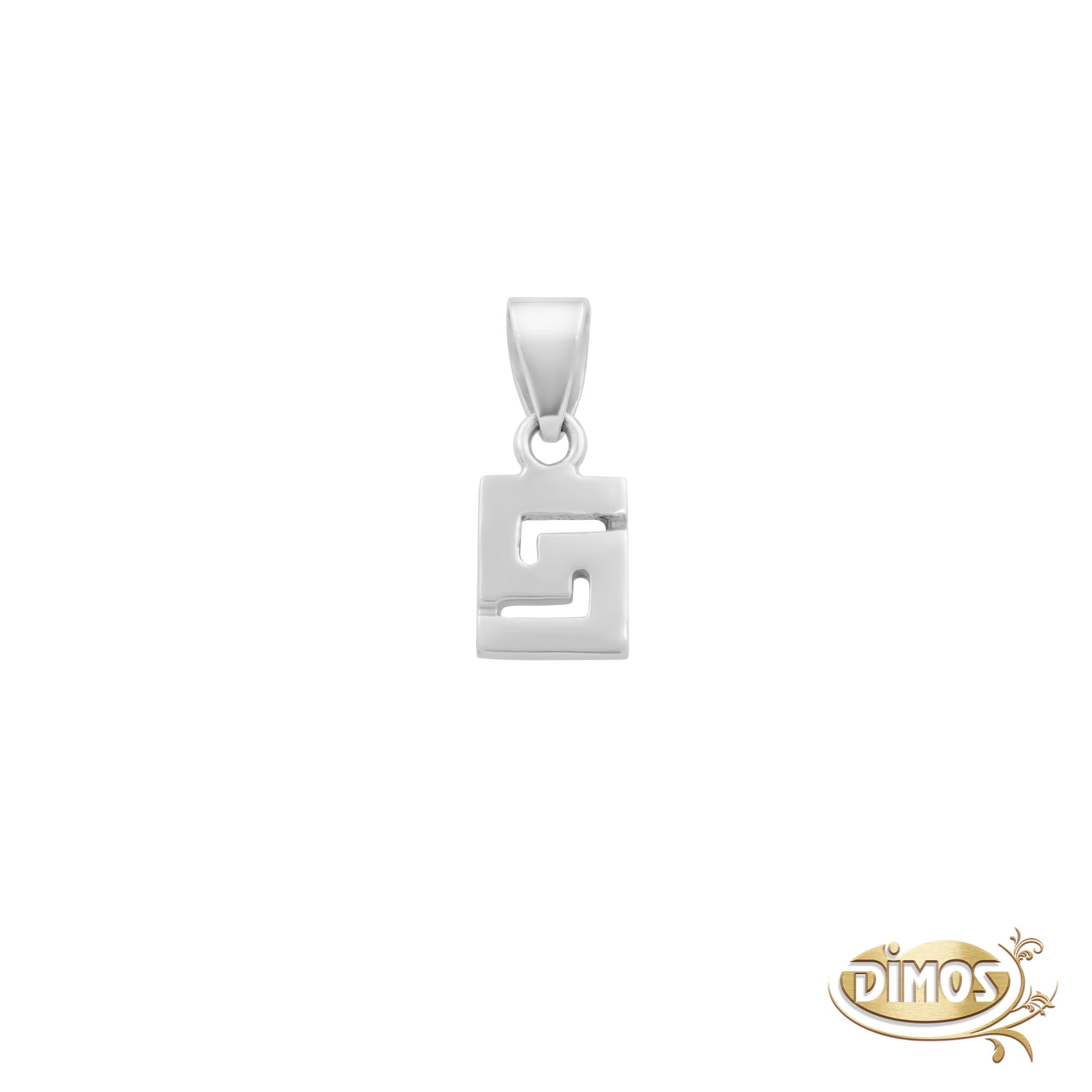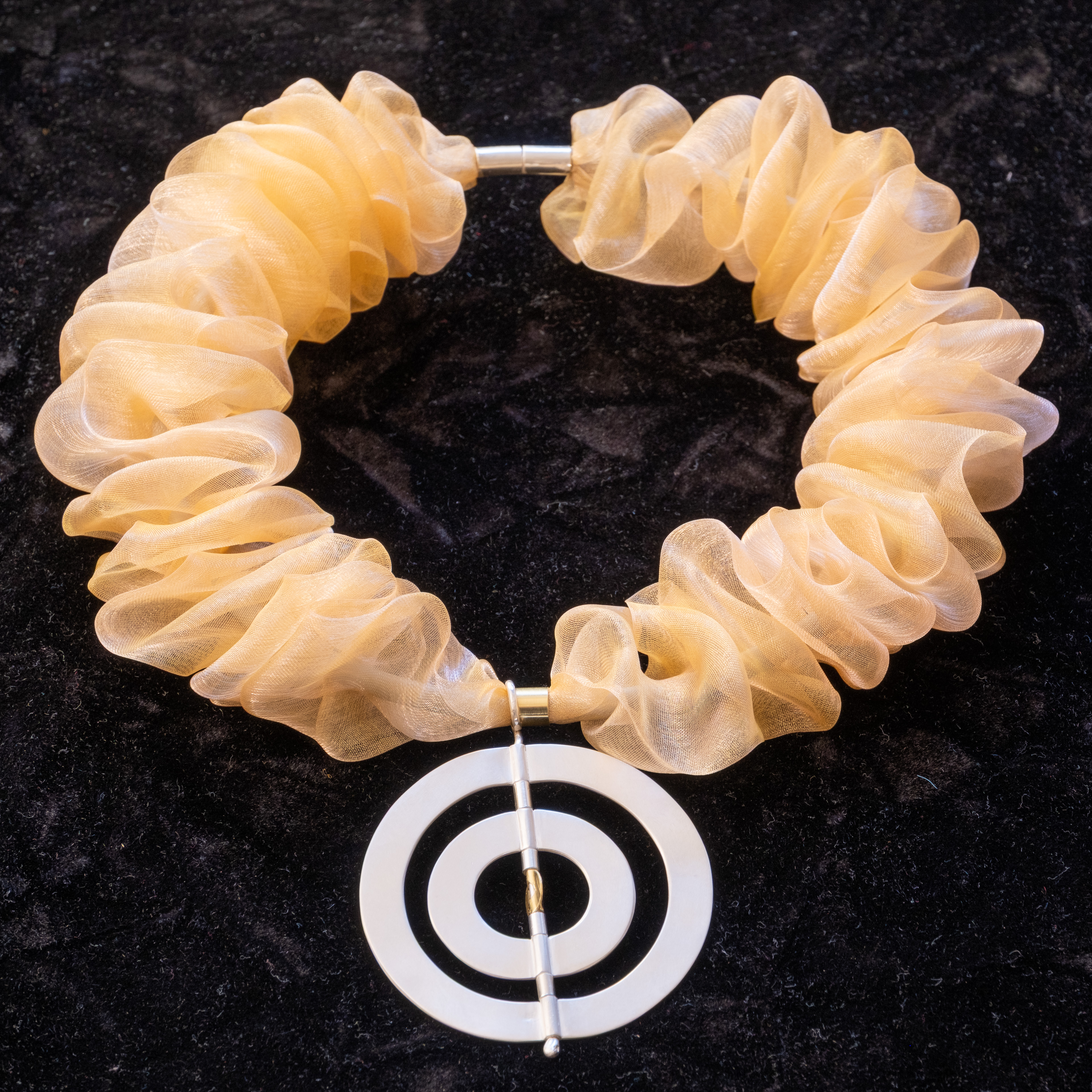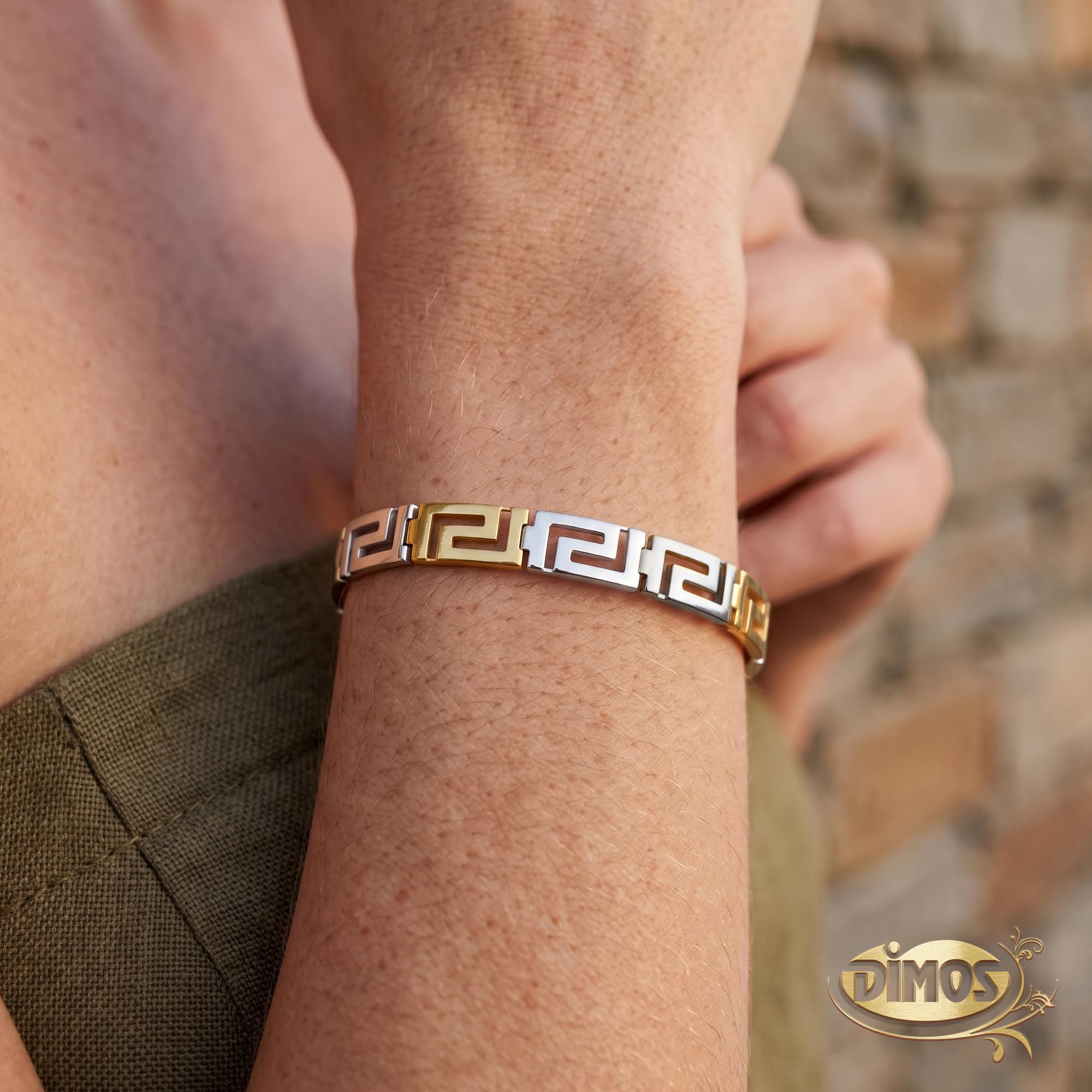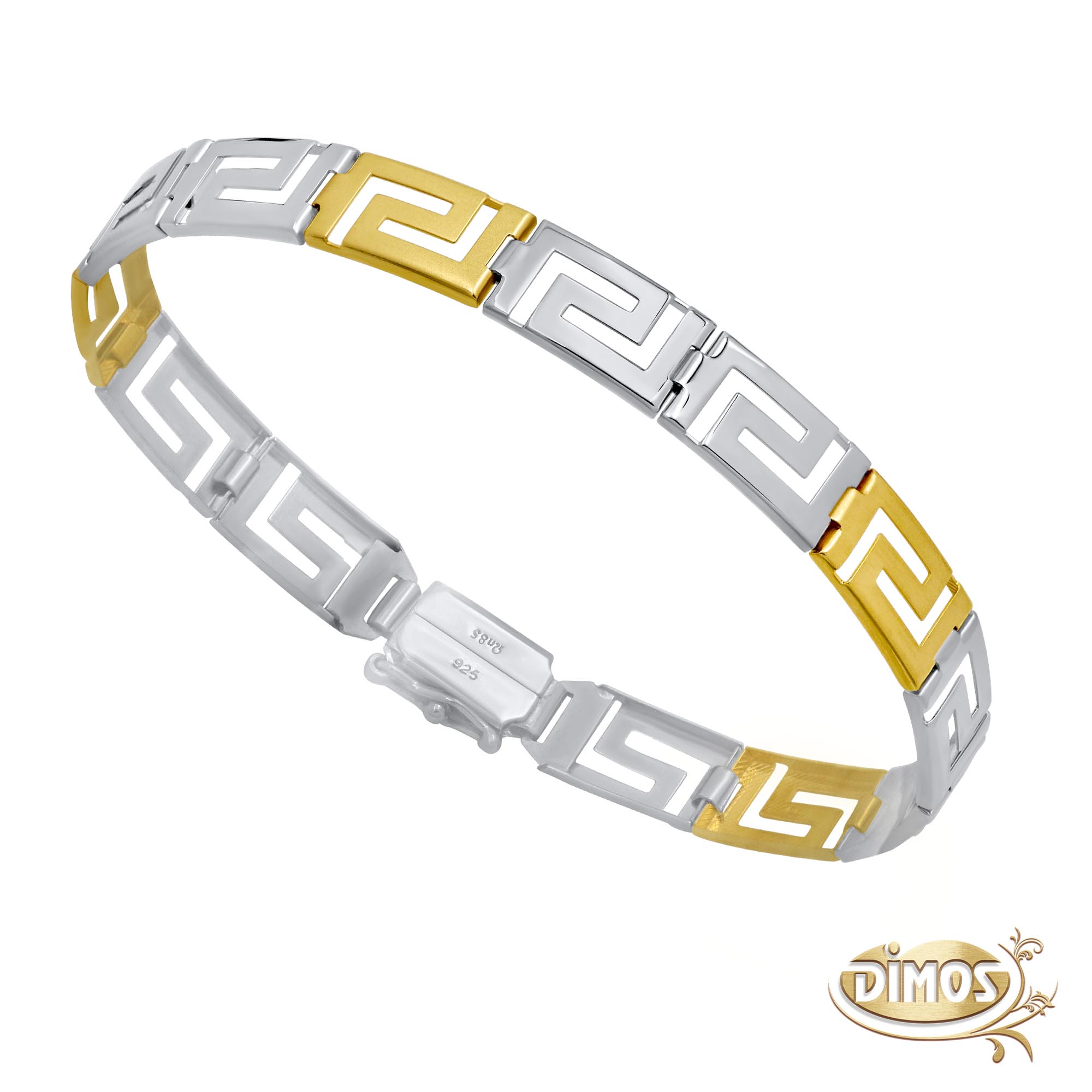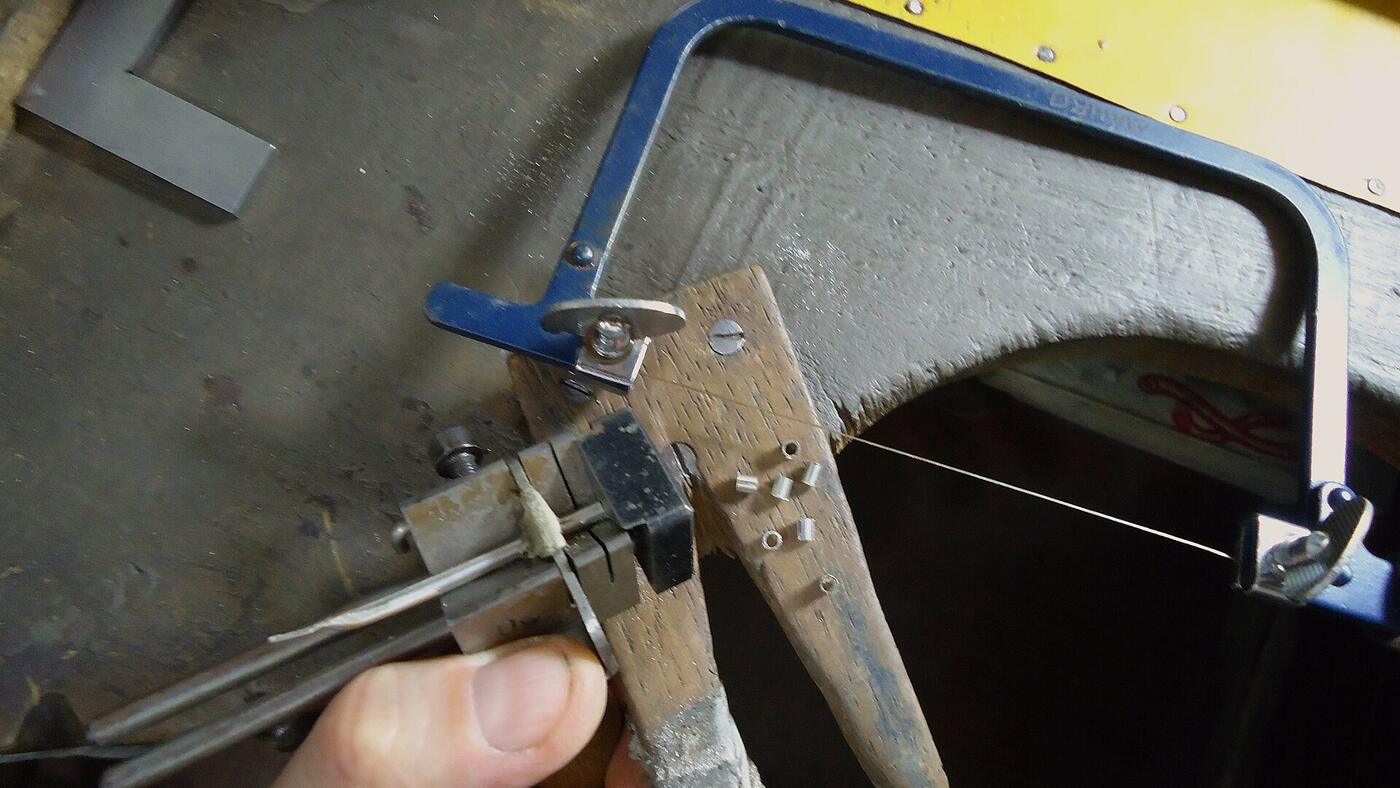
Piercing is cutting a pattern out of sheet metal with a jeweller's saw, so that the design appears as openwork: lace, letters, silhouettes, or simply the parts of a piece before they are shaped. The blade is a fine toothed wire held under tension in a frame, and the thinnest blades are hardly thicker than a hair and break often. It is the first thing an apprentice learns and one of the last things they master.
How it is done
The design is drawn or glued onto the metal. For every enclosed shape the goldsmith drills a small hole, threads the blade through it, tightens the frame, and saws along the line with the blade held vertical, cutting on the down stroke. At each corner the blade is turned on the spot while the saw keeps moving. Afterwards every edge is refined with needle files, and the inside edges are bevelled or left crisp depending on the design. A complex piece can have hundreds of separate openings and take days.
What it is used for
Lace-like pendants and earrings, monograms and lettering, silhouettes and figures, the pierced galleries under a stone that let light in from below, the decorated sides of rings and the undersides of settings. Piercing is also how a goldsmith cuts out the parts of almost any fabricated piece, from a bezel to a clasp, so it sits behind work where you never see it.
Hand-sawn or laser-cut
Openwork can also be cut by laser or water jet, which is quick and exact and suited to series. Hand-sawn work is recognisable by its edges: slightly bevelled, finished by file, with corners that are crisp without being mechanical, and with the tiny variations of a hand. Laser-cut edges are perfectly perpendicular and identical, with a slight heat mark on the back of some metals. In a one-off design made for you, sawing by hand is often simply the most direct way, and it lets the goldsmith adjust the drawing as the metal reveals it.
What it costs
Hours. A monogram pendant is an afternoon; a lace collar is weeks. The metal in an openwork piece is little, because most of it was sawn away, so pierced jewellery is priced almost entirely on the work. It is also one of the techniques where you can see the hand most clearly.
Wear and care
Openwork is light and comfortable, which allows large pieces. Fine bridges of metal are its weak point: they can bend or catch on knitwear, and a bent bridge is a repair. Dirt collects in the openings. Soak the piece in warm water with a little mild soap and use a soft brush; do not force a cloth through the openings.
See pierced jewellery, or describe your piece.