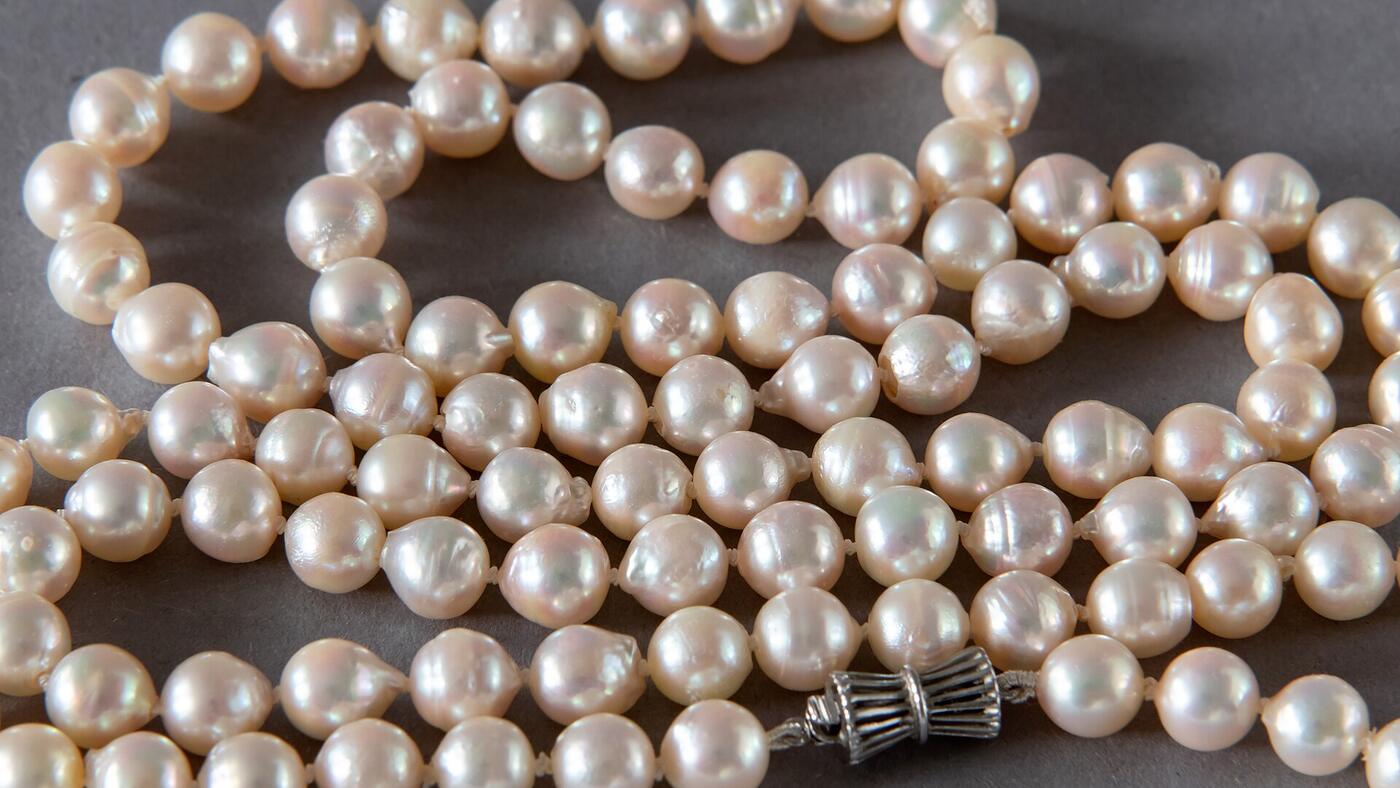
Stringing pearls looks simple and is a craft in its own right. A well-strung necklace drapes smoothly, has no gaps, and keeps your pearls safe if the thread ever breaks.
Why there is a knot between every pearl
- Safety. If the thread breaks, you lose at most one pearl, not the whole strand across the floor.
- Protection. The knots keep the pearls from rubbing against each other. Nacre is soft, and pearls that touch wear each other down at the drill hole.
- Drape. Knots give the strand flexibility, so it follows the neck and does not stand stiff.
Small or very inexpensive pearls are sometimes strung without knots. For pearls of any value, knotting is the standard.
The thread
Silk is traditional. It knots beautifully and drapes well, but it stretches, absorbs skin oils and weakens with time. Synthetic threads are stronger and stretch less. The colour of the thread is matched to the pearls, and its thickness to the drill holes, so that the knots are just too large to slip inside.
How often to restring
A strand that is worn often should be restrung every one to two years, one that is worn occasionally every few years. Signs that it is time: the thread looks grey or frayed near the clasp, there is space between pearls and knots, or the pearls slide on the thread.
When you have pearls restrung, they are usually cleaned as well, the clasp is checked, and you can change the length or the clasp, or have an inherited strand remade into something you will actually wear.
Looking after the thread
Put pearls on after perfume and hairspray, never before. Do not wear them in the shower or the pool: a wet thread stretches and rots, and water can get into the drill holes. Store them flat, because a hanging strand stretches under its own weight.
Read more about pearls, or see pearl jewellery.