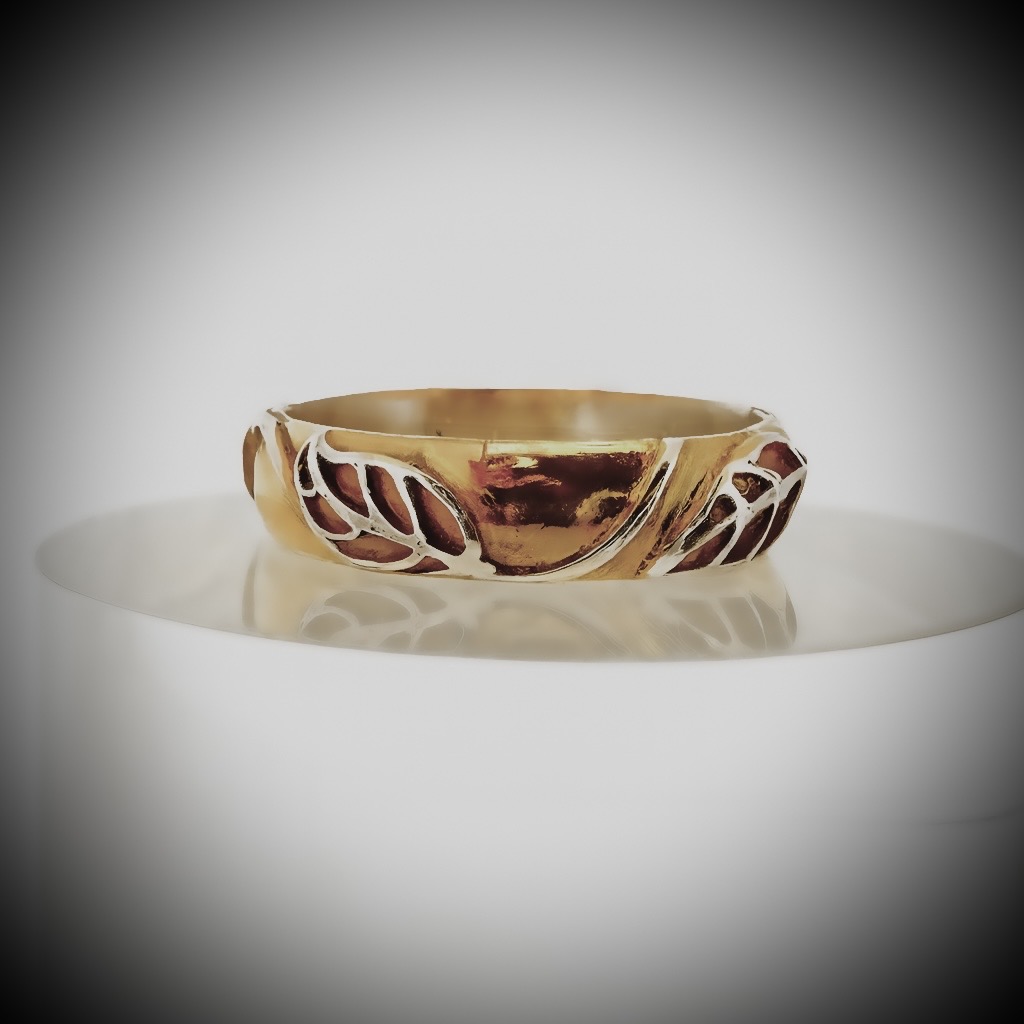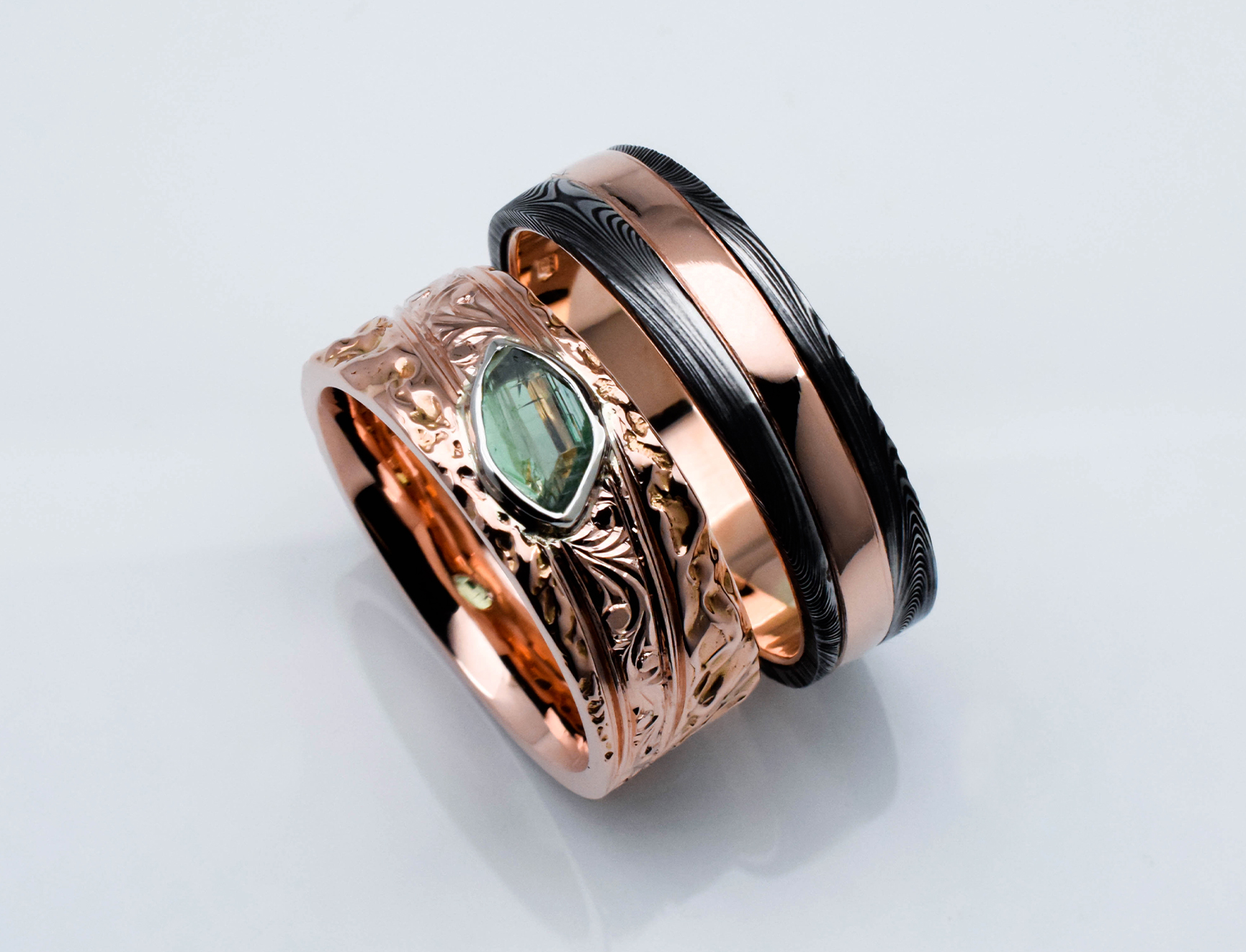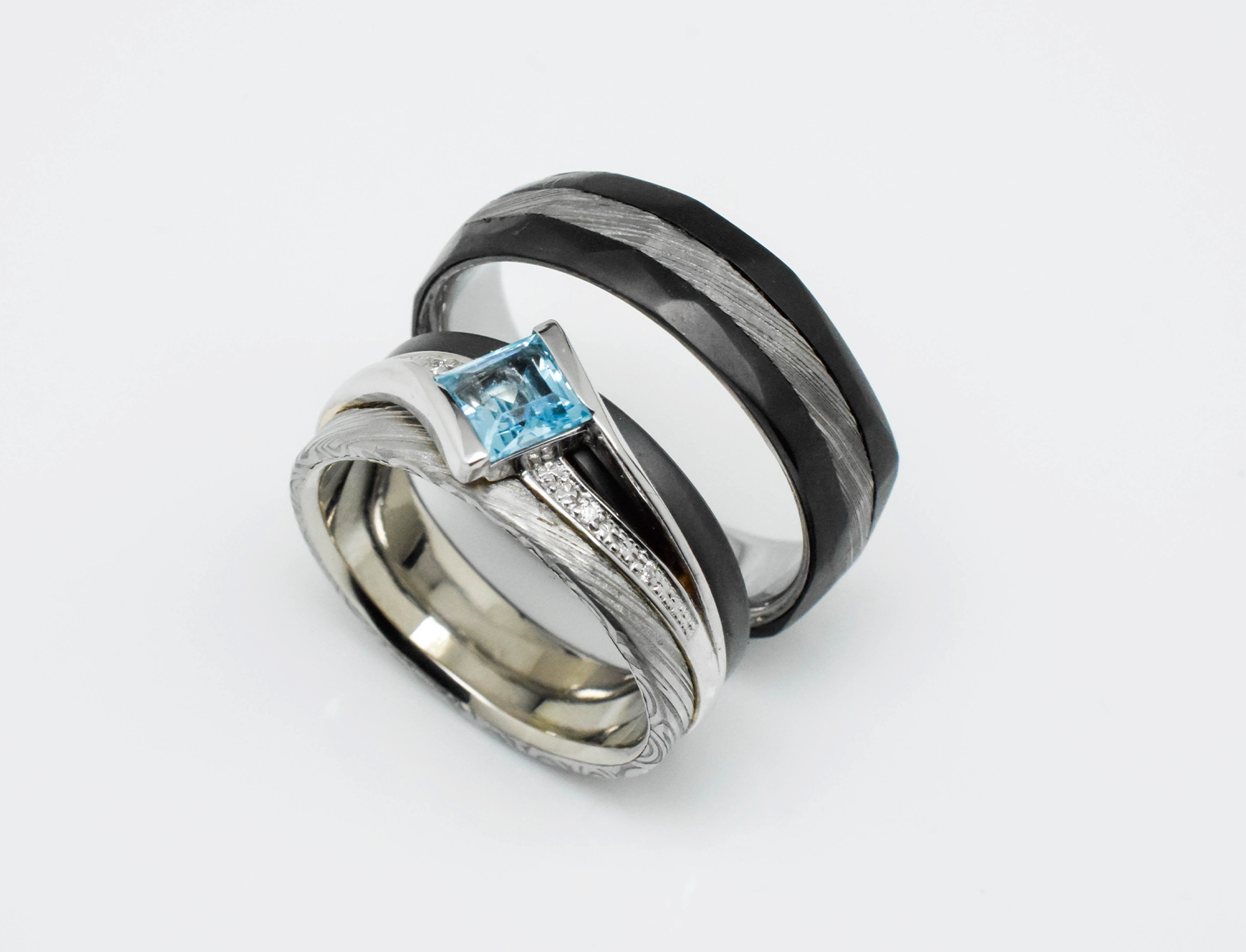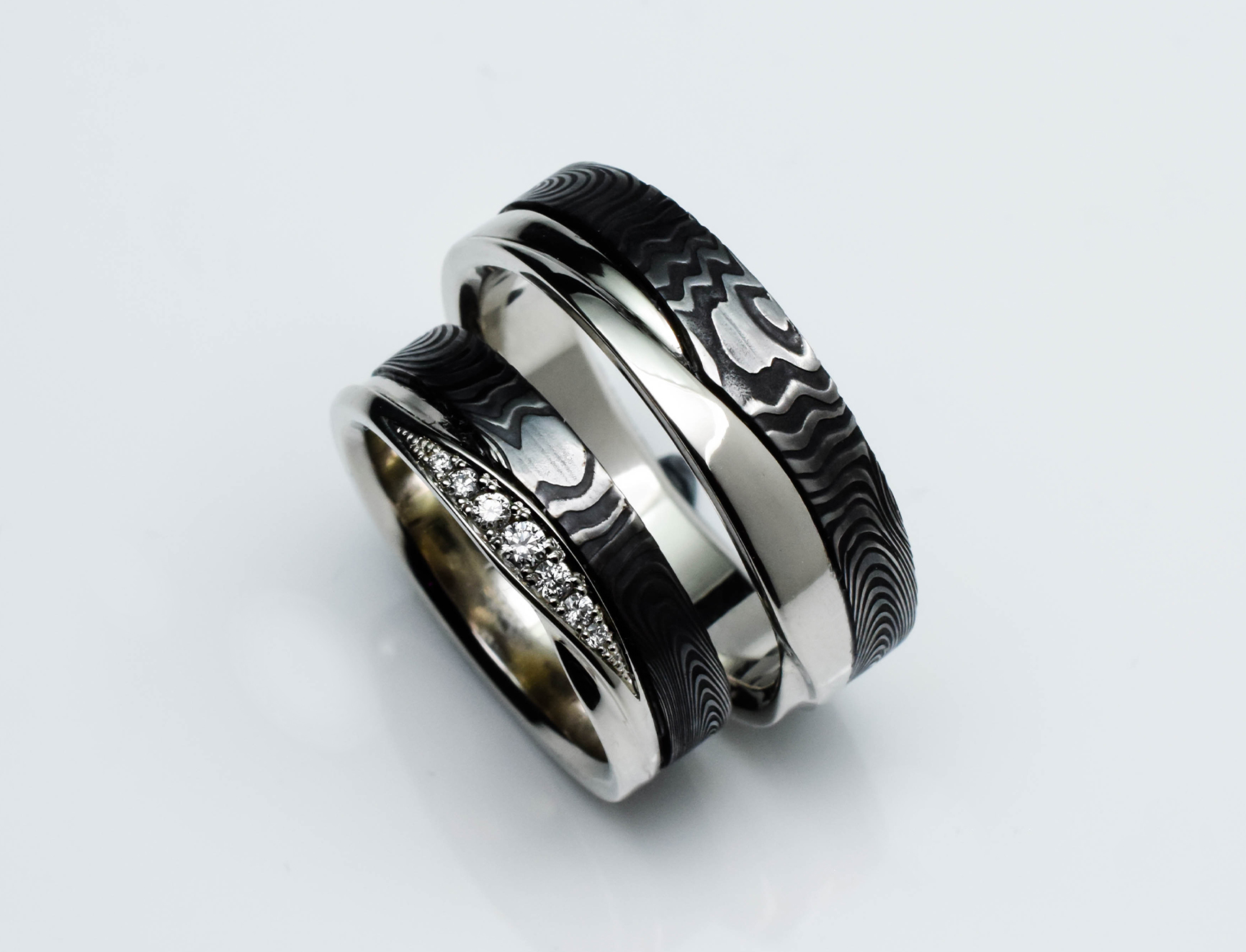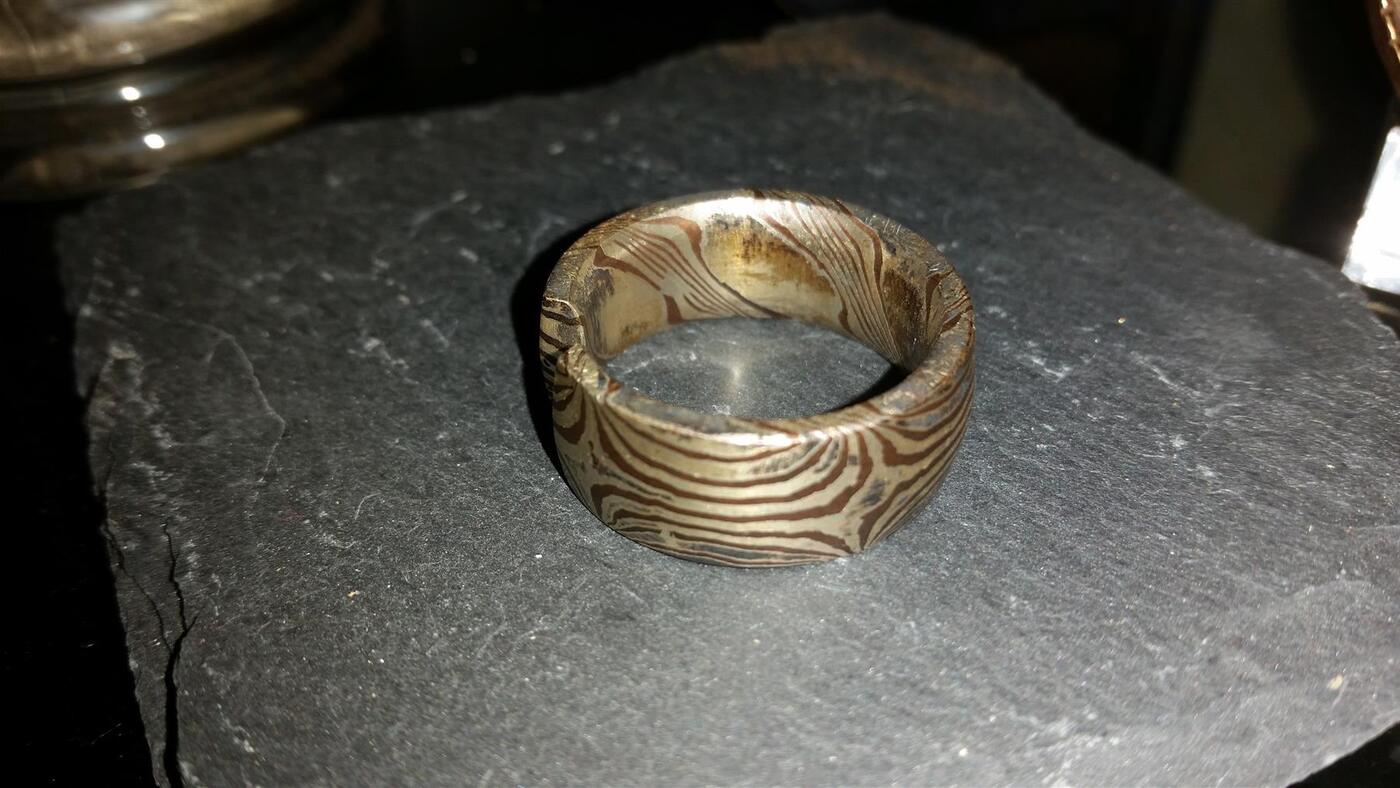
Mokume-gane means "wood-grain metal" in Japanese. Layers of different coloured metals are fused into a single block, and the block is then carved and forged until the layers appear at the surface as flowing lines, like the grain of wood or the pattern in marbled paper.
Where it comes from
The technique was developed in seventeenth-century Japan, where it was used to decorate sword fittings. When swords fell out of use it nearly disappeared. Metalsmiths outside Japan revived it in the second half of the twentieth century, and it is now best known in wedding rings.
How it is made
Sheets of metal, often a dozen or more, are cleaned scrupulously, stacked, clamped and heated until they bond to each other without solder. The goldsmith then cuts, drills or twists the block and forges it flat again. Every cut exposes the layers beneath, and every pass of the hammer stretches them into a pattern. No two pieces come out alike.
Which metals
Typical combinations are yellow, red and white gold, often with palladium or silver. Traditional Japanese work also uses copper alloys such as shakudo, which turns deep purple-black. For a ring worn every day, combinations of precious metals only are the most durable, because copper and silver can discolour and wear faster against the skin.
What to know before you order
- The pattern is in the metal all the way through, so it does not wear off.
- The contrast between the layers can be heightened by etching or patination, and may soften with wear. A goldsmith can refresh it.
- Resizing is limited and should be done by the maker, because the layers must stay intact. See resizing a ring.
- Few goldsmiths make their own mokume-gane. Ask whether the maker produces the block or buys it in.