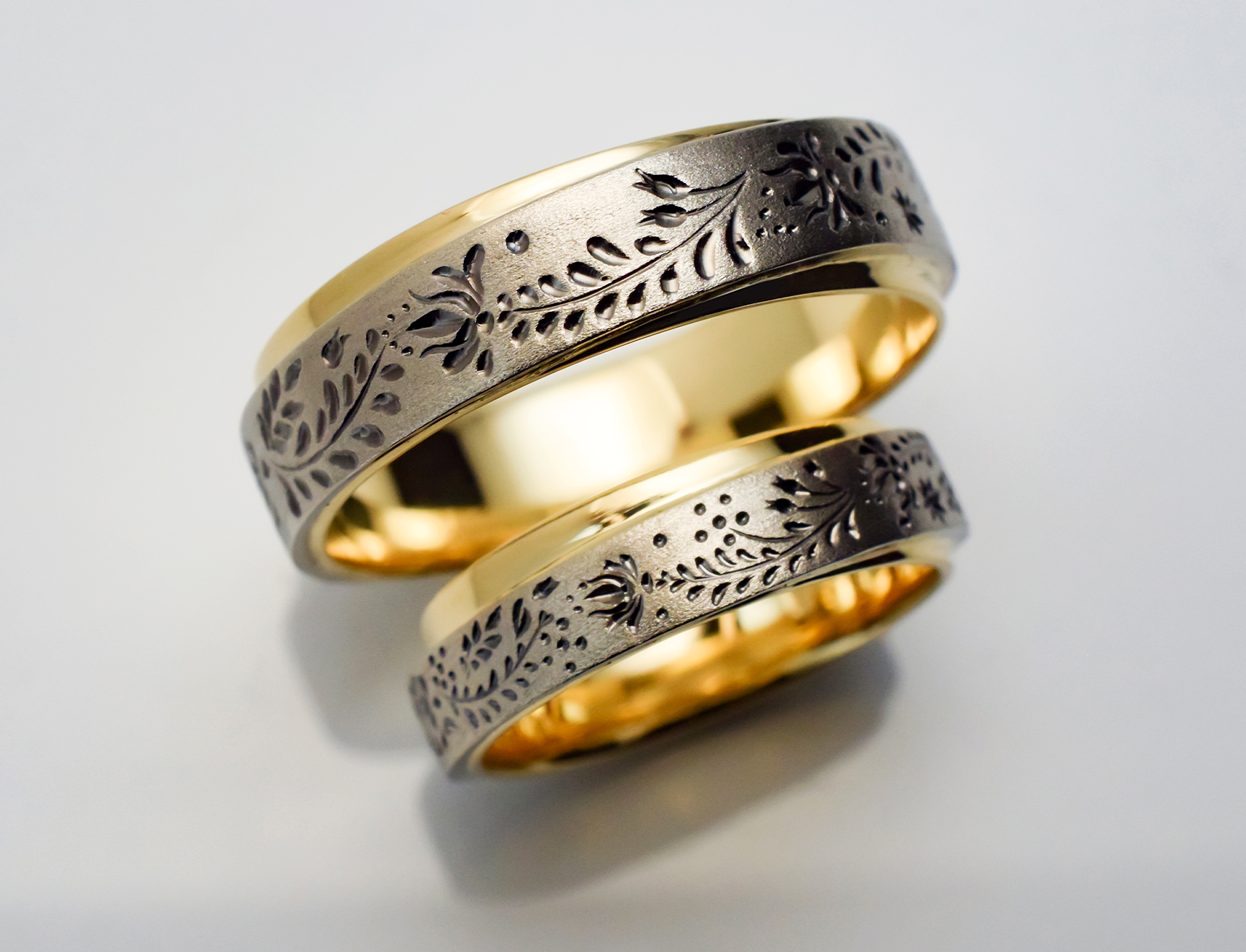
Engraving means cutting lines into metal. It ranges from a date inside a wedding ring to a coat of arms on a signet ring or a whole surface covered in ornament.
Three ways of engraving
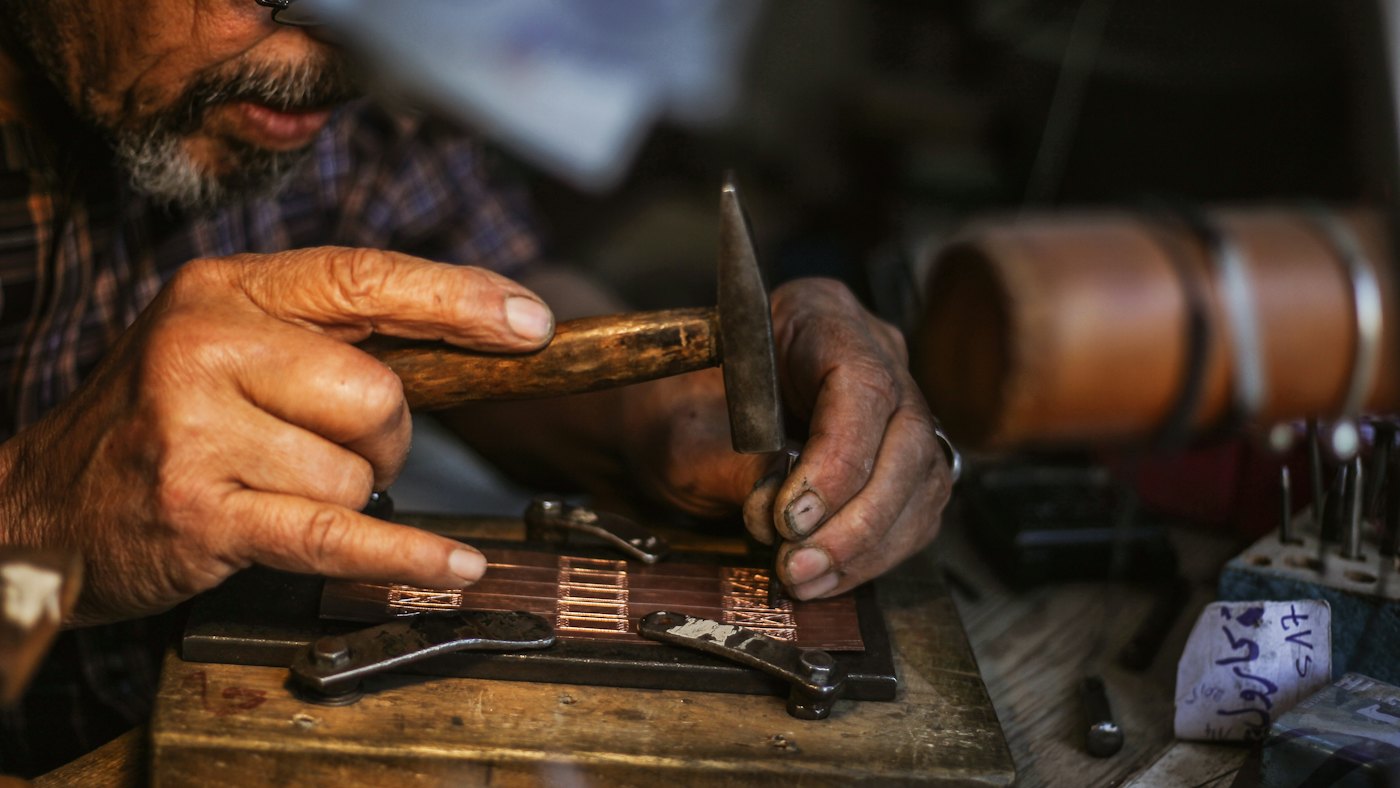
Hand engraving. The engraver pushes a sharpened steel tool, the graver, through the metal and removes a fine curl. The cut is V-shaped, bright and deep, and its width swells and tapers as the hand moves. It is a craft of its own that takes years to learn. Some goldsmiths engrave themselves; many work with a specialist engraver.
Machine engraving. A diamond point scratches the line. The result is even, shallow and a little dull. It is quick and inexpensive, and fine for a simple text inside a ring.
Laser engraving. A laser burns the design into the surface. It can reproduce anything, including handwriting, a fingerprint or a sound wave, and reaches places a tool cannot. The line is shallow and matt.
Inside a ring
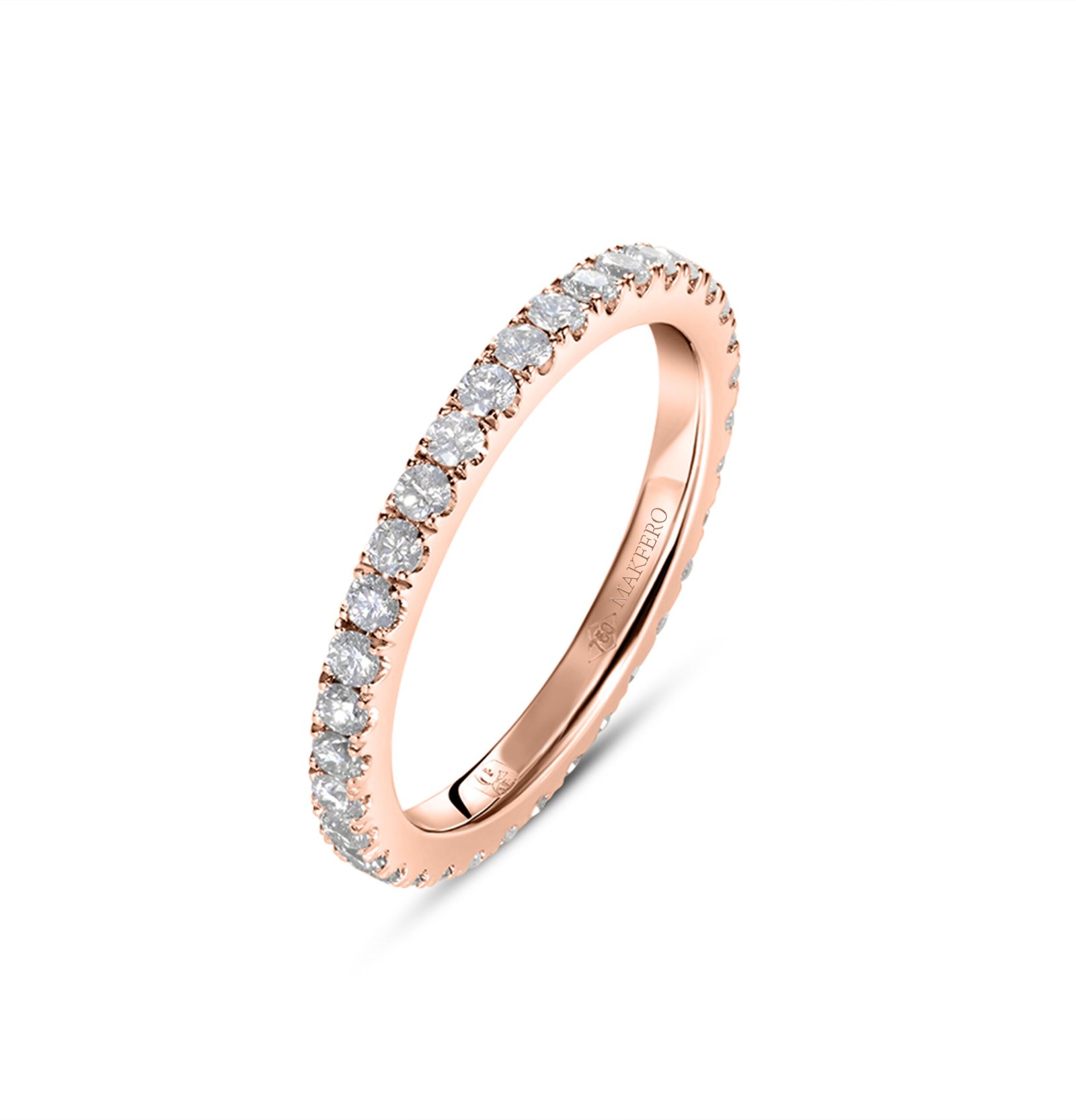
Usual choices are names, a date, initials, coordinates or a few words. Space is limited, more so in narrow and small rings: count on roughly twenty to thirty characters. An engraving on the inside wears slowly through contact with the skin. A deep hand-cut engraving lasts longest.
Signet rings
A seal engraving is cut deep and in mirror image, so that it prints correctly in wax. If the ring is only meant to be looked at, the design can be cut the right way round. Decide this beforehand. See signet rings.
Before you order
- Supply text exactly as it should appear, including capitals and punctuation.
- For a crest or drawing, a clear image is enough. The engraver redraws it to fit and shows you first.
- Engrave after the ring has been sized. Resizing later can damage an engraving, see resizing a ring.
See engraved jewellery.