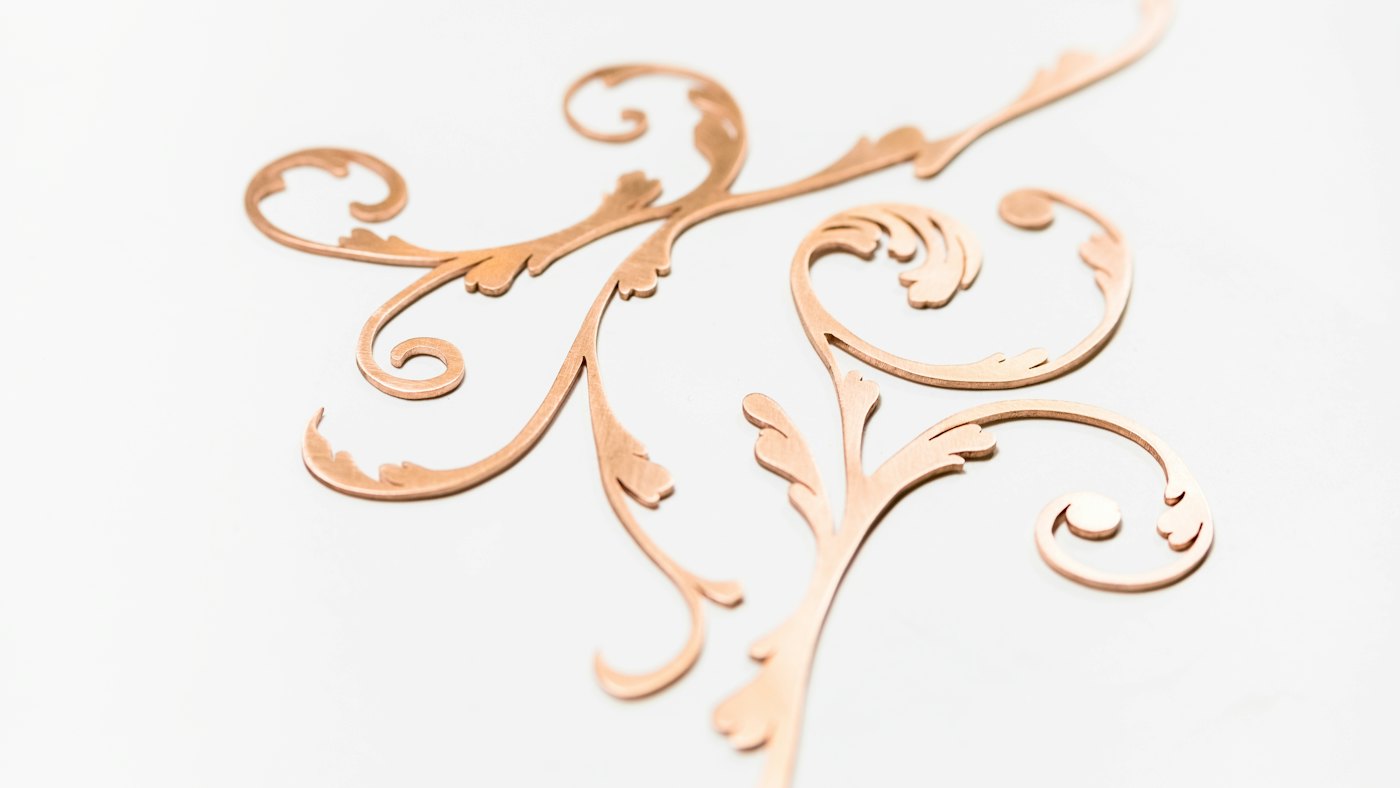
Filigree is ornament made from fine metal wire. The wire is usually twisted from two strands and then flattened, which gives it a beaded edge that catches the light. It is curled into scrolls, spirals and tendrils and soldered together, either onto a metal ground or as openwork with nothing behind it, so that the piece is mostly air. The name comes from the Latin for thread and grain.
Where it comes from
Filigree has been made for thousands of years, around the Mediterranean, in the Middle East and in Asia; the Etruscans and the Byzantine goldsmiths made it in gold, the medieval Islamic world in silver. Living traditions exist in Portugal, where the filigree hearts of Viana do Castelo are national jewellery; on Malta and Sardinia; in Norway, where it belongs to the silver of traditional costume; in India and Yemen; and in the Netherlands, where the silver buttons and clasps of Zeeland costume are a well-known example, still made in Schoonhoven.
What makes it difficult
Every scroll is bent by hand with fine pliers, fitted into its frame and held only by its own tension until it is soldered. The solder has to flow into dozens of joints at once without flooding the fine wire or melting it, which is a matter of seconds and a steady hand on the torch. A piece can consist of hundreds of separate elements, and a single one out of place shows. It is slow work, and the price of hand-made filigree is almost entirely hours.
Hand-made or cast
Because it is slow, filigree is widely imitated by casting: a mould is taken from a hand-made piece and copies are cast in one go. Cast "filigree" is heavier, has rounded, slightly blurred wires with no beaded edge, shows the same pattern repeated exactly, and often has a faint texture on the back. Hand-made filigree is light, crisp, slightly irregular, and the twisted wire shows its beading under a loupe. Both are sold as filigree; only one is the craft.
Wirework
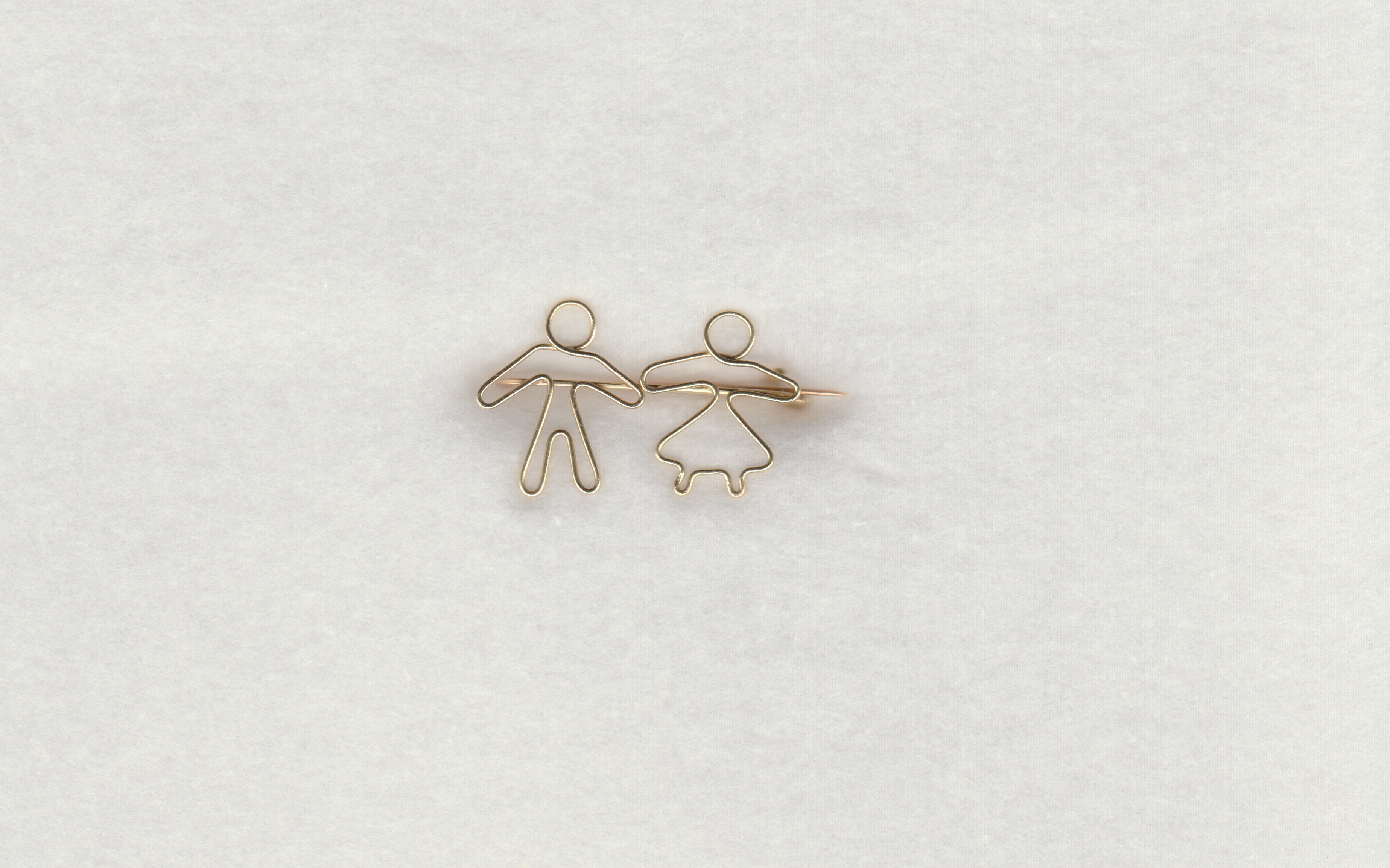
Wirework is the broader family: chains made link by link, woven and knitted wire, wire wrapped around stones, wire built into cages and baskets. It shares with filigree that the wire itself is the design, not a means of construction, and it is where many contemporary goldsmiths take the technique.
Which metals
Silver and high-carat gold, because both are soft enough to twist and bend fine and solder cleanly. Filigree is rarely made in 14 carat gold, which is springy, and never in platinum.
Wearing and care
Openwork filigree is light for its size, which makes large earrings and pendants comfortable. It is also more delicate than solid work: it can catch on clothing and bend if squeezed, and a bent scroll is a repair for a goldsmith. Clean it by soaking in warm water with mild soap and rinsing; a soft brush reaches between the wires. Do not rub it hard with a cloth, and keep silver filigree in a closed box to slow tarnish.
See filigree and wirework by independent goldsmiths, or describe your piece.