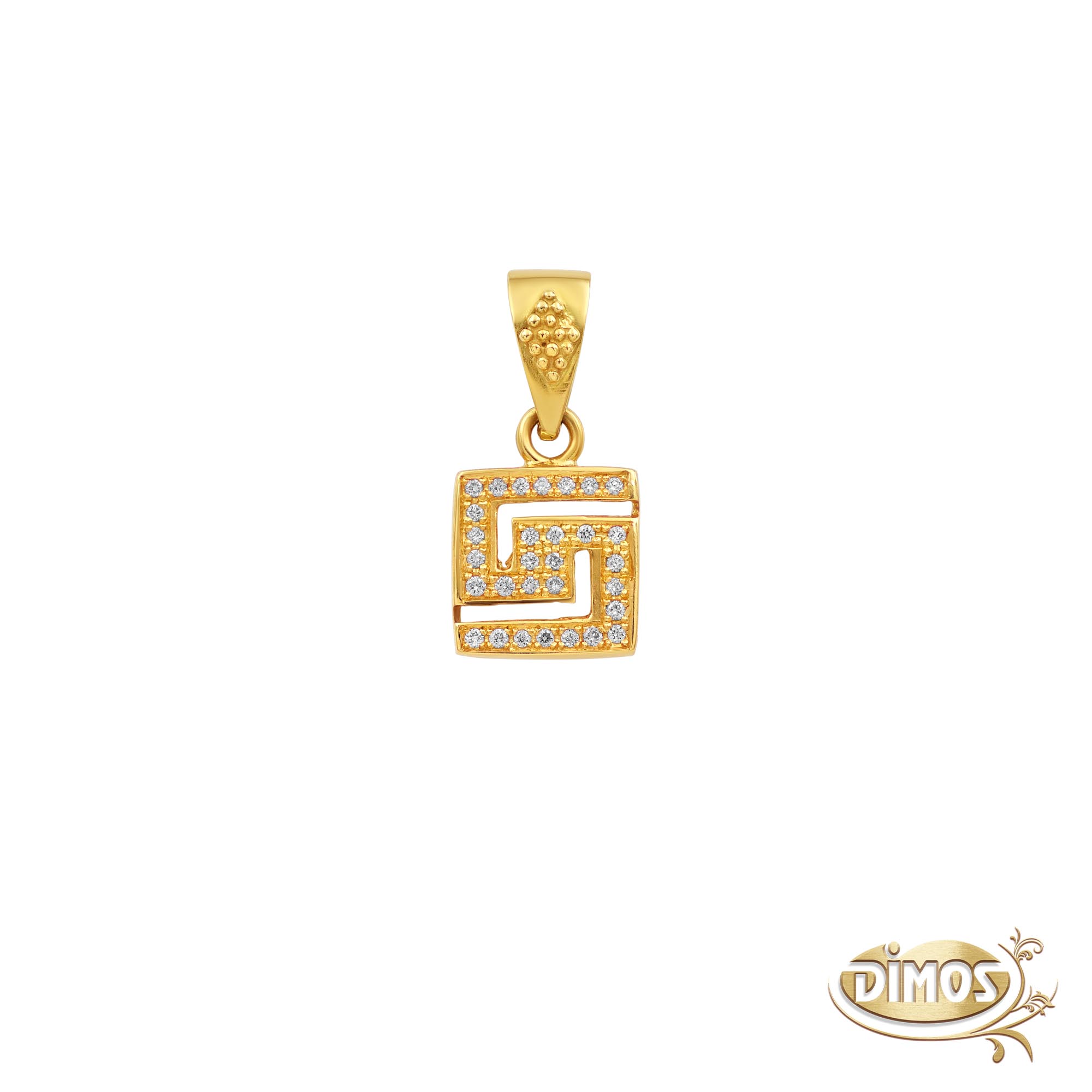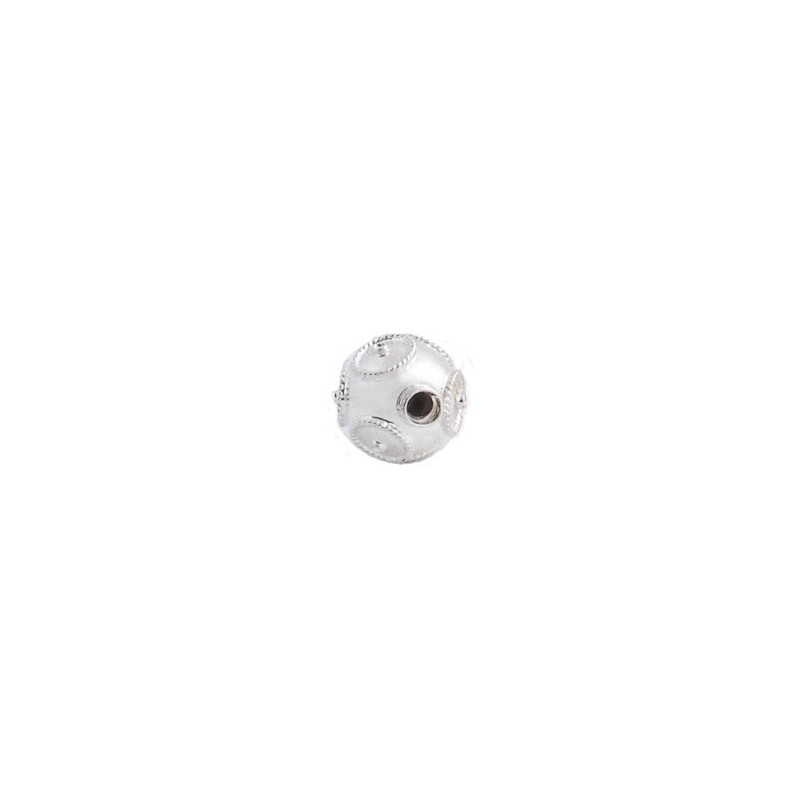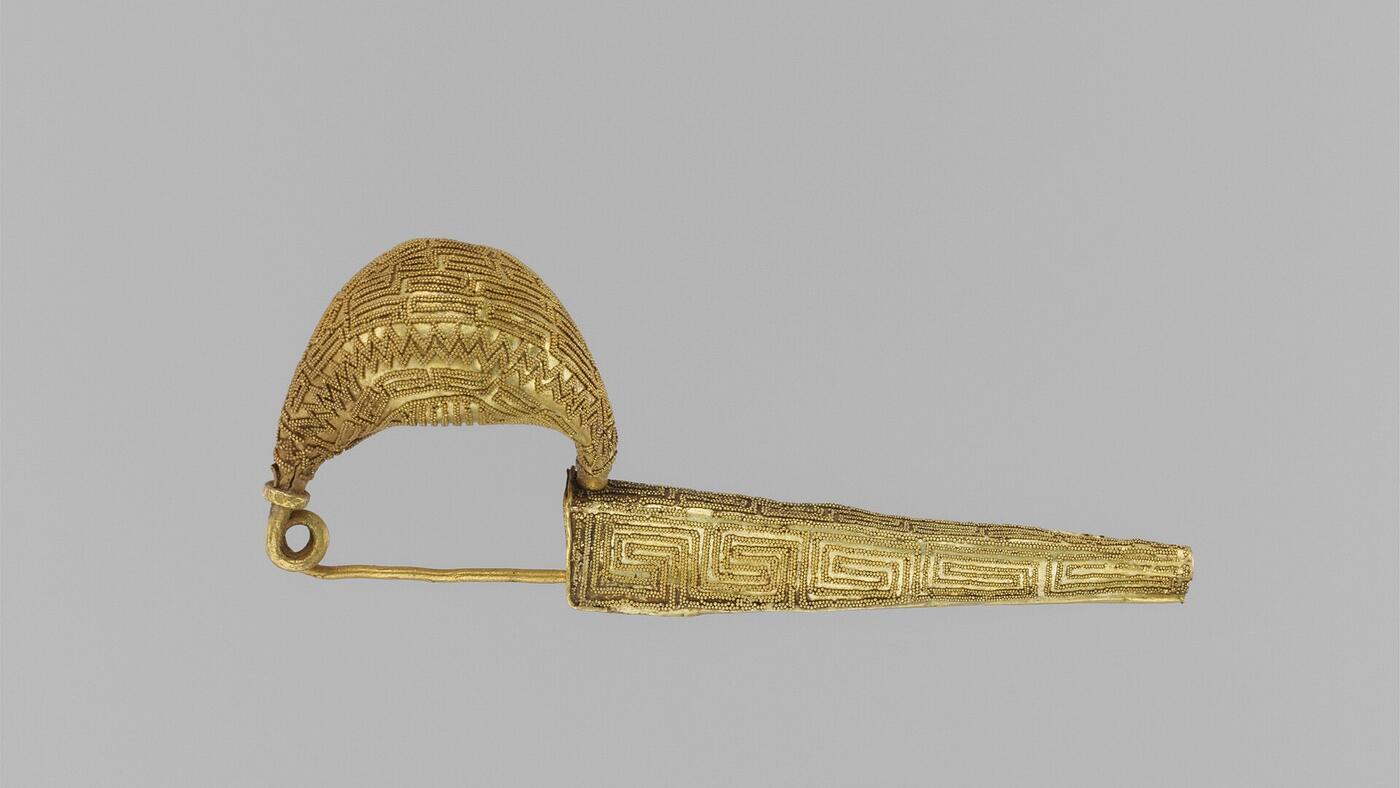
Granulation is decoration with tiny spheres of metal, called granules, arranged in lines, triangles, rosettes or whole fields on a metal surface and fused in place. Done well, each granule sits on the surface like a drop of dew, touching it at a single point, with no solder to be seen and no flooding between the spheres. It is one of the oldest goldsmith's techniques and one of the hardest.
An ancient technique, lost and found
Granulation was practised more than four thousand years ago in Mesopotamia and Egypt. The Etruscans in Italy, between the eighth and third centuries BC, brought it to a level of fineness that still astonishes, with granules smaller than grains of sand laid in patterns that need a loupe to read. How they did it was forgotten after antiquity. Nineteenth-century goldsmiths, Castellani in Rome among them, tried to copy Etruscan pieces and could not, because ordinary solder floods such small work. The method that works, colloidal hard soldering, was worked out in the twentieth century, published in the 1930s, and taken up again by studio goldsmiths after the war; a handful of makers in every country now practise it.
How it is done
The granules are made by melting tiny snippets of gold on a charcoal block, which pull themselves into spheres by surface tension, and sorted by size through sieves. They are placed one by one with a fine brush, held by an organic glue mixed with a copper compound. When the piece is heated, the copper lowers the melting point of the gold exactly where granule and surface touch, and they fuse there, at a point, while the rest of the gold stays solid. A few degrees too hot and everything melts together into a lump; too cool and nothing holds. The goldsmith judges it by colour in a dim room, and a large panel may be fused in a single pass that cannot be repeated.
Which metals
Granulation works best in high-carat gold, 18 or 22 carat, because the fusion depends on the gold's own behaviour; 14 carat is possible but harder. Fine silver takes it well too. That is why granulated jewellery so often has the deep yellow of rich gold, see gold: carat and alloys.
What to look for
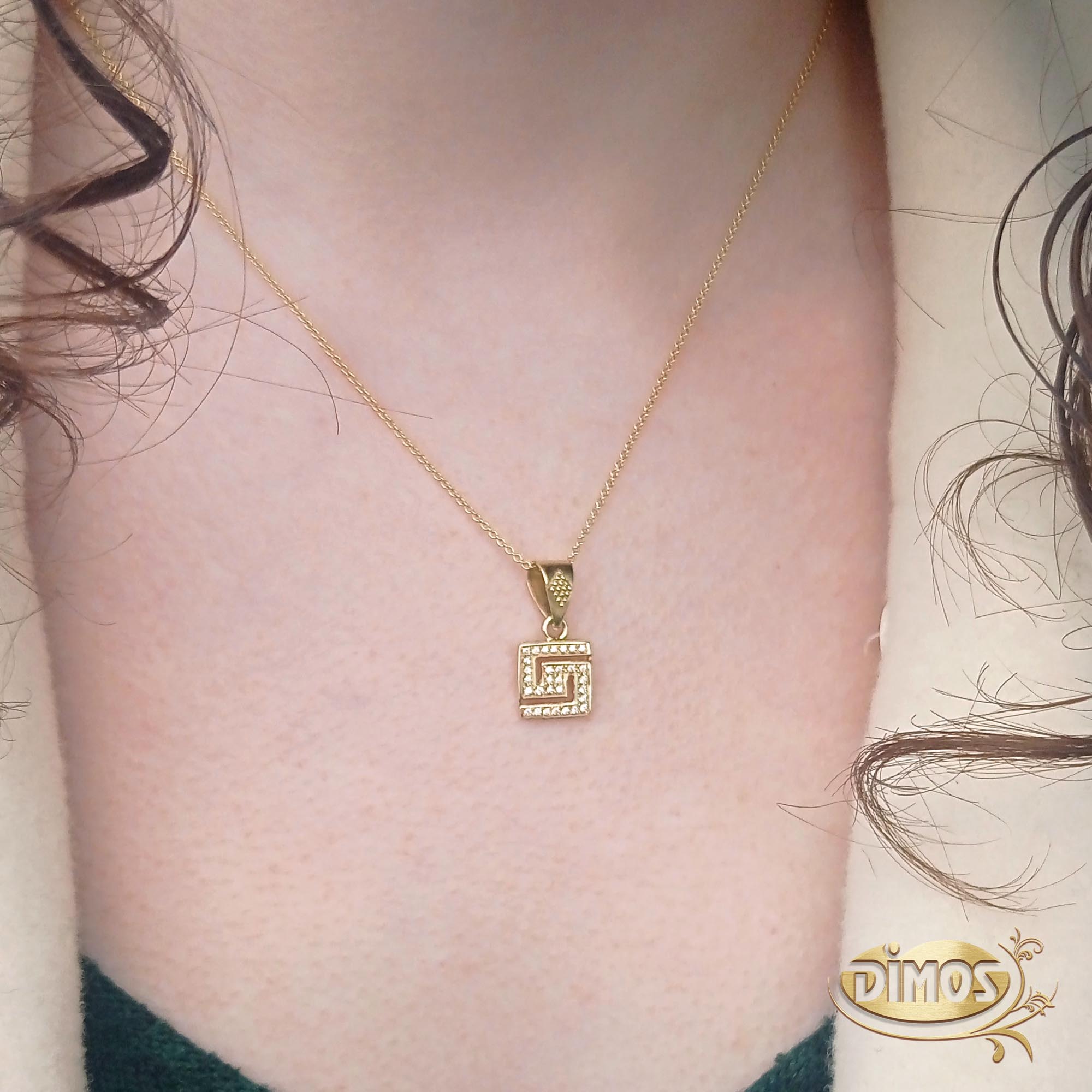
Even size, even spacing, clean lines and geometry, and granules that are clearly round and not half sunk into the surface or joined to their neighbours by a bridge of metal. Under a loupe, good granulation shows each sphere standing on a single point of contact. Few goldsmiths offer it, and those who do have spent years learning it; ask how it was made, and expect to hear about temperature.
What it costs
Hours, patience and high-carat gold. A granulated pendant carries days of work in a few grams of metal, and the price reflects that; it is a technique for a piece meant to be looked at closely.
See granulated jewellery, or describe your piece.