In lost-wax casting the goldsmith does not shape the metal directly. The piece is first made in wax, and the wax is then replaced by gold, silver or platinum. The technique is at least five thousand years old, the Benin bronzes and Renaissance statues were made with it, and it is still the way most jewellery in the world is made, in workshops of one and in factories of a thousand.
How it works
- The goldsmith carves, builds or models the piece in wax, or prints it, see CAD and 3D printing.
- The wax model is attached to a wax stem, the sprue, and enclosed in a fine plaster called investment, which is left to set.
- The plaster is heated in a kiln for hours. The wax melts and burns away, which is the "lost" wax, and leaves a hollow in the exact shape of the model.
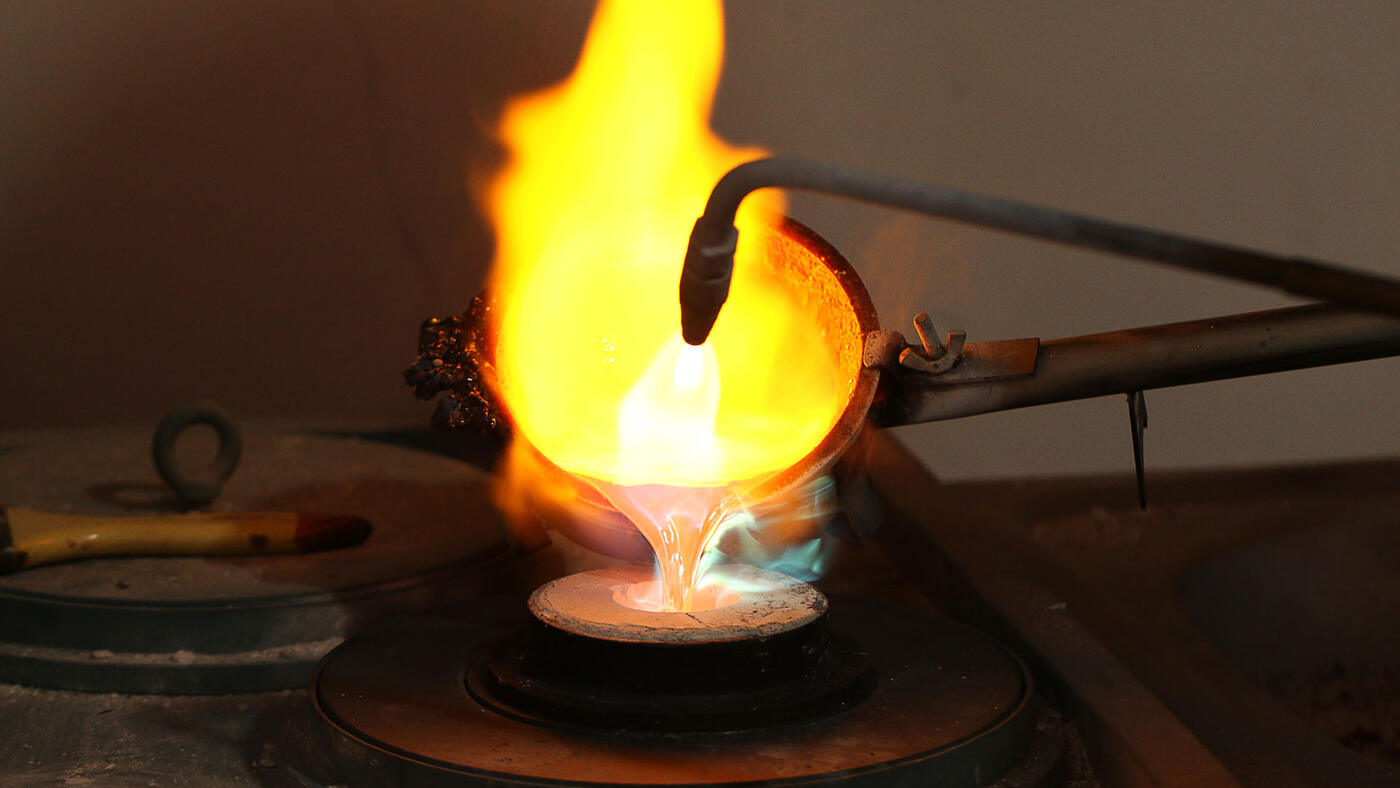
- Molten metal is forced into the hollow, by centrifugal force or vacuum, and freezes in seconds.
- The plaster is broken away, and the rough casting is cut from its sprue, filed, cleaned, set and polished.
The casting is only the halfway point. Much of the work, and of the quality, is in the finishing: a casting comes out of the plaster matt, slightly rough, with the sprue stub to remove, and everything you see on the finished piece is bench work done afterwards.
What it makes possible
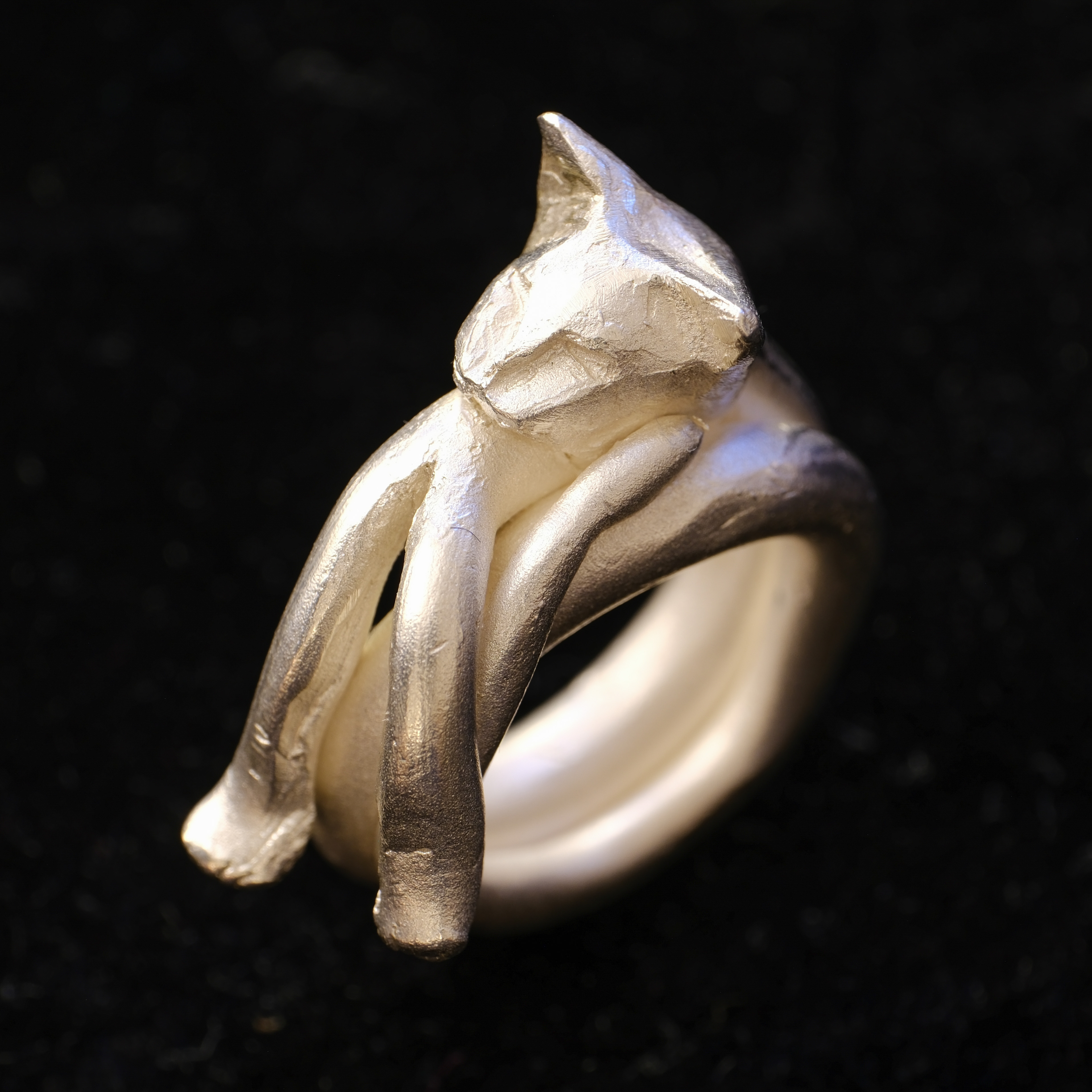
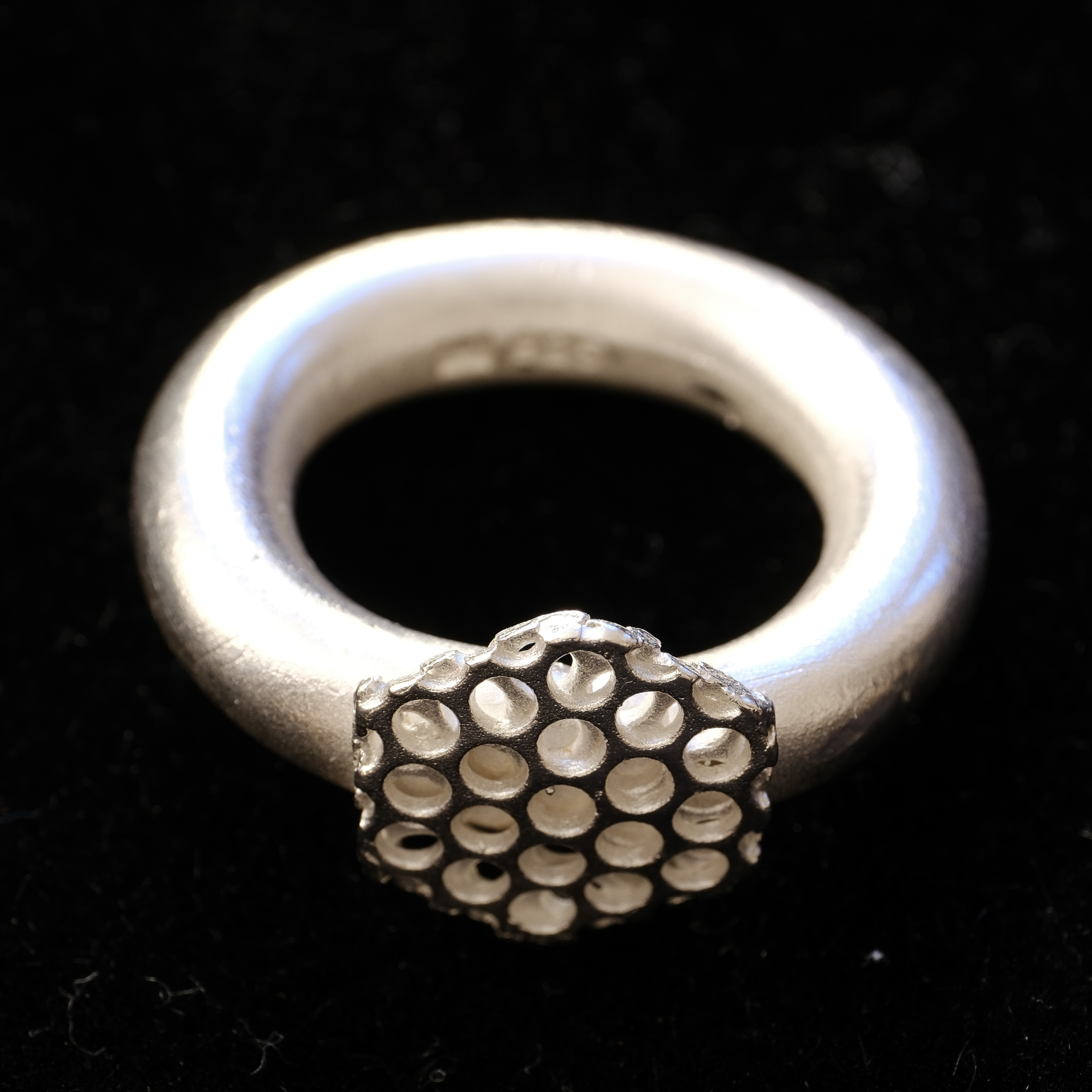
Wax can be carved, built up, melted and textured in ways metal cannot. Organic and sculptural shapes, deep textures, hollow forms, and rings that flow in one piece around a stone are typical of cast work. A fingerprint, a leaf, a piece of bark or a texture from nature can be pressed into wax and cast, which is how many memorial pieces are made; see memorial jewellery.
One of a kind or a series
A wax carved by hand is destroyed in the process, so the piece is unique. If a rubber mould is made from the first casting, new waxes can be injected into it and the design can be cast again, as often as wanted; that is how a design becomes a small series, and how a pair of wedding rings is made to match. Ask a goldsmith which it is if that matters to you: a piece cast from a hand-carved wax exists once, a piece from a mould may exist ten times.
What casting cannot do
Cast metal is slightly less dense than forged metal and can carry tiny pores, which is why thin shanks and claws are often forged and soldered onto a cast head. A good caster minimises porosity with vacuum casting and the right temperatures; a bad casting shows pinholes when polished. Platinum is harder to cast than gold and needs a specialised workshop.
What it costs
For a one-off, the wax carving is the time; the casting itself is quick, and many goldsmiths send their flasks to a casting house rather than pouring in the workshop. For a series, the mould spreads the design cost over every copy, which is why cast jewellery can be affordable and why a cast piece from a mould costs less than the same piece carved once for you.
See cast jewellery by independent goldsmiths, or describe your piece.