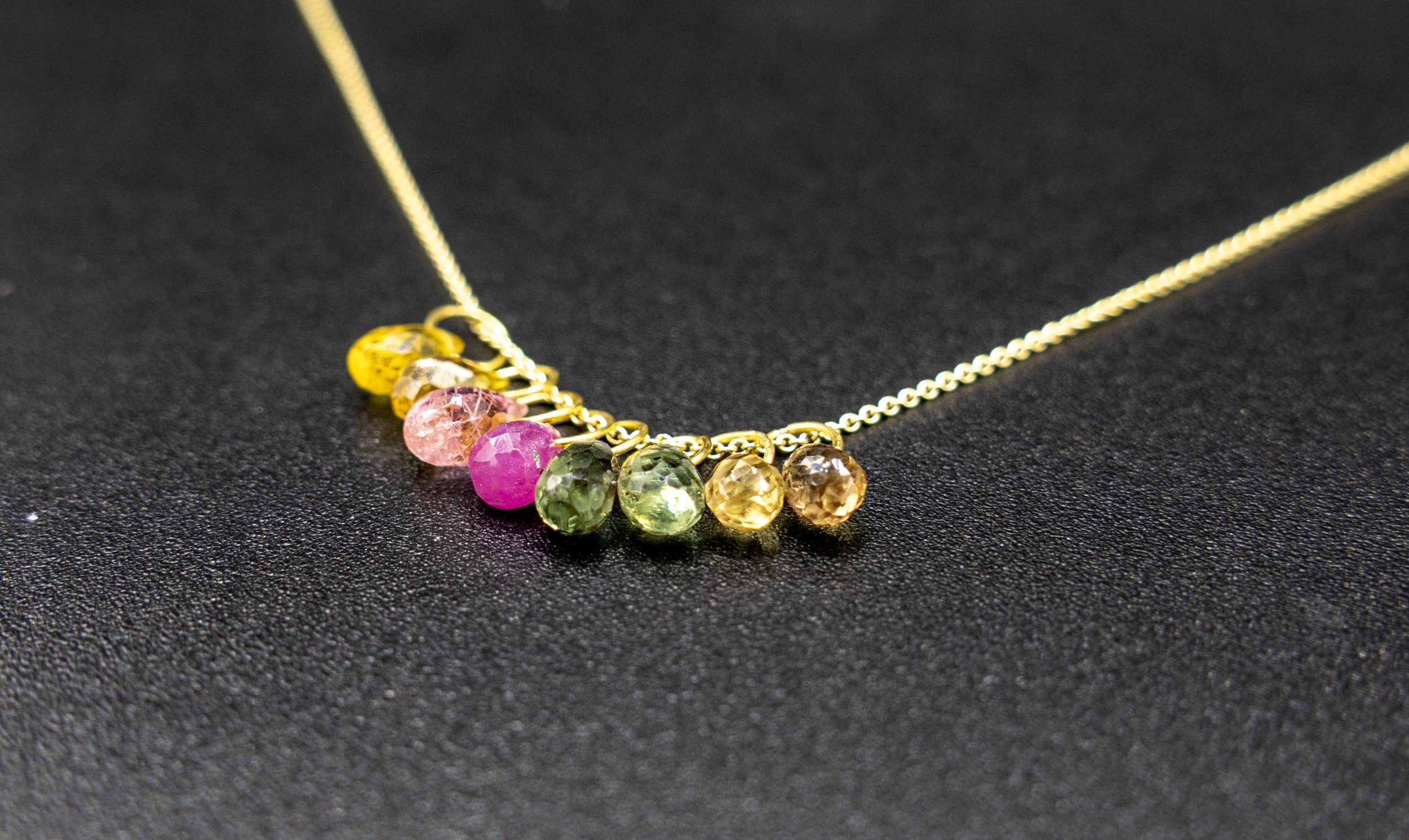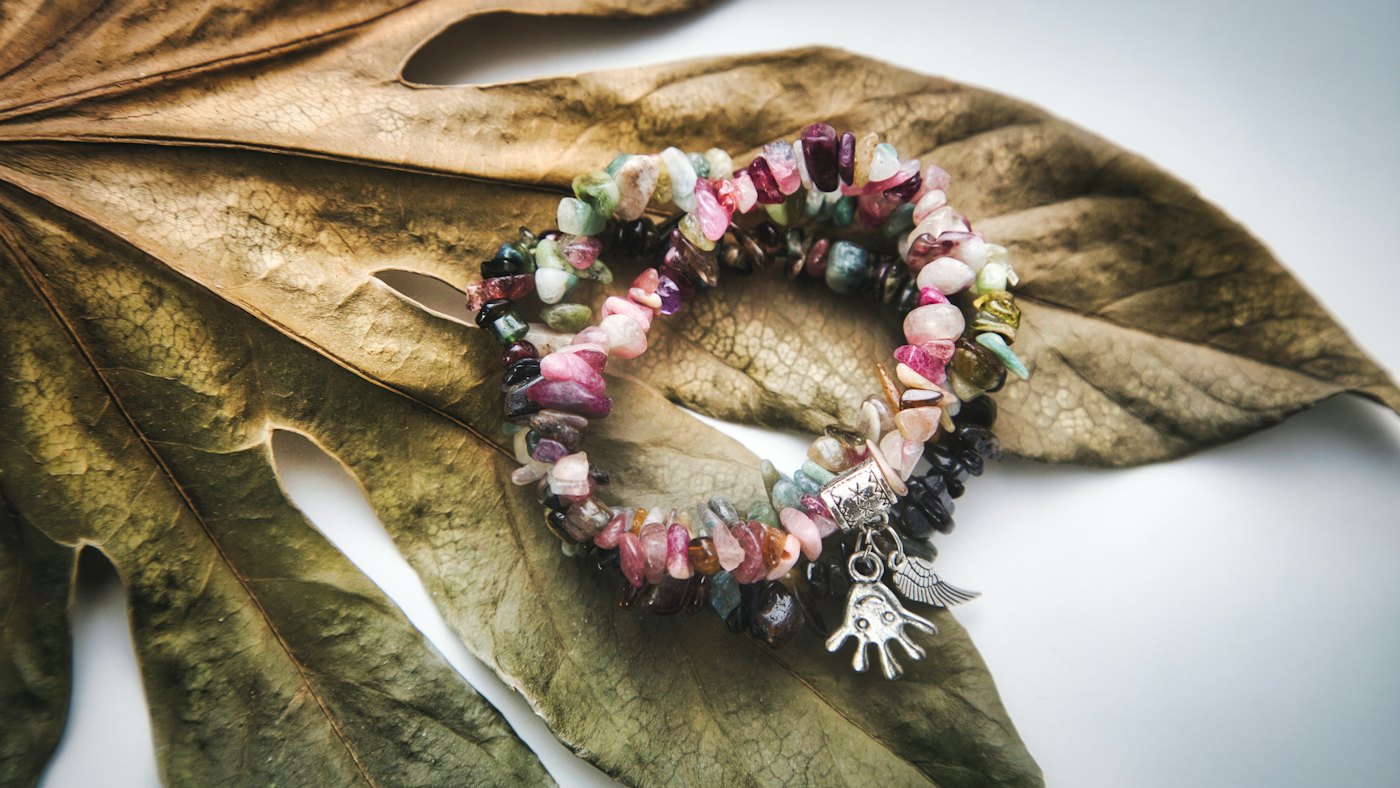
Tourmaline has the widest colour range of any gemstone, and often two colours in one crystal. Goldsmiths love it because no two stones are alike, and because the price runs from a few euros a carat for a green stone to the price of a house for a fine Paraíba, so there is a tourmaline for every design.
The colours and their names
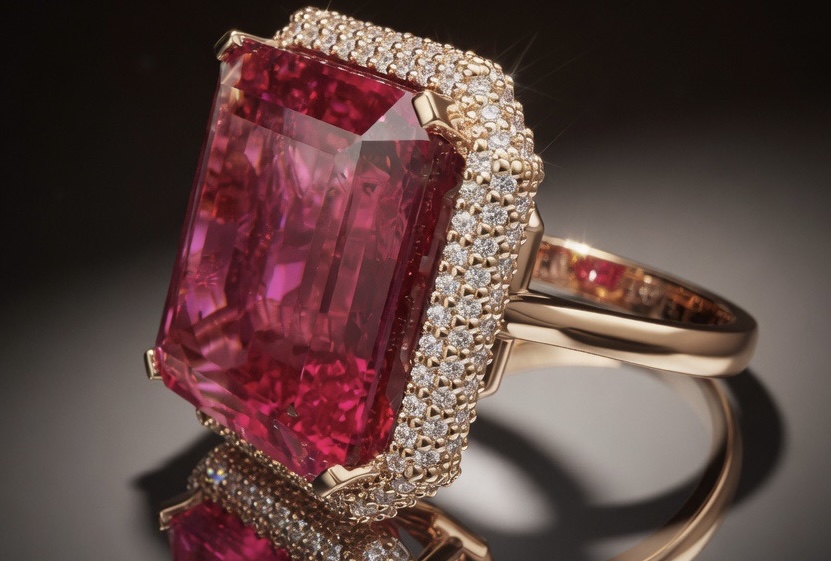
- Rubellite: pink to red. The reds with a purplish cast are valued most; many rubellites carry visible inclusions, which is accepted.
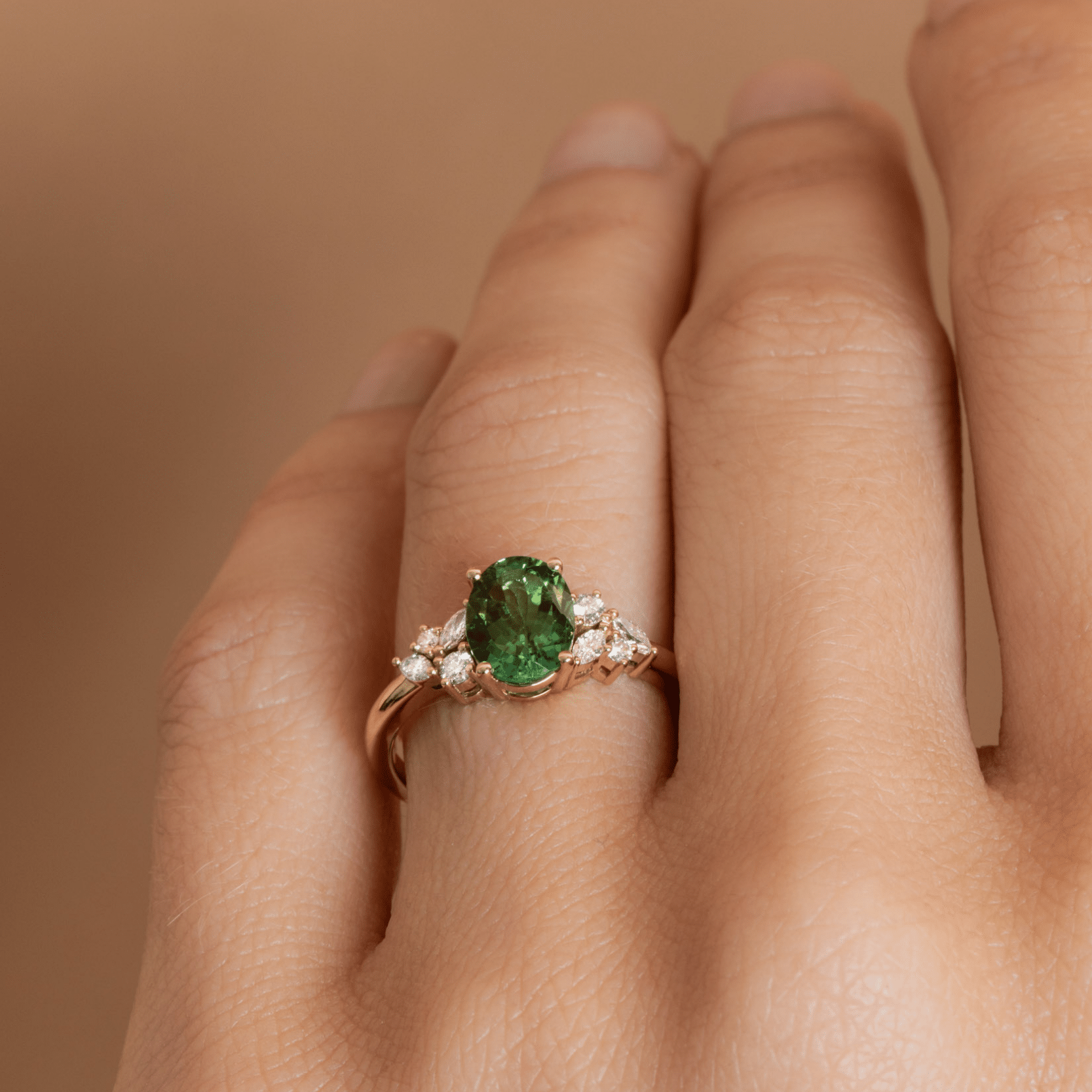
- Verdelite: green, from mint to deep forest green, the commonest and cheapest. Chrome tourmaline, coloured by chromium and vanadium from East Africa, is a vivid emerald green and dearer.
- Indicolite: blue to blue-green, rarer, and the most sought after of the ordinary colours.
- Paraíba: a neon blue to green coloured by copper, first found in the Brazilian state of Paraíba in 1989 and later in Mozambique and Nigeria. It is by far the most valuable tourmaline; Brazilian stones command a premium, and a laboratory report naming the origin is the rule.
- Watermelon: pink in the centre with a green rim, often cut in slices to show it.
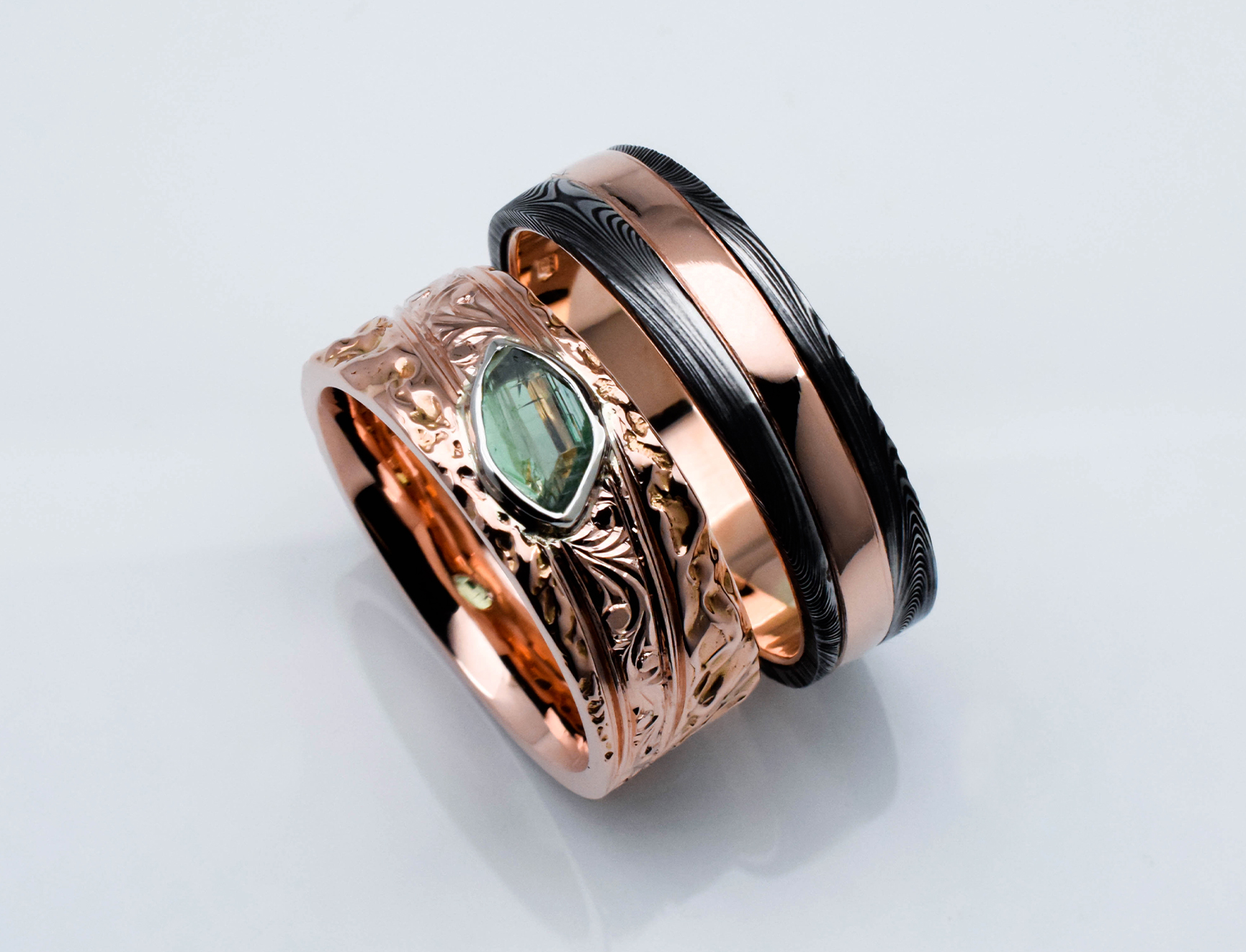
- Bicolour and tricolour: two or three zones along the crystal, kept in one stone by the cutter.
- Schorl: the black tourmaline of mineral shops, cheap, and used in beads.
Look at it from more than one side
Tourmaline is strongly pleochroic: the colour changes with the direction you look through it. A green stone can look bright from the top and nearly black down the length of the crystal, and the cutter chooses the direction, so judge a stone face up, in daylight. Elongated stones are common because the crystals are; a dark tourmaline is often cut with the table across the crystal to lighten it. See optical effects.
Value and treatments
Colour decides the price: saturated, clean and not too dark. Some tourmaline is heated to lighten a dark green or blue, and some pink is irradiated to deepen it; both are stable and should be disclosed. Pink and red stones often have visible inclusions, which is accepted for the colour; green and blue are expected to be clean. Paraíba is heated as a rule and priced by the intensity of its neon glow. For a stone of value a laboratory report settles species, treatment and, for Paraíba, origin.
Wearing it
Tourmaline has a hardness of 7 to 7.5, enough for a ring that is worn regularly, and no cleavage to worry about. See which stones can be worn every day. Warm water and soap; avoid heat and the ultrasonic cleaner for included stones.
Where it comes from
Brazil, Mozambique, Nigeria, Madagascar, Afghanistan, Namibia and the United States (Maine and California). Tourmaline is a birthstone for October. See tourmaline jewellery or describe your piece.