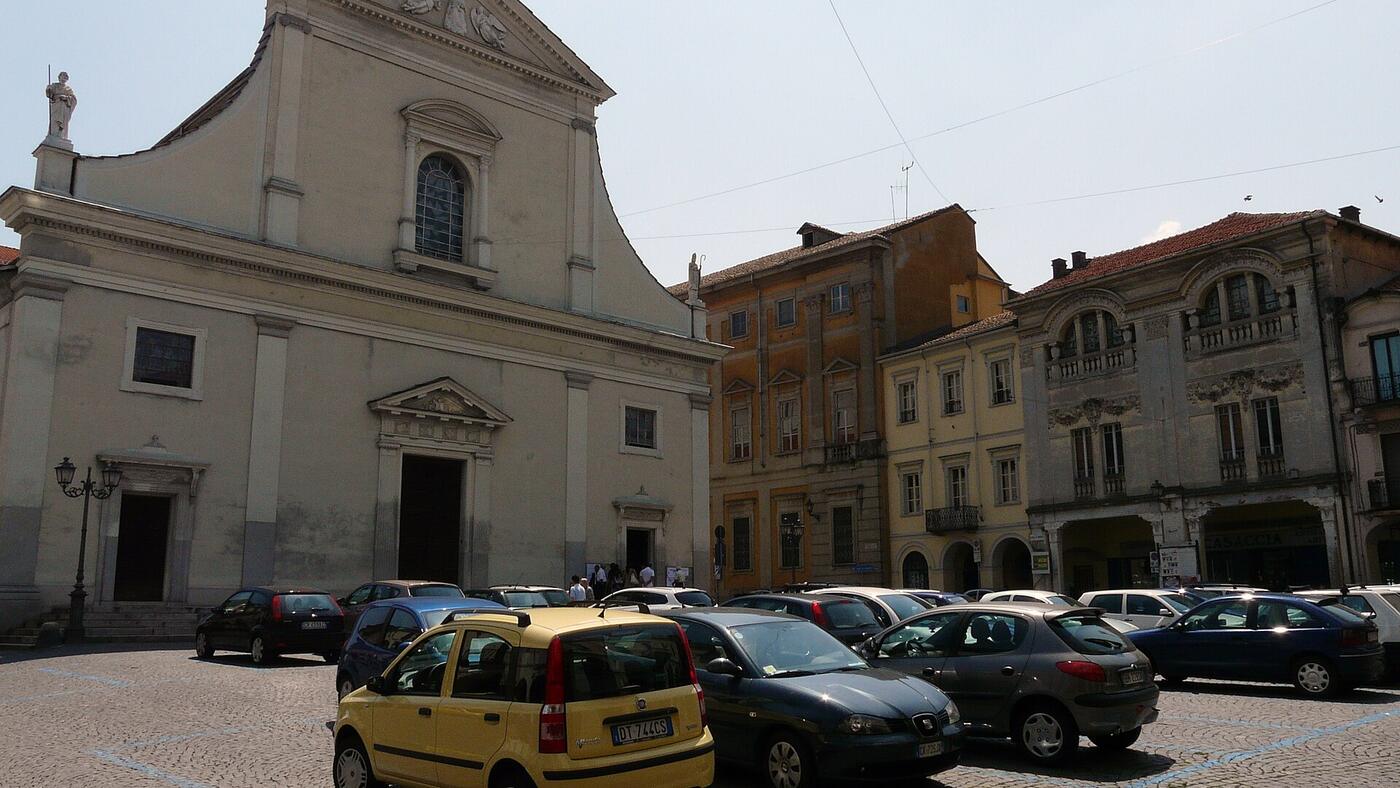
Valenza is a small town in Piedmont, in northern Italy, on the river Po between Milan, Turin and Genoa, with about eighteen thousand inhabitants. It is one of the most important centres of fine jewellery making in the world, and most people have never heard of it, because almost nothing it makes carries its name.
How it began
Goldsmithing started in Valenza in the first half of the nineteenth century, with a handful of workshops; Vincenzo Morosetti's, founded in 1840, is usually named as the first. Apprentices set up on their own, and the trade multiplied through the century as the town found that it could compete with Milan on skill and price. By the twentieth century Valenza was filled with small and medium-sized workshops, many of them family firms, specialised in high-end gold jewellery set with stones, and by the 1970s more than a thousand firms employed a large part of the town.
What Valenza is good at
The town's speciality is fine jewellery: hand-made mounts, pavé and micro-pavé, complex pieces with many stones, all in 18 carat gold, which is the Italian standard, and increasingly platinum. The work is divided among specialists in a way that goes back to the guilds: one workshop makes the mounts, another sets the stones, another polishes, another engraves, and a piece may pass through five hands before it is finished. That division is what makes the quality and the speed possible. See stone setting.
Why you rarely see its name
Much of what Valenza makes is sold under other names. Many of the great international jewellery houses, French and American among them, have pieces made here, and several have opened their own manufactories in the town in the last two decades; Bulgari's plant is the largest jewellery factory in Europe. Alongside them, hundreds of independent workshops make jewellery under their own name or to order for jewellers across Europe. A "made in Italy" high-jewellery piece has a good chance of being Valenza work.
Training
Valenza has its own goldsmithing schools, the Istituto Benvenuto Cellini and the training centre For.Al, which supply the workshops with trained setters, goldsmiths and designers, and the big houses run their own academies. As elsewhere, finding young craftspeople is the industry's main concern, and the town's schools are full.
The other Italian gold towns
Italy has two more: Vicenza, in the Veneto, known for its chains and for the Vicenzaoro trade fair, and Arezzo, in Tuscany, the largest producer of gold jewellery by volume and the home of mechanised chain. Valenza is the smallest of the three and the one most devoted to handwork and stones. For the fairs, see the events calendar. Italian gold carries a fineness stamp and a maker's registration, a star with a number and province code; see recognising hallmarks.
See the goldsmiths in Valenza on Lujoro.