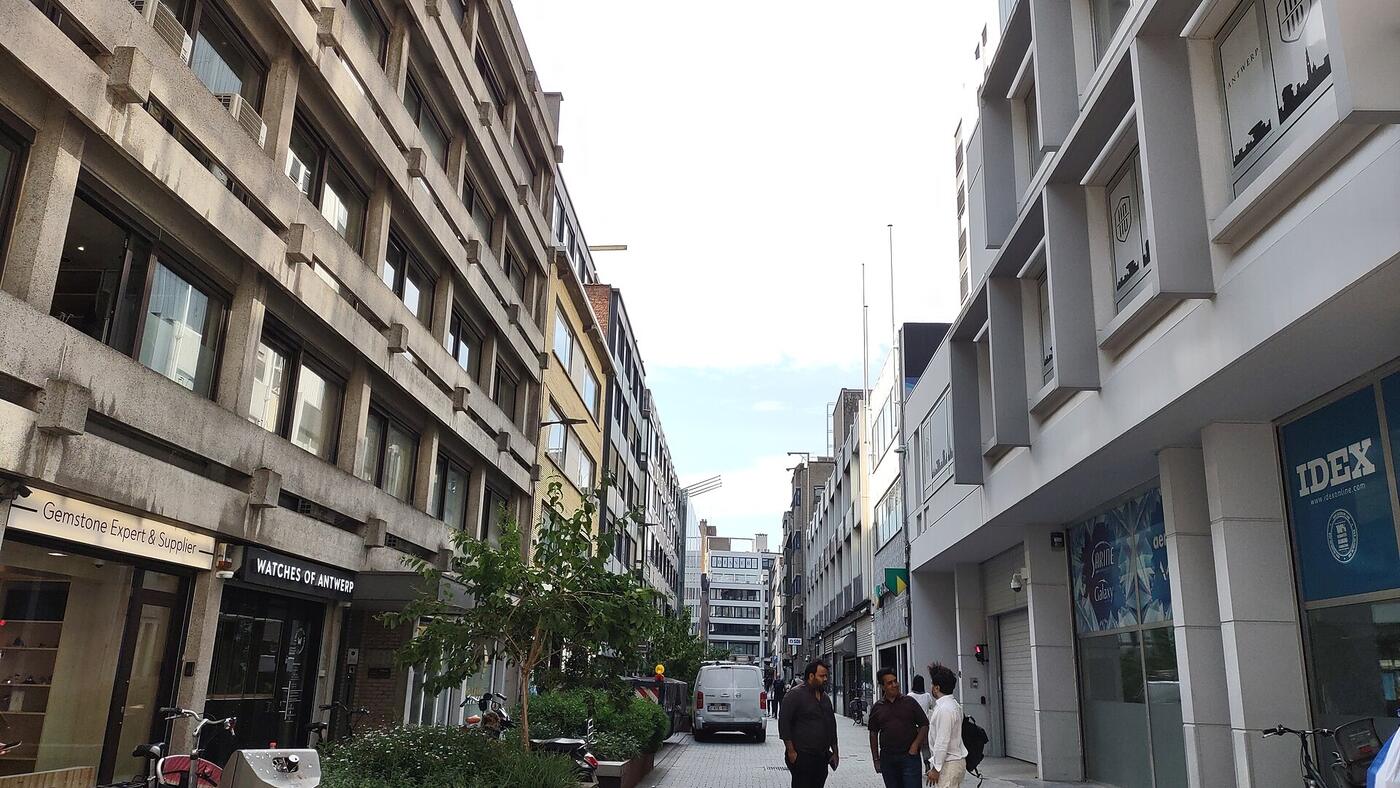
If a goldsmith in the Netherlands or Belgium sets a diamond in your ring, there is a good chance it passed through a few streets beside Antwerp's Central Station. The diamond district covers barely a square kilometre: Hoveniersstraat, Schupstraat, Rijfstraat and Pelikaanstraat.
What happens there
Antwerp has traded in diamonds since the fifteenth century. Today the district houses four diamond bourses, hundreds of trading companies, grading laboratories and the banks, insurers and couriers that serve them. The sector is represented by the Antwerp World Diamond Centre. Every shipment of diamonds entering or leaving is checked by the Diamond Office, which also enforces the Kimberley Process, see responsible gold and diamonds.
For decades the great majority of the world's rough diamonds changed hands in Antwerp at some point. That share has fallen: Dubai and Mumbai have become major centres, and the sanctions on Russian diamonds since 2024 have redirected part of the trade. Antwerp remains one of the most important places in the world for both rough and polished stones.
Trading, more than cutting
Most of the world's diamonds are now cut and polished in India, above all in Surat. Antwerp's remaining cutters specialise in large, valuable and difficult stones, and "Antwerp cut" is still used in the trade as a mark of precise workmanship.
Two of the main grading laboratories have their roots here: HRD Antwerp, and IGI, which was founded in the city in 1975. See diamond grading reports.
Amsterdam before Antwerp
In the nineteenth century Amsterdam was the world's leading cutting centre. The Cullinan, the largest gem diamond ever found, was cleaved there by Joseph Asscher in 1908, the same man who developed the Asscher cut. Amsterdam's diamond industry was largely Jewish and was destroyed in the Holocaust. After the war the trade concentrated in Antwerp.
Across the Atlantic, New York's Diamond District plays the same role for the United States.
Buying a diamond in Antwerp
Many people travel to Antwerp expecting a bargain. A few things to know:
- Most of the district is wholesale. The bourses and offices are open to the trade only. The shops that sell to the public are mainly on and around Pelikaanstraat.
- A stone is not cheaper or better because it is sold in Antwerp. The trade prices diamonds worldwide from the same list, see how the trade prices diamonds. Compare on the four Cs, as you would anywhere.
- Insist on an independent report from GIA, HRD Antwerp or IGI for any stone of some size. A "certificate" issued by the shop itself is not the same thing.
- Get an invoice that describes the stone fully and states the report number.
The other route
You can also leave the buying to a goldsmith. Many goldsmiths have bought from the same Antwerp dealers for years, can ask for several stones on approval, and will show you the difference between them. You pay for the stone you choose, set in a ring made for you. Describe your piece and mention your budget for the stone.
See the goldsmiths in Antwerp on Lujoro.