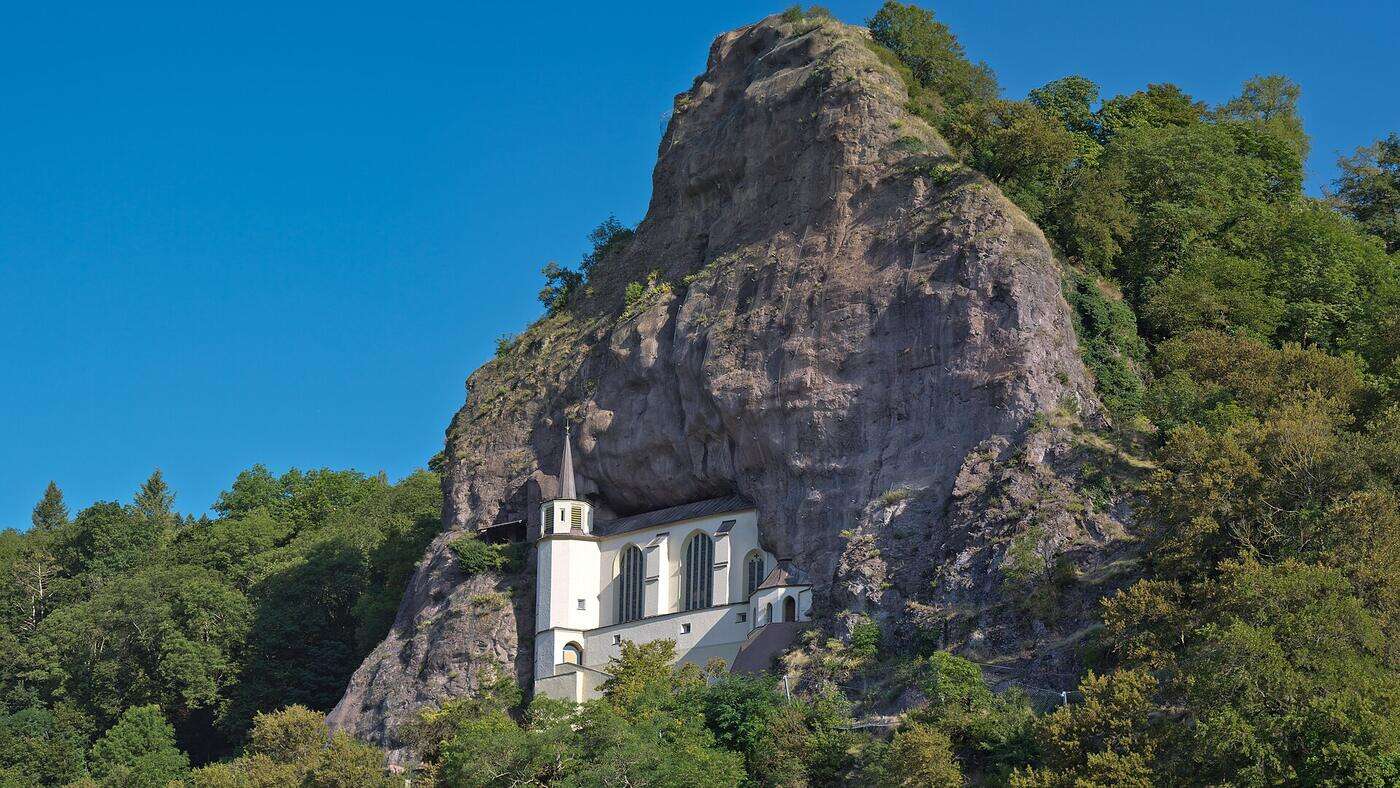
Idar-Oberstein lies in the hills of the Hunsrück in western Germany, along the river Nahe. For five centuries it has been a centre of gemstone cutting, and its name still stands for precision in coloured stones.
From local agate to stones from all over the world
Agate, jasper and amethyst were mined in the hills around the town from the late Middle Ages. Streams drove the great sandstone wheels on which the cutters worked, lying on their stomachs to press the stone against the wheel. When the local deposits ran out in the nineteenth century, emigrants from the region who had settled in Brazil began sending agate home. Soon rough stones of every kind arrived from Brazil, Africa and Asia, and the town turned from mining to cutting and trading.
What it is known for
- Precision cutting of coloured stones, including unusual and custom cuts that large cutting centres do not offer.
- Gem engraving and carving: cameos, intaglios for signet rings, and sculptures in stone.
- Agate work: bowls, slices and objects, the town's original trade, see onyx and agate.
- Gemmology. The German Gemmological Association and a research laboratory for gemstones are based here.
What to see
The Deutsches Edelsteinmuseum shows cut stones and carvings from all over the world. The Steinkaulenberg is a historic gemstone mine open to visitors, and a restored water-powered cutting mill shows how the work was once done. The trade meets each autumn at the Intergem fair, see the events calendar.
What it means for a buyer
A goldsmith who wants a stone cut to a drawing, a matching pair, or a worn stone repolished, often turns to a cutter in Idar-Oberstein. "Cut in Idar-Oberstein" says something about the quality of the cutting. It says nothing about where the stone was mined, see does origin matter?
See the goldsmiths in Idar-Oberstein on Lujoro.