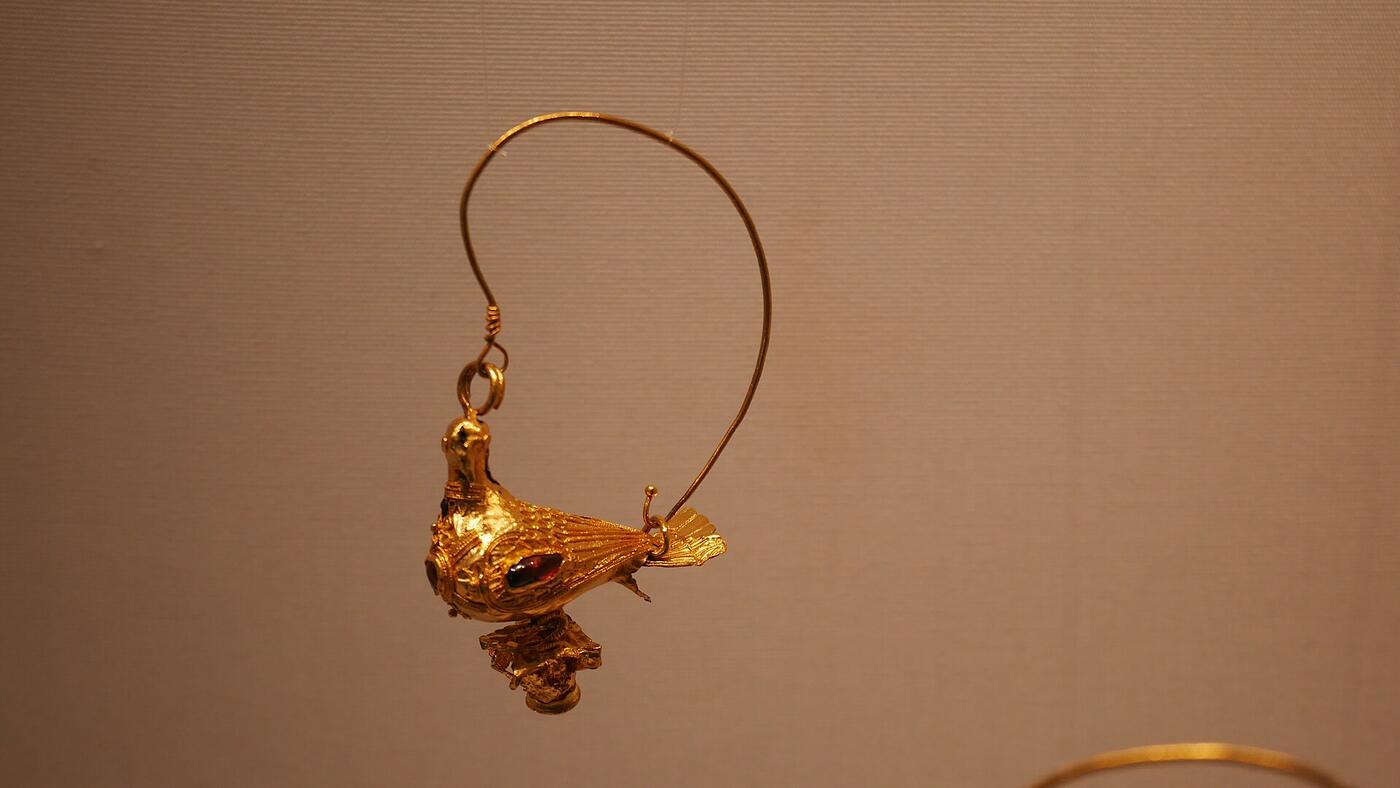
Pforzheim, in south-west Germany at the northern edge of the Black Forest, calls itself Goldstadt, the gold city. For two and a half centuries it has been the centre of the German jewellery and watch industry, and a large share of the gold jewellery sold in Germany still passes through it in one form or another: as alloy, as chain, as setting, as the training of the goldsmith who made it.
How it began
In 1767 the Margrave of Baden, Karl Friedrich, allowed a watch and jewellery manufactory to be set up in the town's orphanage, to give the children a trade. The enterprise grew into an industry: by the nineteenth century Pforzheim supplied a large part of Germany's jewellery, exported all over the world, and had developed the mechanised chain-making and stamping that made affordable gold jewellery possible. At its height before the First World War, tens of thousands of people in the town worked in the trade, and the Jugendstil jewellery of the years around 1900 was largely made here.
Destruction and rebuilding
On 23 February 1945 an air raid destroyed most of the town in a single evening and killed about a quarter of its population. The jewellery industry was rebuilt along with the city in the years after the war, and by the 1960s Pforzheim was again one of the largest jewellery-producing cities in Europe. Since then production has moved abroad as it has everywhere, and the town has kept the parts of the chain that need skill and proximity: refining, alloys, findings, tooling, training and design.
What is there today
- The Schmuckmuseum Pforzheim, in the Reuchlinhaus, is one of the very few museums in the world devoted entirely to jewellery. Its collection spans five thousand years, from antiquity through Renaissance and Jugendstil to contemporary art jewellery, and it is worth a journey on its own.
- The Goldschmiedeschule mit Uhrmacherschule trains goldsmiths and watchmakers, and the Hochschule Pforzheim has one of Germany's best-known design faculties, with a jewellery programme that has produced many of the country's studio goldsmiths.
- Manufacturers, refiners, stone dealers, tool makers and platers. Much of the supply chain that German goldsmiths rely on is here or nearby, and Pforzheim's chain factories still supply the trade across Europe.
- The Technisches Museum shows the machines of the jewellery and watch industry.
What it means for a buyer
Pforzheim is a working industrial town more than a place to stroll past shop windows. Its importance lies in what it supplies: alloys, chains, settings, tools and training. Many German goldsmiths trained here or buy their materials here, and a piece made by an independent goldsmith in Berlin or Munich may well have a Pforzheim chain or setting in it. For the German marks on gold and silver, see hallmarks and recognising hallmarks; Germany has no state hallmark, so the maker's fineness stamp is what you find.
See the goldsmiths in Pforzheim on Lujoro, and compare Idar-Oberstein, the German town for stones.