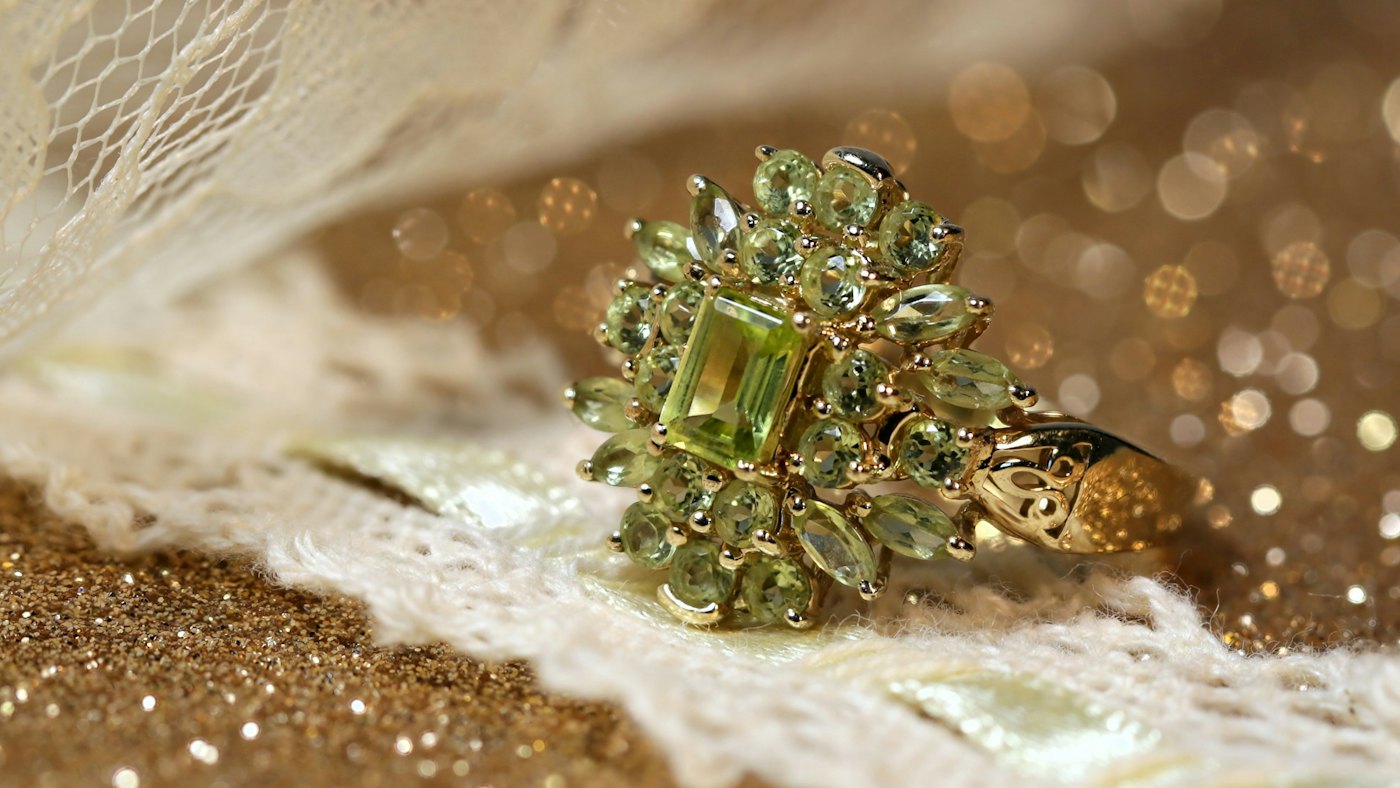
Peridot is the gem variety of the mineral olivine. Most gemstones get their colour from traces of another element; in peridot the colouring iron is part of the mineral itself, so it exists in one colour only, green, from yellowish green to olive, and no amount of heating or dyeing changes it. It is one of the oldest gems in use: the Egyptians mined it on an island in the Red Sea, and the "emeralds" of some medieval church treasuries turned out to be peridot.
What makes a good one
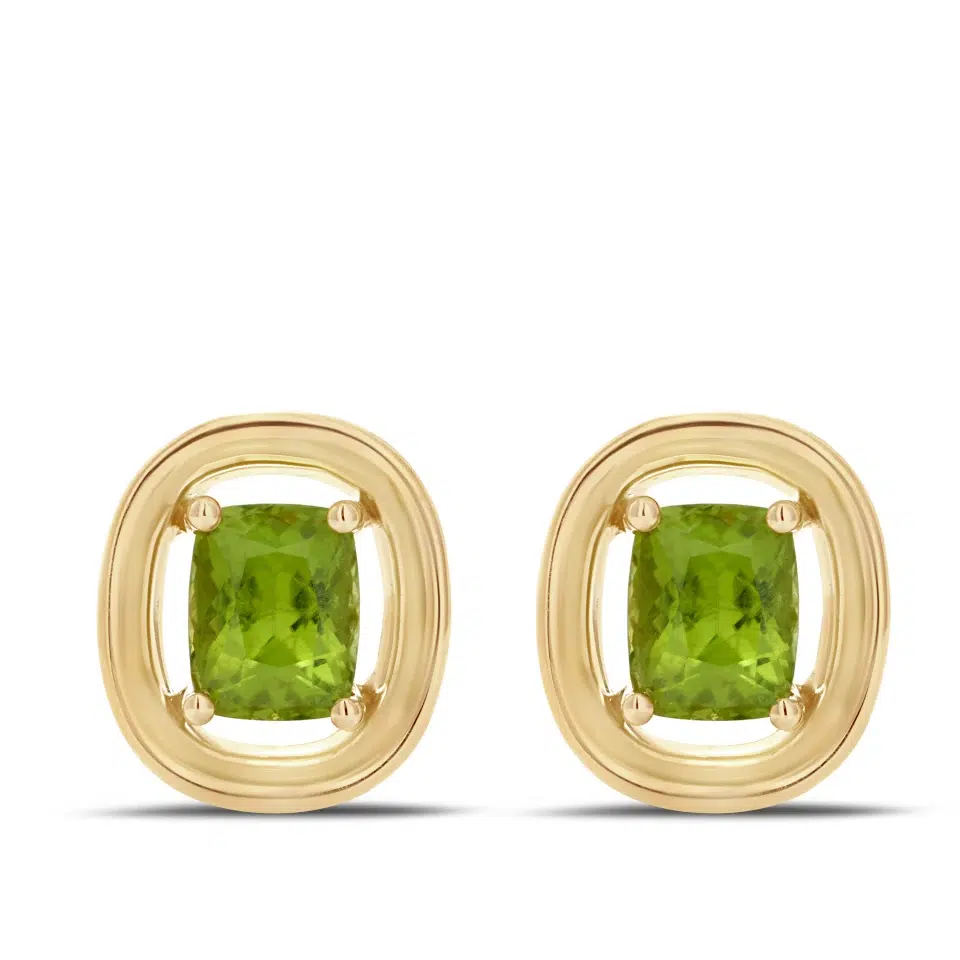
The most valued colour is a pure, saturated grass green without brown or yellow, and larger stones show the richest colour because the tint builds with depth. Peridot often has small disc-shaped inclusions the trade calls lily pads, and black chromite crystals; a stone clean to the eye is worth more. It is strongly doubly refractive: look through a larger stone with a loupe and the back facets appear doubled, which is also how you tell it from green glass.
Hardly ever treated
Peridot is one of the few gemstones that is normally not treated in any way, and there is no synthetic on the market to speak of. What you see is what came out of the ground. Green glass and synthetic spinel imitate it in cheap jewellery; the doubling under a loupe and a refractometer settle it.
What decides the price
Colour first, then clarity, then size. Small peridot is cheap, because Arizona produces it by the ton; a clean, saturated stone above five carats from Pakistan or Myanmar is uncommon and priced accordingly, and stones above twenty carats are collector's pieces. Origin matters less than colour, but the Pakistani material sets the standard for large stones.
Wearing it
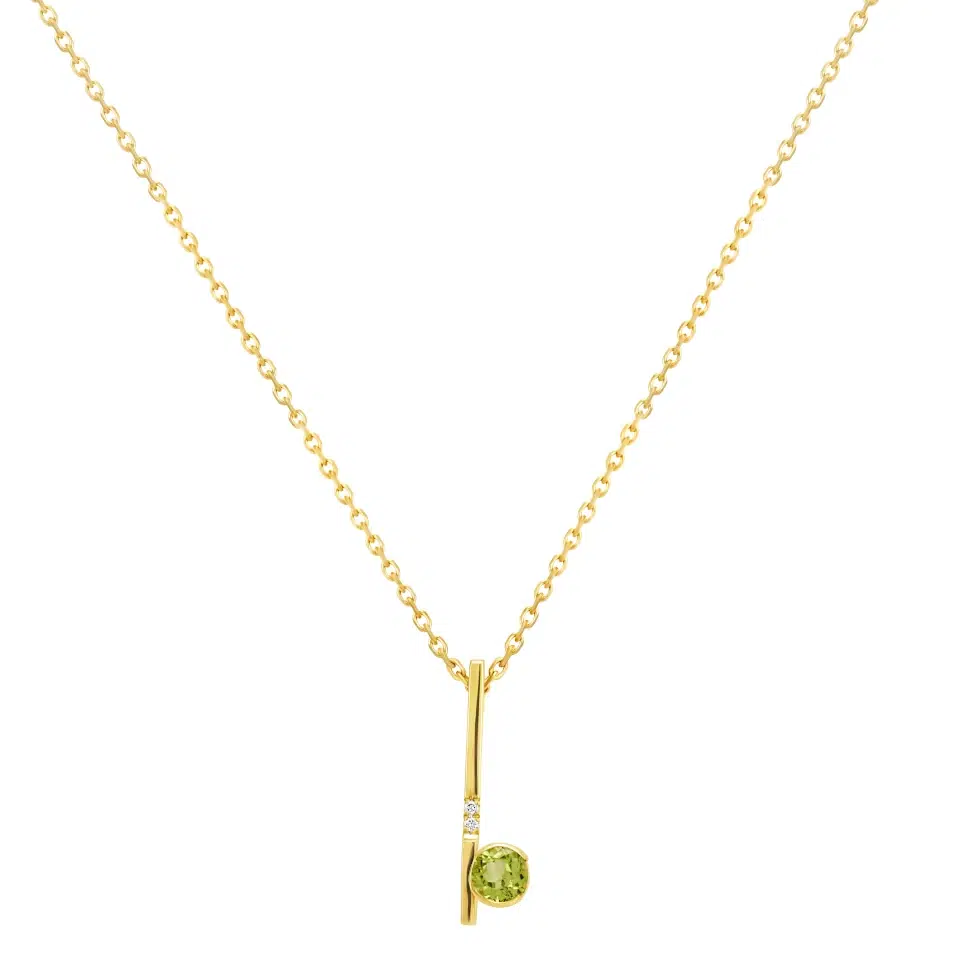
Peridot has a hardness of 6.5 to 7 and no cleavage. It is fine for earrings, pendants and rings worn with some care; in a ring worn every day the facet edges soften over the years, and a protective setting helps. See which stones can be worn every day.
Care
Peridot is sensitive to acids, and even long contact with sweat or hairspray can dull its polish. Clean it with lukewarm water and mild soap; no ultrasonic cleaner, no steam, no sudden heat. A dulled stone can be repolished.
Where it comes from
The San Carlos Apache Reservation in Arizona supplies a large share of the world's peridot in small sizes. The finest large stones come from the Kohistan region of Pakistan and from Myanmar; China, Vietnam and Tanzania are other sources, and the Red Sea island of Zabargad was the ancient one. Peridot forms deep in the earth and is carried up by volcanoes, and it has been found in meteorites: pallasite meteorites hold peridot crystals, and a few have been cut. It is a birthstone for August. See peridot jewellery or describe your piece.