Quartz is one of the most common minerals on earth, and several of its varieties are used in jewellery. Amethyst and citrine are the best known. Rose quartz and smoky quartz are the understated ones, and among the best-value stones a goldsmith can set in a big, bold piece.
Rose quartz
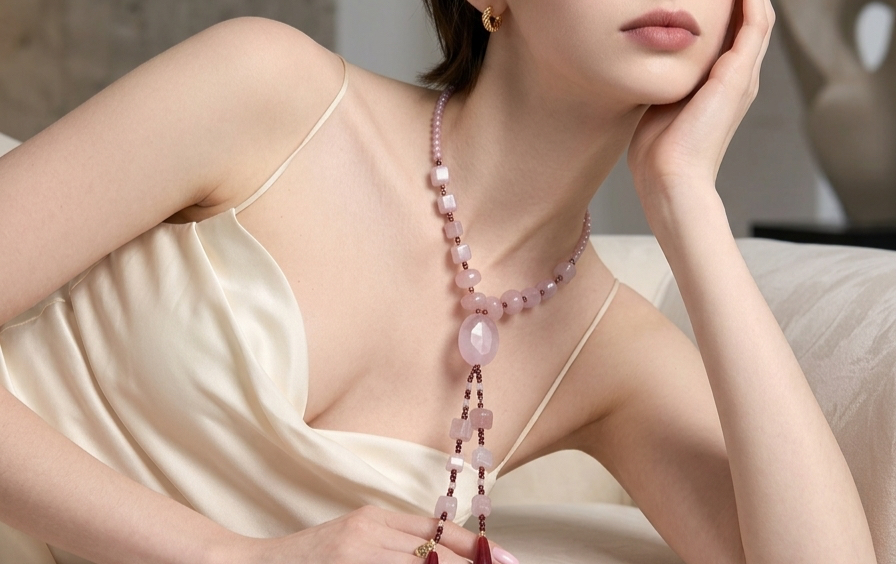
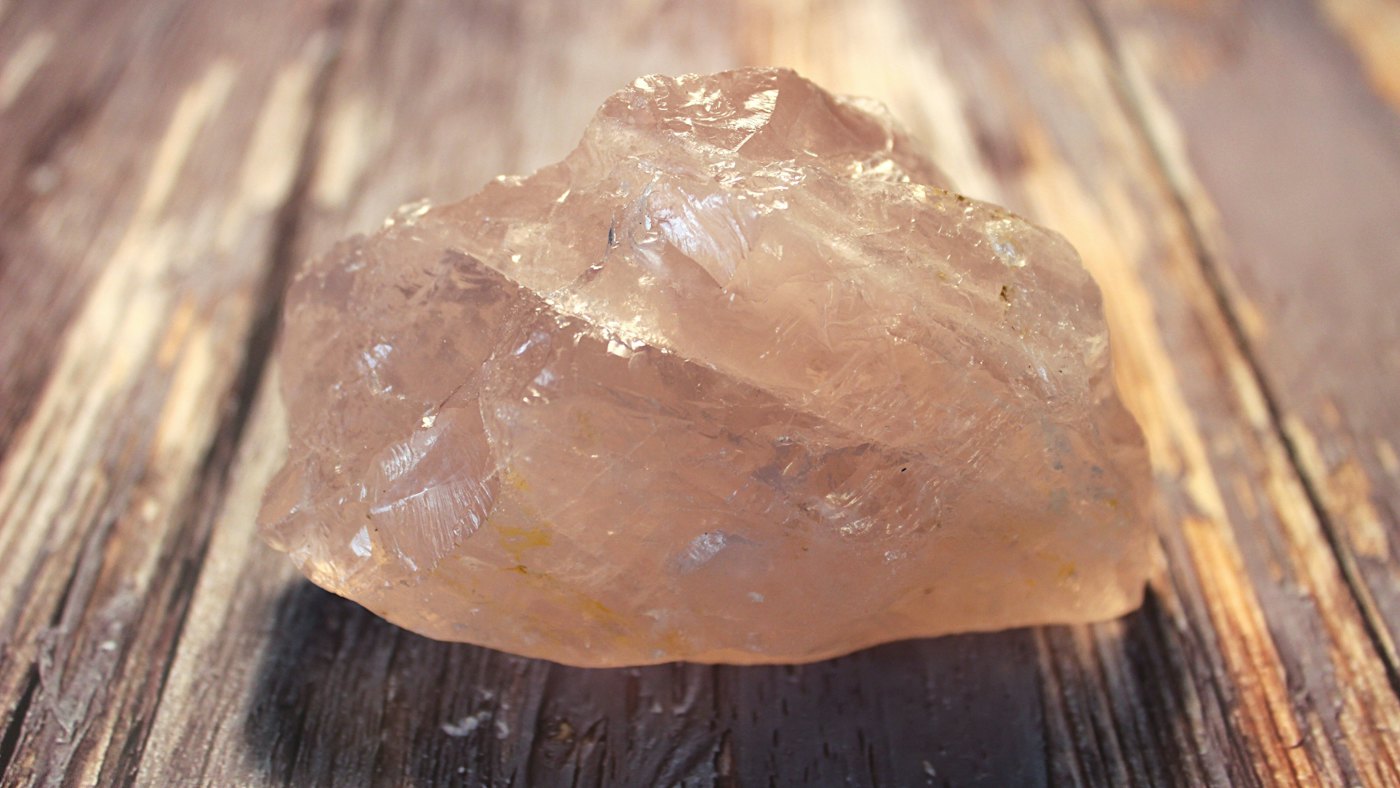
Rose quartz is pale to medium pink, coloured by traces of titanium and iron in microscopic fibres, and usually cloudy to translucent rather than clear. That soft, milky look is its character; it is cut as cabochons, beads, spheres and carved shapes, and transparent rose quartz that can be faceted is rare and comes mostly from Minas Gerais in Brazil. Some cabochons show a faint six-rayed star from those same fibres. A deeper, even pink without brown or grey is the best of it; pale, greyish material is the bottom of the market. Rose quartz can fade slowly in strong sunlight. Brazil, Madagascar, Namibia and South Dakota are the sources, and the price is low in any size. Pink glass and dyed quartz imitate it; a loupe shows bubbles in glass and colour concentrations in dyed stone.
Smoky quartz
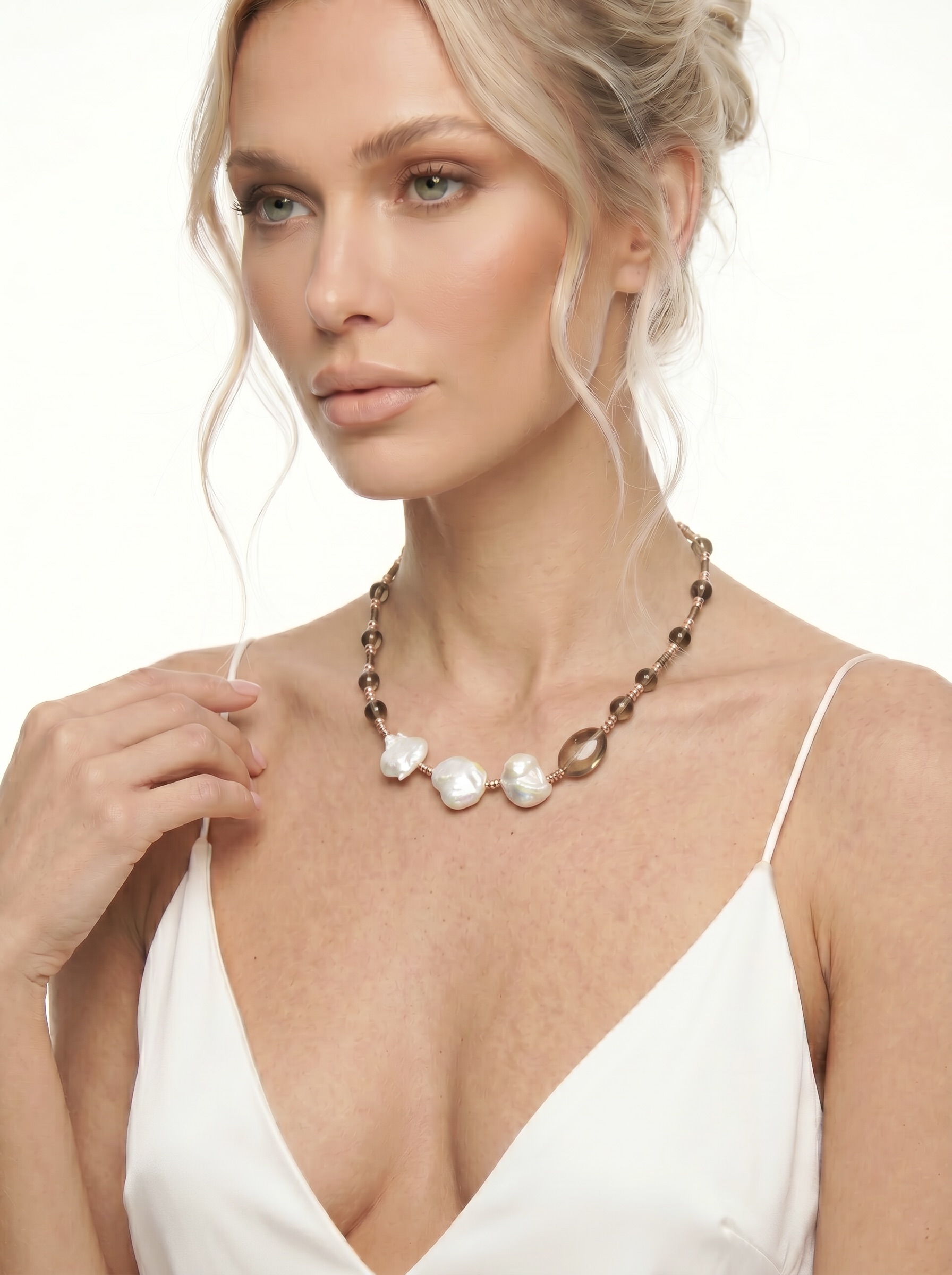
Smoky quartz is transparent and ranges from light greyish brown to nearly black. The colour comes from natural radiation in the rock acting on traces of aluminium in the crystal, over geological time. It forms large, clean crystals, so big faceted stones of thirty or fifty carats are easy to find, and it is the stone of the cocktail ring for that reason. A warm, even brown with no grey is the best colour; very dark, almost opaque smoky quartz is called morion. In Scotland, smoky quartz from the Cairngorm mountains is the traditional stone of Highland jewellery and is still called cairngorm there. Some smoky quartz on the market has been irradiated to darken it from colourless quartz; the result is stable and the stone is not radioactive, but it should be stated. Strong heat lightens it, which is why some "citrine" is heated smoky quartz.
Wearing them
Both have a hardness of 7 and no cleavage, which makes them suited to rings that are worn regularly. Over many years the facet edges of a faceted stone soften and a cabochon picks up scratches; both can be repolished. See which stones can be worn every day.
Value
Both are very affordable. That gives a goldsmith freedom: a large smoky quartz in a bold cocktail ring, or a generous rose quartz cabochon, costs a fraction of what a comparable coloured stone would, and the value of the piece lies in the design and the making. Cutting, not material, decides what you pay.
Care
Warm water, mild soap and a soft brush; the ultrasonic cleaner is fine. Avoid strong heat, which lightens smoky quartz, and keep rose quartz out of prolonged strong sun.
See rose quartz jewellery and smoky quartz jewellery, or describe your piece.