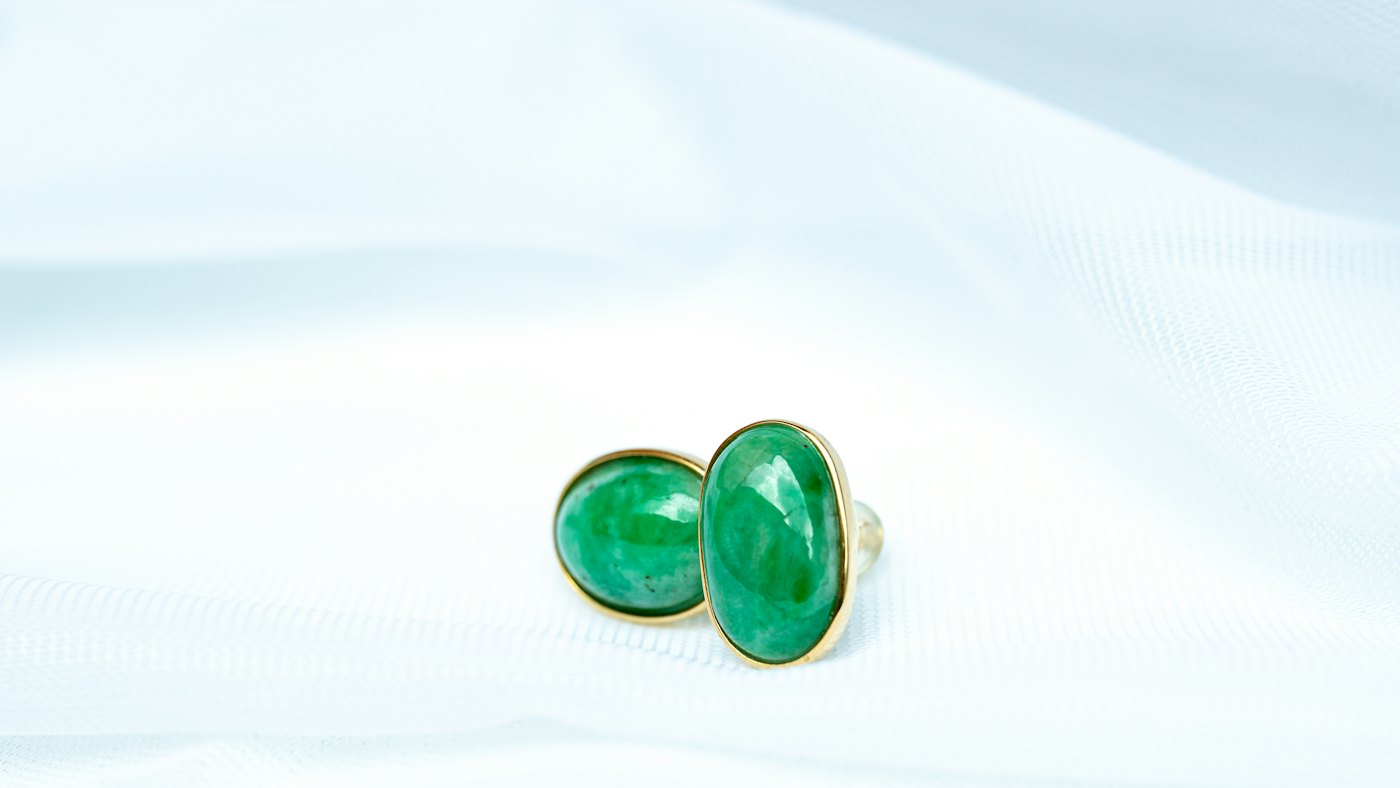
"Jade" covers two minerals that were only distinguished in the nineteenth century: jadeite and nephrite. Both have been carved for thousands of years, because they are extraordinarily tough.
Jadeite and nephrite
Jadeite is the rarer and generally more valuable of the two. The finest comes from Myanmar. It occurs in green, lavender, white, yellow, orange and black. The most valued is a saturated, slightly translucent emerald green, known as imperial jade.
Nephrite is more common and has a softer, slightly oily lustre. It is usually spinach green, white or creamy. Sources include China, Canada, Russia and New Zealand, where it is known as pounamu and has deep cultural significance for Māori.
What decides the value
Colour, translucency and texture. The best jade has an even, intense colour, lets light glow into the stone, and has a fine, smooth texture without visible grain. Craftsmanship counts heavily, as much jade is carved.
Types A, B and C
For jadeite the trade uses three letters:
- Type A: natural, untreated jadeite, at most finished with a surface wax.
- Type B: bleached with acid to remove stains and then impregnated with polymer. It looks cleaner but becomes brittle and can discolour over time.
- Type C: dyed.
The differences in value are very large, and they cannot be seen with the naked eye. For an expensive piece, ask for a laboratory report.
Wearing it
Jade has a hardness of 6 to 7 on the Mohs scale, so it can be scratched, but it is tougher than almost any other gem material: it resists chipping and breaking exceptionally well. That is why it can be worn as a solid bangle or carved into thin forms. See which stones can be worn every day.
Care
Warm water, mild soap and a soft cloth. Treated jade should stay away from heat and chemicals.
See jade jewellery.