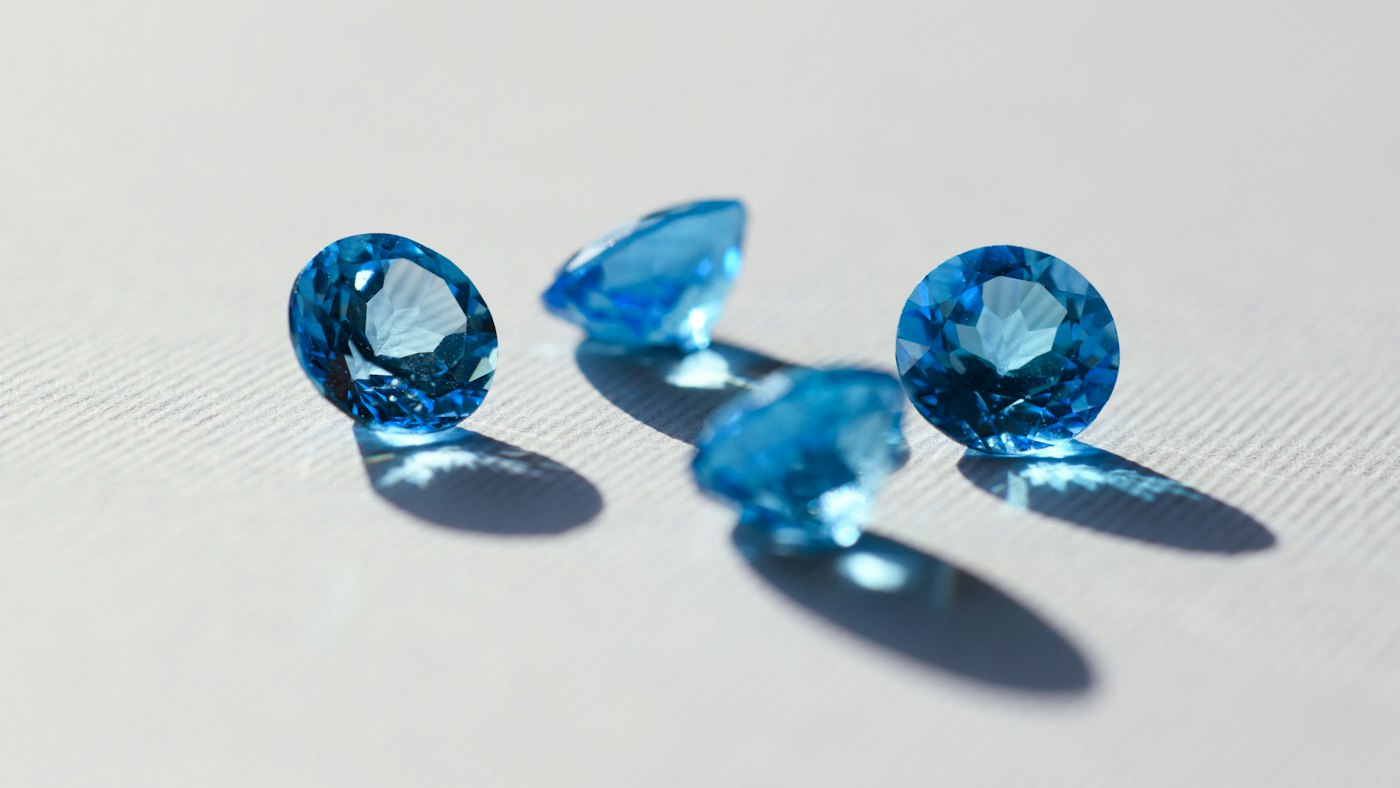
Topaz occurs in many colours: colourless, blue, yellow, orange, pink, brown and, rarely, red. In nature most of it is colourless or pale, and the two topazes people know, the cheap bright blue and the costly golden imperial, are opposite ends of the same mineral. It is hard, brilliant and forms large clean crystals, and it has been confused with, and sold as, other stones for centuries.
Blue topaz
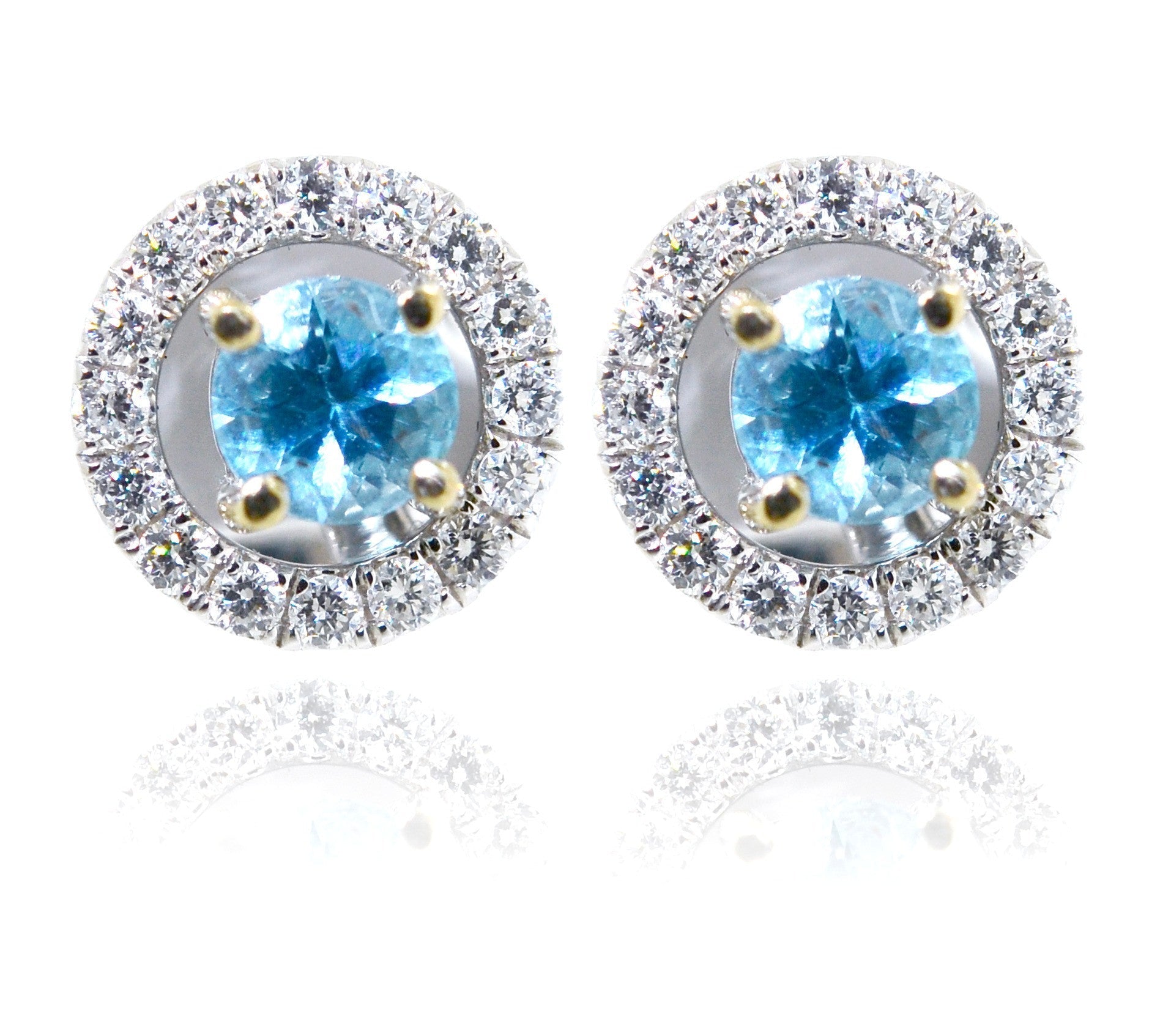
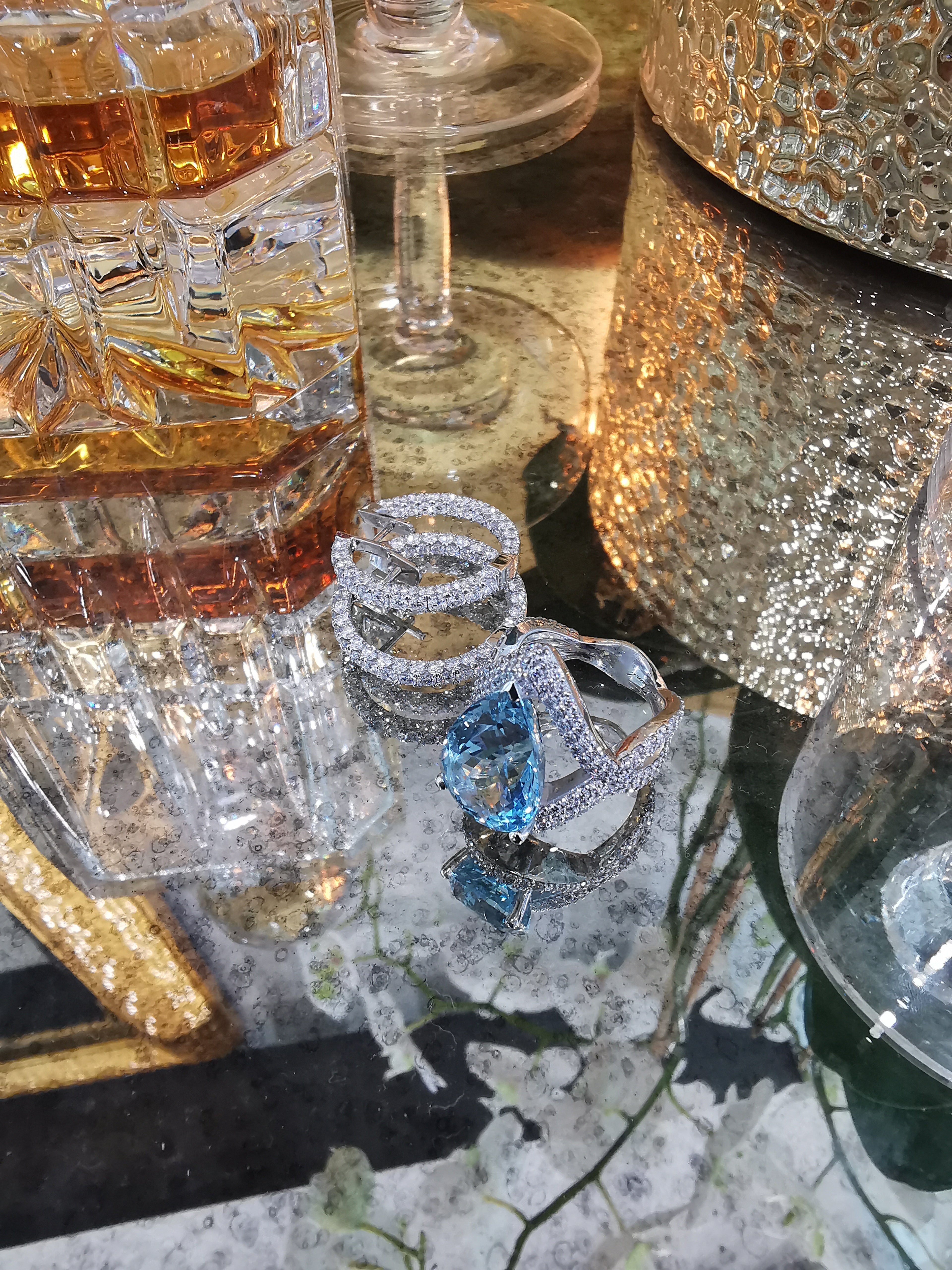
Natural blue topaz is rare and pale. Nearly all the blue topaz in jewellery is colourless topaz that has been irradiated and then heated, a treatment that is permanent and standard in the trade, and, once the stone has rested the legally required time after irradiation, safe. The three usual shades are sky blue (light), Swiss blue (bright, electric) and London blue (dark, slightly greyish or teal). Because colourless topaz is plentiful, blue topaz is affordable even in large clean stones, and it is the stone people mean when they mistake something for aquamarine, which costs more and is softer and greener in tone.
Imperial and precious topaz
The most valuable topaz is golden orange to pinkish orange, known as imperial topaz. It comes almost only from the mines around Ouro Preto in Minas Gerais, Brazil, and a clean stone of a few carats with a strong reddish-orange costs what a good sapphire does. Yellow and brown topaz, sold as precious topaz, is much cheaper. Pink and red topaz are rare in nature; most pink topaz is produced by heating orange-brown Brazilian material, which is stable and accepted, and the natural pinks from Pakistan's Katlang mine are collector's stones.
Coated topaz
"Mystic topaz", "rainbow topaz" and similar names refer to colourless topaz with a thin metallic coating that gives a rainbow effect. The coating is on the surface only and can wear or scratch off, and it must be sold as coated. It is cheap and it is not a colour of topaz.
Names that are not topaz
Citrine was sold for centuries as "gold topaz", "Madeira topaz" and "Spanish topaz", and smoky quartz as "smoky topaz"; all of those are quartz. "Oriental topaz" is yellow sapphire. See misleading trade names. A refractometer separates topaz from quartz at once, and topaz is noticeably heavier.
Wearing it
Topaz has a hardness of 8, so it resists scratches well. Its weakness is cleavage: it can split cleanly along one direction from a single hard blow, and a cutter avoids placing the table on that plane for the same reason. A setting that protects the stone, and some care, prevent it. See which stones can be worn every day.
Care
Warm water and mild soap. Avoid ultrasonic cleaners, steam and sudden temperature changes, which can open the cleavage; keep coated stones away from anything abrasive.
Where it comes from
Brazil is the most important source for every colour, followed by Pakistan, Sri Lanka, Nigeria, Namibia, Russia (the Urals, historically) and the United States. Topaz is a birthstone for November, together with citrine. See topaz jewellery or describe your piece.