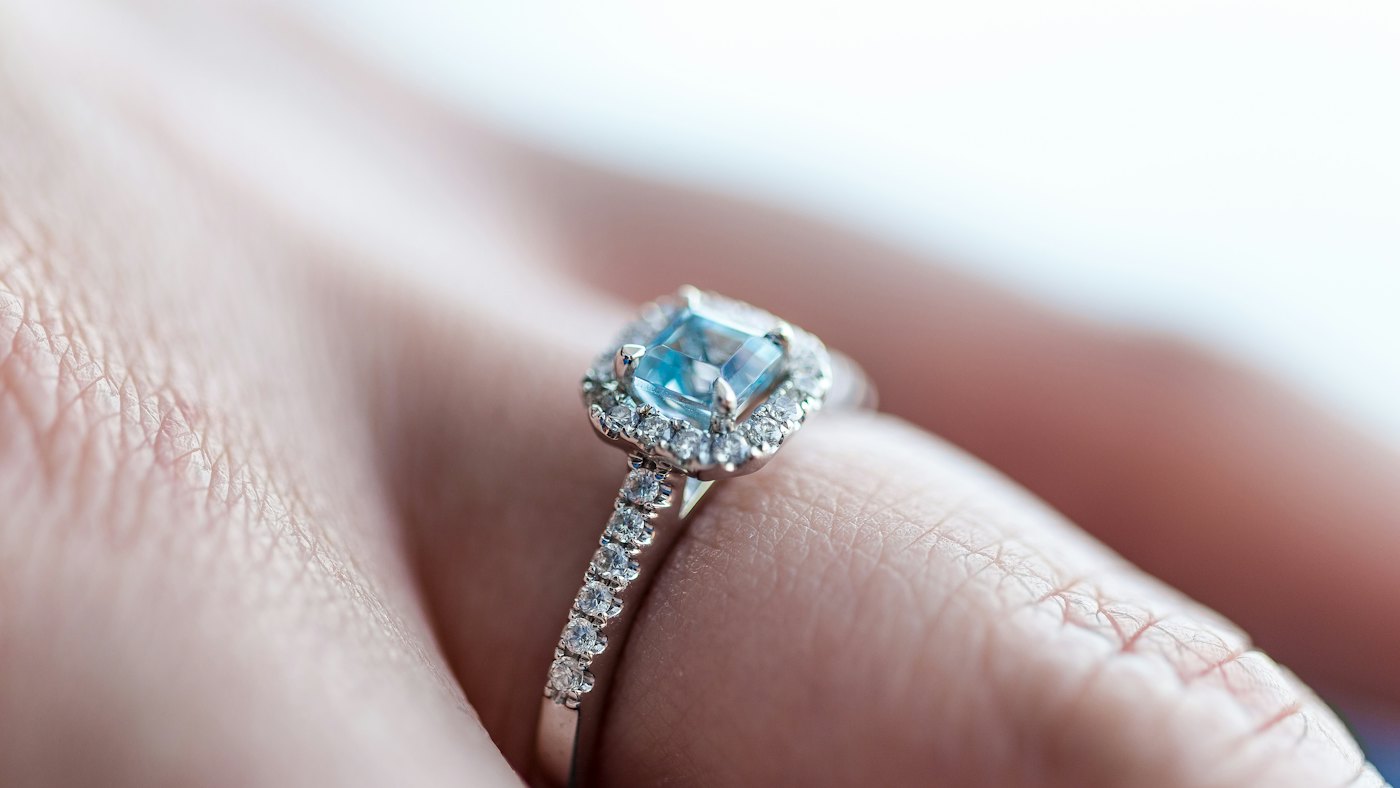
Aquamarine is the blue to blue-green variety of beryl, the mineral family that also includes emerald and morganite. Iron gives it its colour, and the name means sea water. It is one of the few gems that give you a big, clean, transparent stone in a colour nothing else quite has, at a price that stays sensible.
Clean where emerald is not
Emerald is known for its inclusions. Aquamarine is the opposite: it forms large, clean crystals, so stones without visible inclusions are the norm, stones of ten or twenty carats are easy to find, and a crystal the size of a forearm is not unheard of. That also makes it far less fragile than emerald, though it is the same mineral.
Colour and what decides the price
Most aquamarine is a light blue. The deeper and purer the blue, the higher the price, and the difference between pale and saturated is a factor of ten or more per carat. Because the colour is delicate, it shows best in stones of some size; very small aquamarines look almost colourless, which is why a one-carat aquamarine is rarely worth setting as a centre stone. "Santa Maria" is the trade name for the deep, saturated blue of a Brazilian mine, applied now to any stone of that colour; "Santa Maria Africana" to similar stones from Mozambique. Slightly greenish stones cost less, though some people prefer them.
Heating is normal
Many aquamarines come out of the ground greenish. Gentle heating removes the green and leaves a purer blue; the result is permanent, undetectable and accepted, and it is rarely mentioned separately. Unheated sea-green stones are available for those who want them.
Aquamarine or blue topaz
Blue topaz is the cheaper lookalike, and irradiated blue topaz is far commoner in shops than aquamarine. Aquamarine is lighter, usually a softer and greener blue, and warmer in tone; topaz is heavier and its Swiss and London blues are more electric. A refractometer separates them at once. Aquamarine costs more than blue topaz at every size, and is worth it for the colour. See topaz.
Wearing it
With a hardness of 7.5 to 8 and no cleavage to speak of, aquamarine is suited to rings that are worn every day. See which stones can be worn every day. A pale transparent stone shows dirt behind it quickly and loses its sparkle; warm water, mild soap and a soft brush, also behind the stone, bring it back, and the ultrasonic cleaner is safe for a clean stone.
Where it comes from
Brazil (Minas Gerais) is the classic source; Pakistan, Mozambique, Madagascar, Nigeria and Zambia also produce it. Origin does not change the price. Aquamarine is the birthstone for March. See aquamarine jewellery or describe your piece.