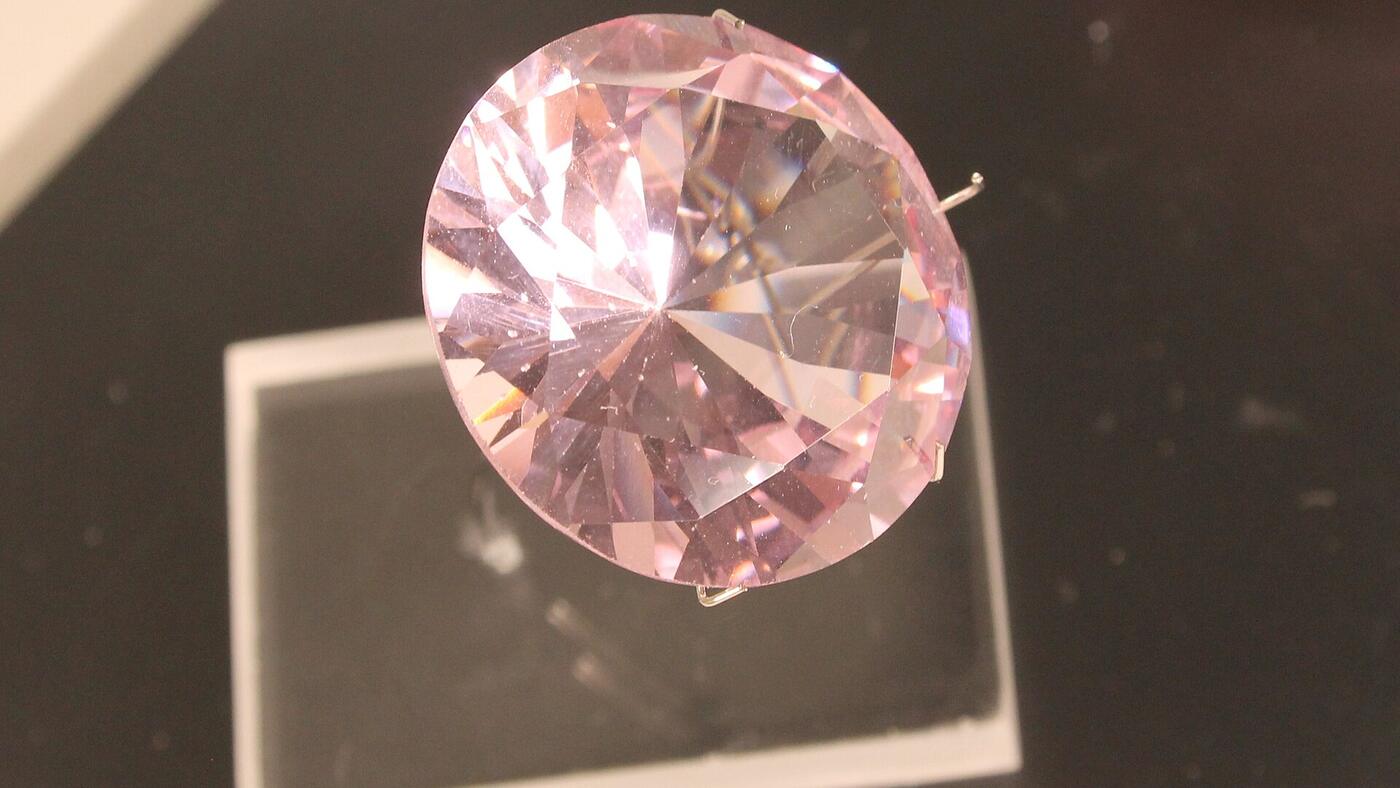
Spinel occurs in red, pink, orange, lavender, blue, violet and grey. Red spinel and ruby are found in the same deposits and look so alike that they were not told apart until the late eighteenth century: the "Black Prince's Ruby" in the British Imperial State Crown and the "Timur Ruby" are both spinel, as are many of the great "rubies" of the Mughal and Persian treasuries. For two centuries after the distinction that history made spinel the poor relation; in the last twenty years it has become one of the most sought-after coloured stones, and prices have followed.
Why goldsmiths like it
It wears well. Spinel has a hardness of 8 and no cleavage, so it is both hard and tough, one of the safest coloured stones for a ring that is worn every day. See which stones can be worn every day.
It is usually untreated. Most spinel is sold exactly as it was found, which is unusual among coloured stones, where heating is the rule. A few blue stones have been heated; a report says so.
It is brilliant. Spinel is singly refractive, like diamond and garnet, which gives it a crisp, clean sparkle without the doubling of facets that corundum shows.
Colours and value
Vivid red, the colour of the finest Burmese stones, and hot pink are valued most, with the rare cobalt blue from Vietnam and Sri Lanka close behind; those three are priced like fine sapphire above a carat. Orange "flame" spinel, purple and lavender sit in the middle. Soft greys, steel blues and lilacs are much more affordable and have become popular for engagement rings with a quieter look. Fine spinel of size is rarer than ruby or sapphire of similar quality, but it still costs less, because the name is less known. Clean stones are the norm; a spinel with visible inclusions is discounted.
Synthetic spinel
Synthetic spinel has been made by flame fusion since the 1920s and was widely used in class rings, birthstone jewellery and as an imitation of aquamarine, blue zircon and even diamond; it is coloured to order and cheap. It says nothing about the natural stone, but it means that an old "spinel" or a bright blue "aquamarine" in an inherited ring deserves a look, and that a valuable spinel should come with a laboratory report. See synthetic and imitation stones.
Where it comes from
Myanmar (Mogok) for the classic reds and pinks; Sri Lanka for blues, greys and lilacs; Tanzania (Mahenge) for the vivid pink-reds that started the modern boom in 2007; Vietnam for cobalt blue; Tajikistan for large pinks, from the mines that supplied the Mughals. Origin adds a premium for Burmese red and Mahenge pink, otherwise colour decides. Spinel has been an official birthstone for August since 2016. See spinel jewellery or describe your piece.
Care
Warm water and soap; the ultrasonic cleaner is fine. Nothing else to remember.