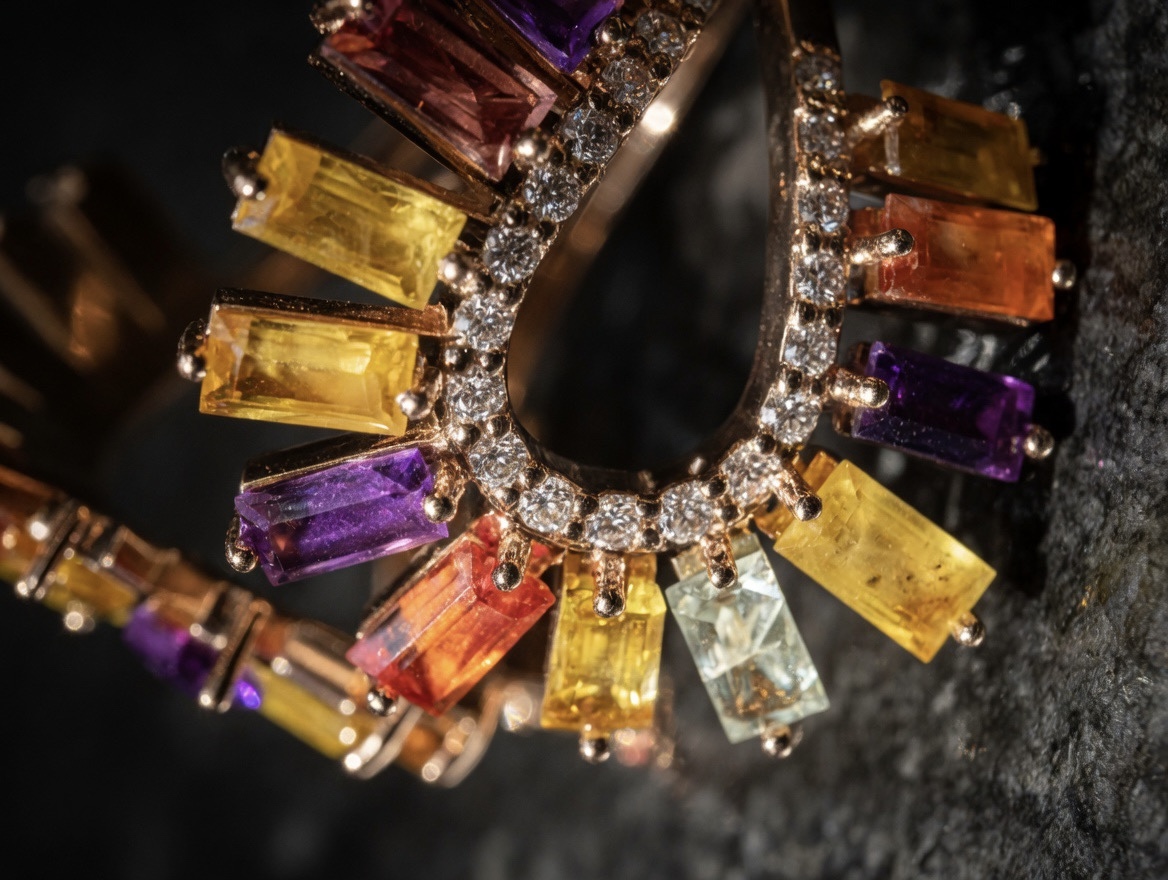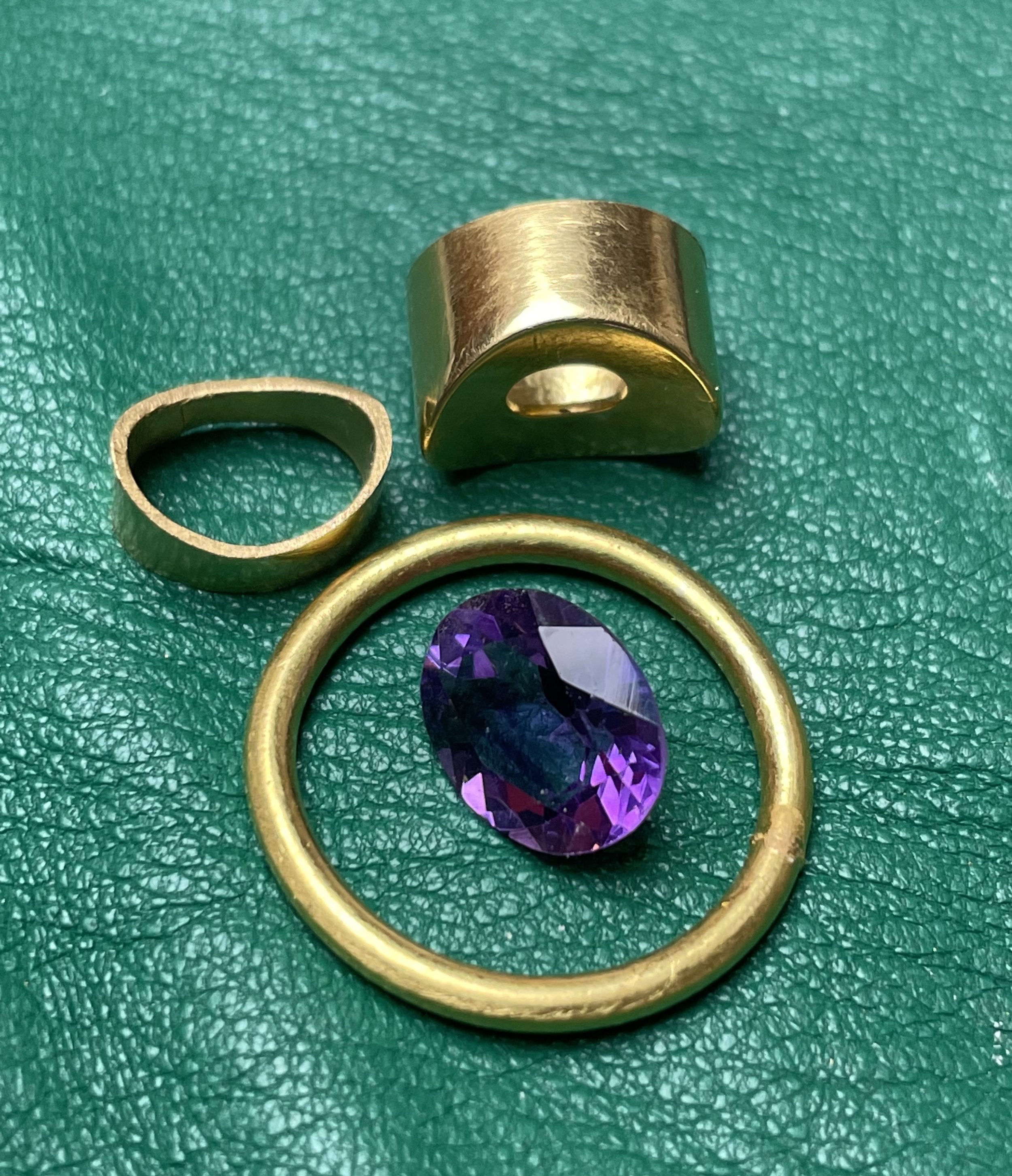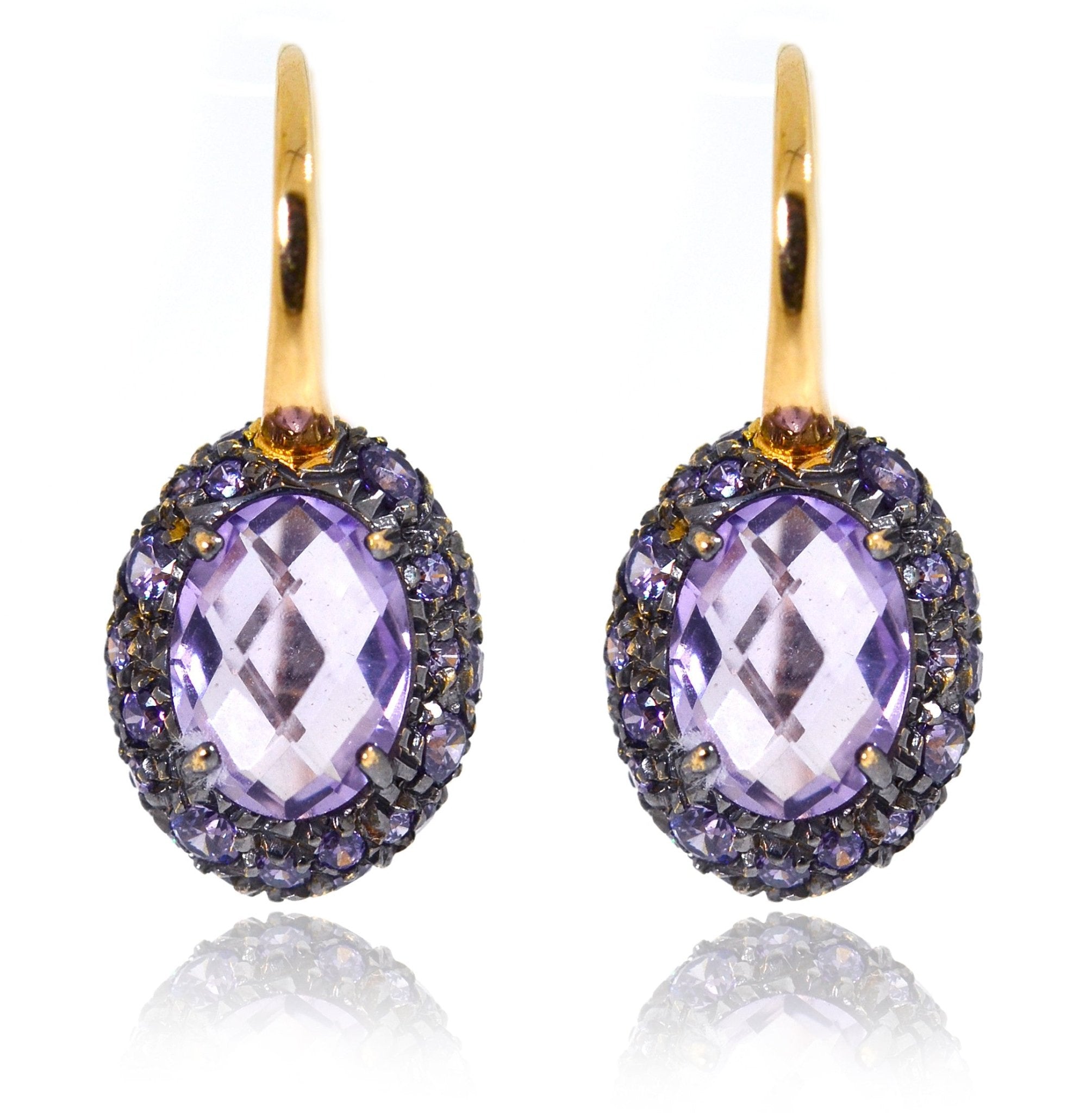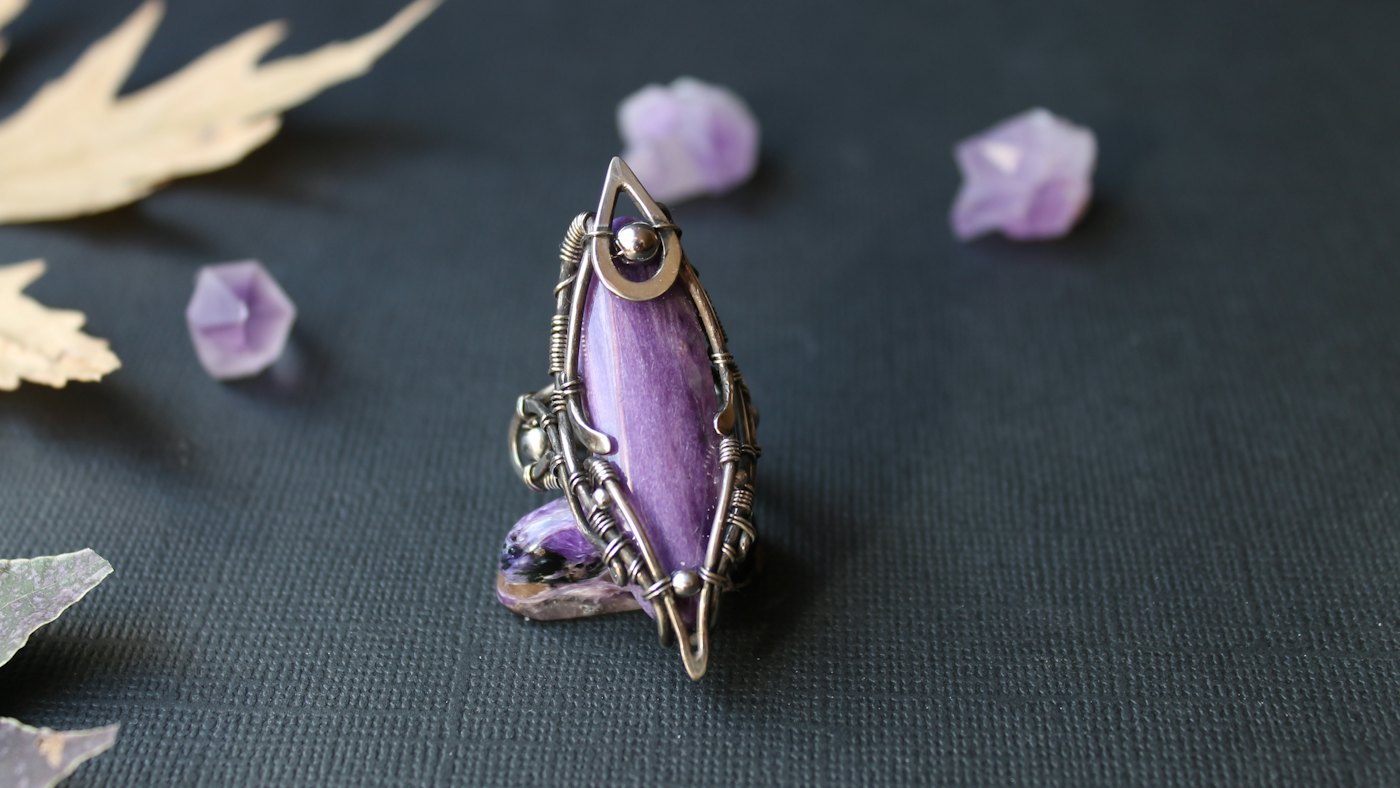
Amethyst is the purple variety of quartz. Its colour comes from traces of iron acted on by natural radiation in the earth, and it ranges from the palest lilac to a deep purple with flashes of red and blue. Until large deposits were found in Brazil in the nineteenth century it was as costly as ruby and emerald and sat in bishops' rings and crown jewels; today it is the most affordable of the classic gems, which is a gift to anyone who wants a large, clean, coloured stone.
What makes a good one
Colour is what counts: a saturated purple, neither so pale that it reads pink-grey nor so dark that the stone looks black indoors. The most valued stones, traditionally from Siberia and today mostly from Uruguay and Zambia, show red and blue flashes in the purple; the trade calls the top grade "Siberian" whatever its origin. Amethyst is usually clean to the eye, so visible inclusions and colour zoning, the pale and dark stripes many crystals carry, lower the price. Pale lilac stones are sold as "Rose de France" and are cheap. Ametrine, purple and yellow in one crystal, comes from a single mine in Bolivia.
Where it comes from
Brazil (Rio Grande do Sul, Minas Gerais) supplies most of the world's amethyst, in geodes the size of a person, and most of it is pale to medium. Uruguay produces the darker, more saturated material; Zambia a deep purple with a slightly reddish cast; Madagascar, Namibia and Russia the rest. Origin does not change the price; colour does.
Wearing it
With a hardness of 7 and no cleavage, amethyst is suited to rings that are worn regularly. Over many years of daily wear the facet edges lose some sharpness, and a goldsmith can have the stone repolished for little. See which stones can be worn every day.
Keep it out of strong sun and heat
Prolonged exposure to bright sunlight can make amethyst fade, slowly, and strong heat changes the colour altogether: heated amethyst turns yellow to orange, and much of the citrine on the market is made that way. Do not leave an amethyst on a sunny windowsill, and tell a goldsmith what the stone is before any repair with a torch.
Synthetic and imitation
Synthetic amethyst, grown hydrothermally, is common and hard to tell from natural stone without a laboratory; it turns up in inexpensive jewellery and does no harm at that price, but a large fine "amethyst" sold cheaply deserves a question. Purple glass is easy to spot under a loupe by its bubbles. See synthetic and imitation stones.
Value
Amethyst is affordable in every size, which gives a goldsmith room for a generous design: a twenty-carat cushion in a cocktail ring costs what a small sapphire would. Deep Uruguayan or Zambian colour costs several times pale Brazilian, but still little. It is the birthstone for February. See amethyst jewellery or describe your piece.