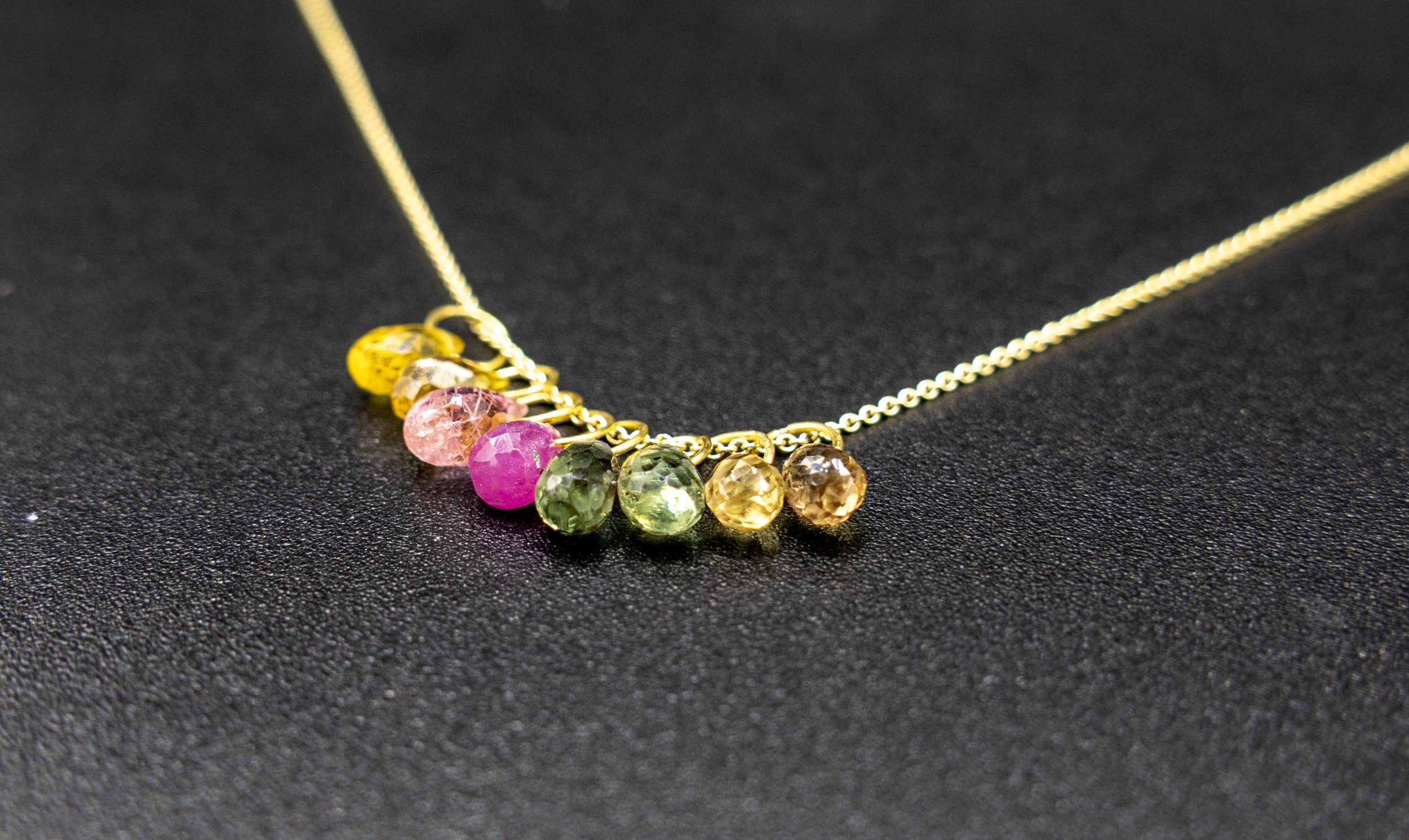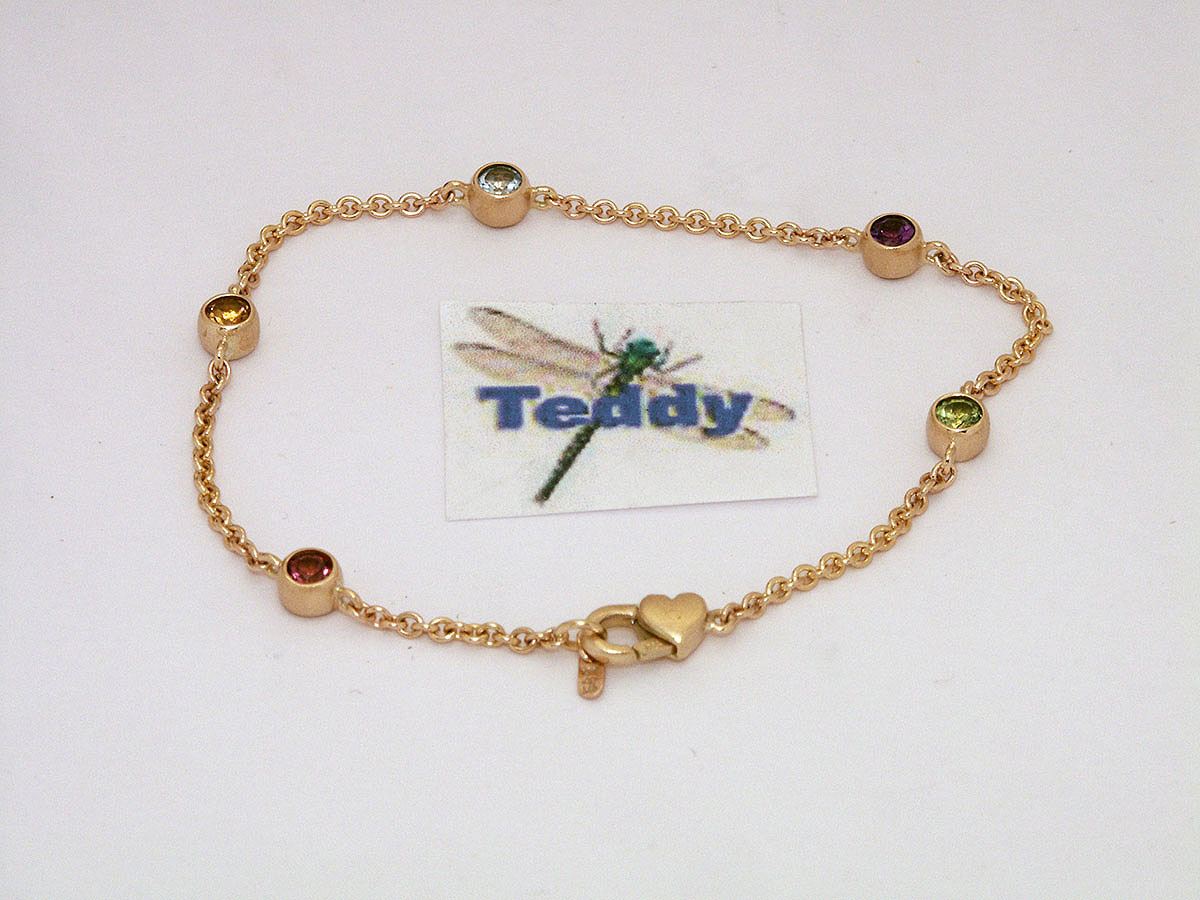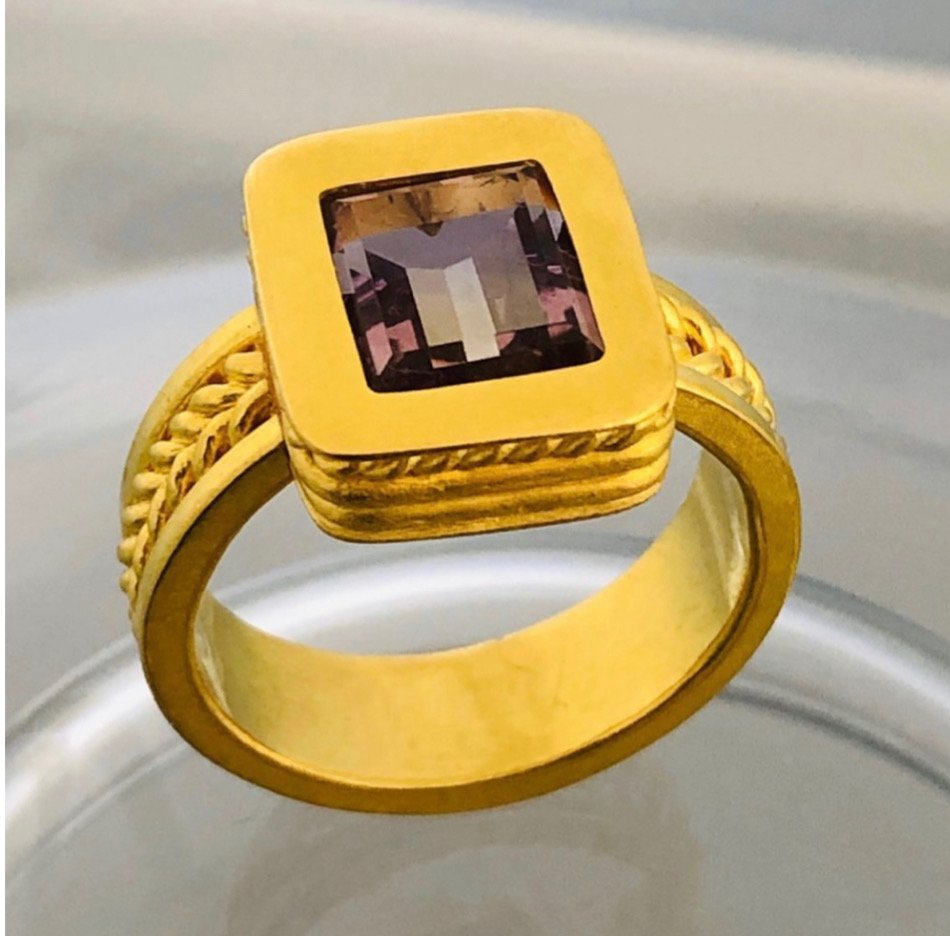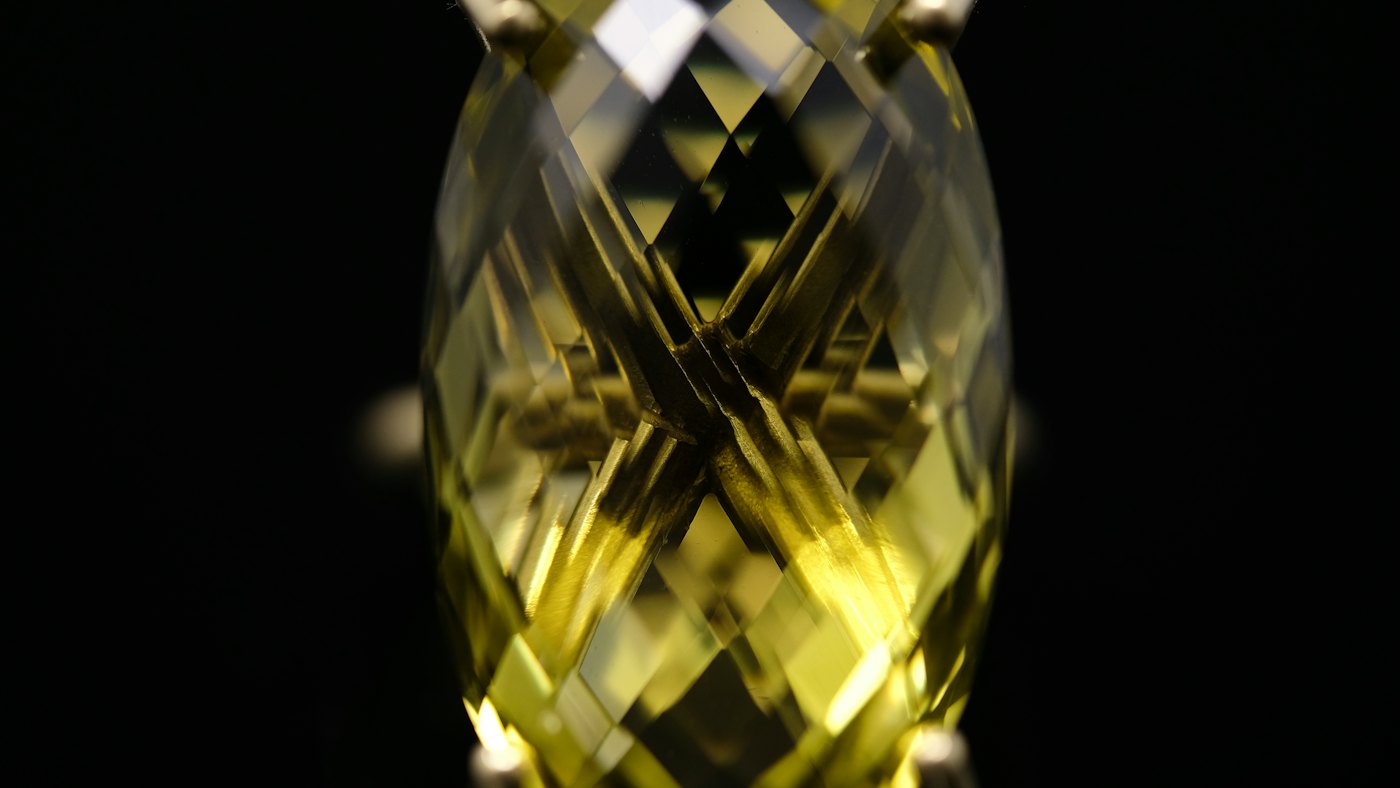
Citrine is the yellow to orange-brown variety of quartz. It is warm, clean and affordable, it comes in large stones, and it combines well with yellow gold. It is also the stone with the most confusing paperwork in the quartz family, so a few words on where it comes from are worth reading before you buy.
Natural and heated
Natural citrine exists but is uncommon, and usually a pale, smoky yellow; Brazil, Bolivia, Madagascar and Zambia produce some. Most citrine on the market is amethyst or smoky quartz that has been heated to a few hundred degrees, which turns the iron in it yellow, orange or reddish brown. The treatment is permanent, stable and fully accepted in the trade, and it is the reason citrine is so widely available in clean, large stones at low prices. Heated citrine often shows a slightly reddish tone and a colour concentrated at the tips of the original crystal; natural citrine is more evenly pale. Ametrine, half amethyst and half citrine in one crystal, comes from a single mine in Bolivia.
Colour and what decides the price
Tastes differ. Pale lemon yellow is fresh and modern and the cheapest. The deep orange to reddish tones, sold as Madeira citrine, are valued most. An even colour without brown or smoky patches, and a stone clean to the eye, is what to look for; both are easy to find, which keeps citrine among the most affordable coloured stones even at ten or twenty carats. Size adds little to the price per carat.
Do not confuse it with topaz
Citrine has long been sold under names such as "gold topaz", "Madeira topaz" and "Spanish topaz". It is not topaz. Topaz is a different, harder and generally more valuable mineral, and those names are on the list of misleading trade names. A careful seller names the stone for what it is and says whether it was heated.
Wearing it
Citrine has a hardness of 7 and no cleavage, so it is suited to rings that are worn regularly. See which stones can be worn every day. Warm water, mild soap and a soft brush; avoid strong heat, which can change the colour, and long hours in bright sun, which can pale it a little.
Where it comes from
Brazil supplies most citrine, natural and heated. It is a birthstone for November, together with topaz. See citrine jewellery or describe your piece.