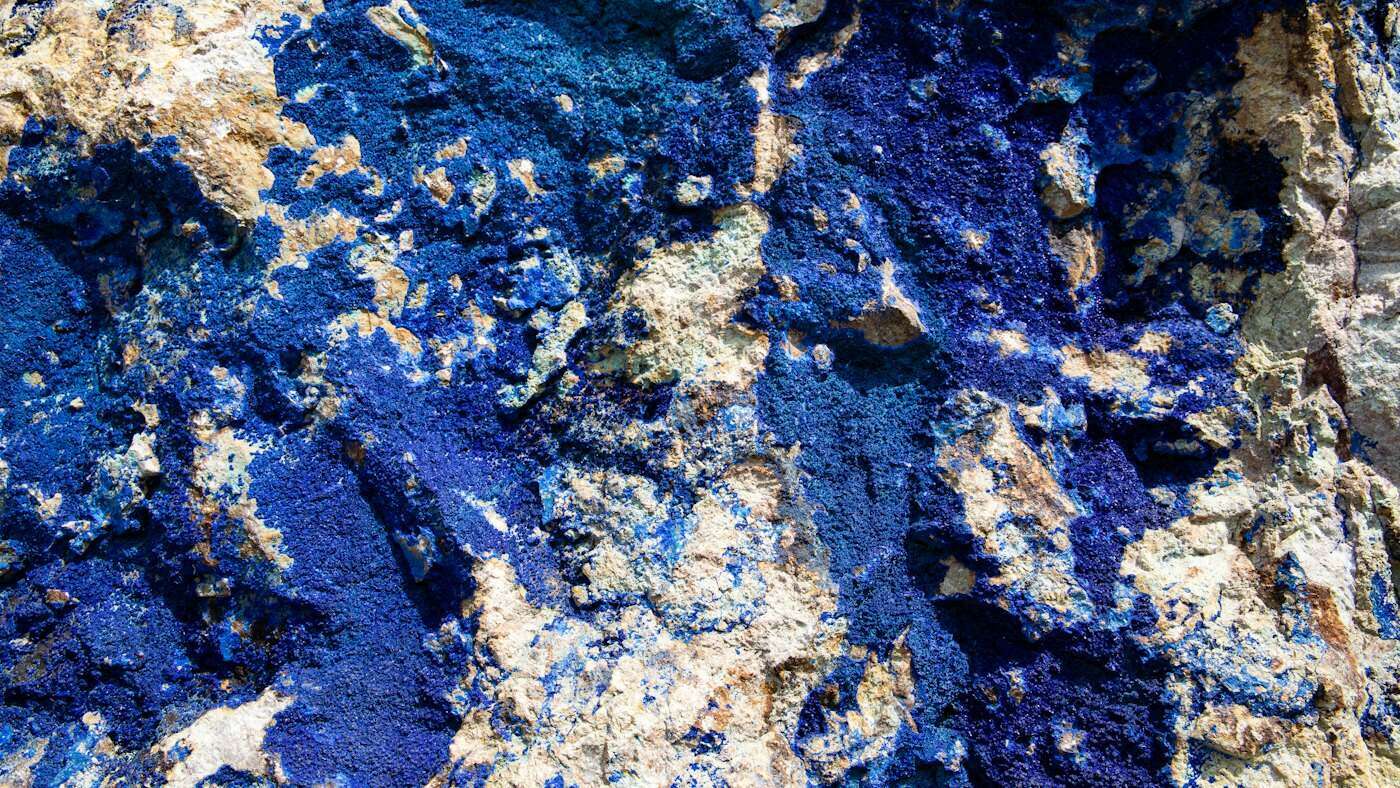
Lapis lazuli is not a single mineral but a rock. The blue comes from lazurite, the white veins are calcite, and the gold-coloured flecks are pyrite. It has been mined in the mountains of Badakhshan in Afghanistan for more than six thousand years, and those mines still supply the finest material.
For centuries lapis was also ground into ultramarine, the most precious blue pigment available to painters.
What makes a good one
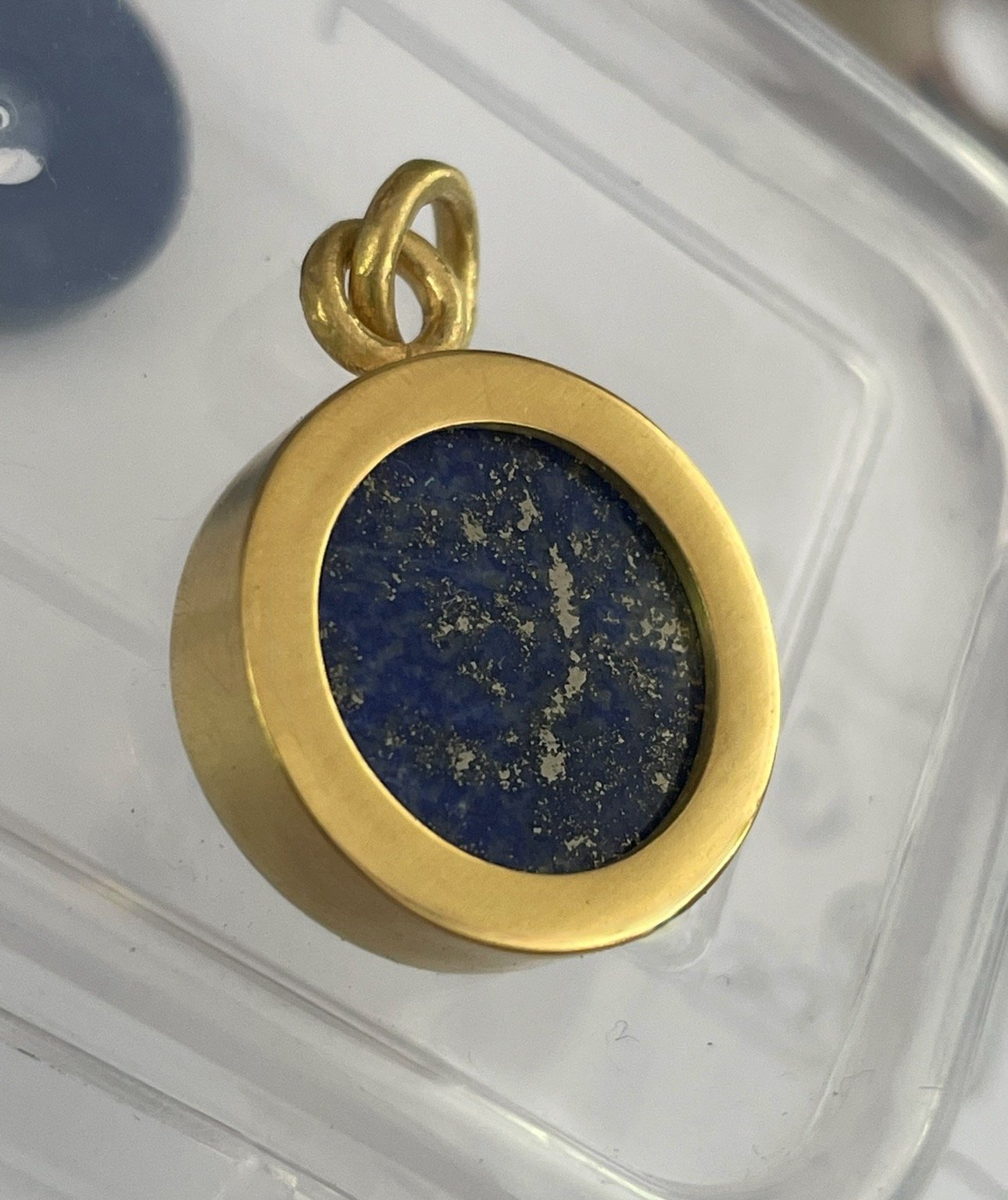
The best lapis is an intense, even, slightly violet blue, with little or no white calcite and a fine scattering of pyrite. A lot of white makes a stone less valuable. Pyrite is a matter of taste: a light dusting is prized, heavy dull patches are not.
Dyed and imitation
Pale or patchy lapis is often dyed to even out the colour, and lapis is commonly waxed or oiled to improve the polish. Dye can come off on a cotton bud with a little acetone, in a spot that is out of sight. Imitations exist too: dyed howlite or jasper, and synthetic material. Real pyrite flecks are irregular in shape and spread; in imitations they tend to look too uniform.
Wearing it
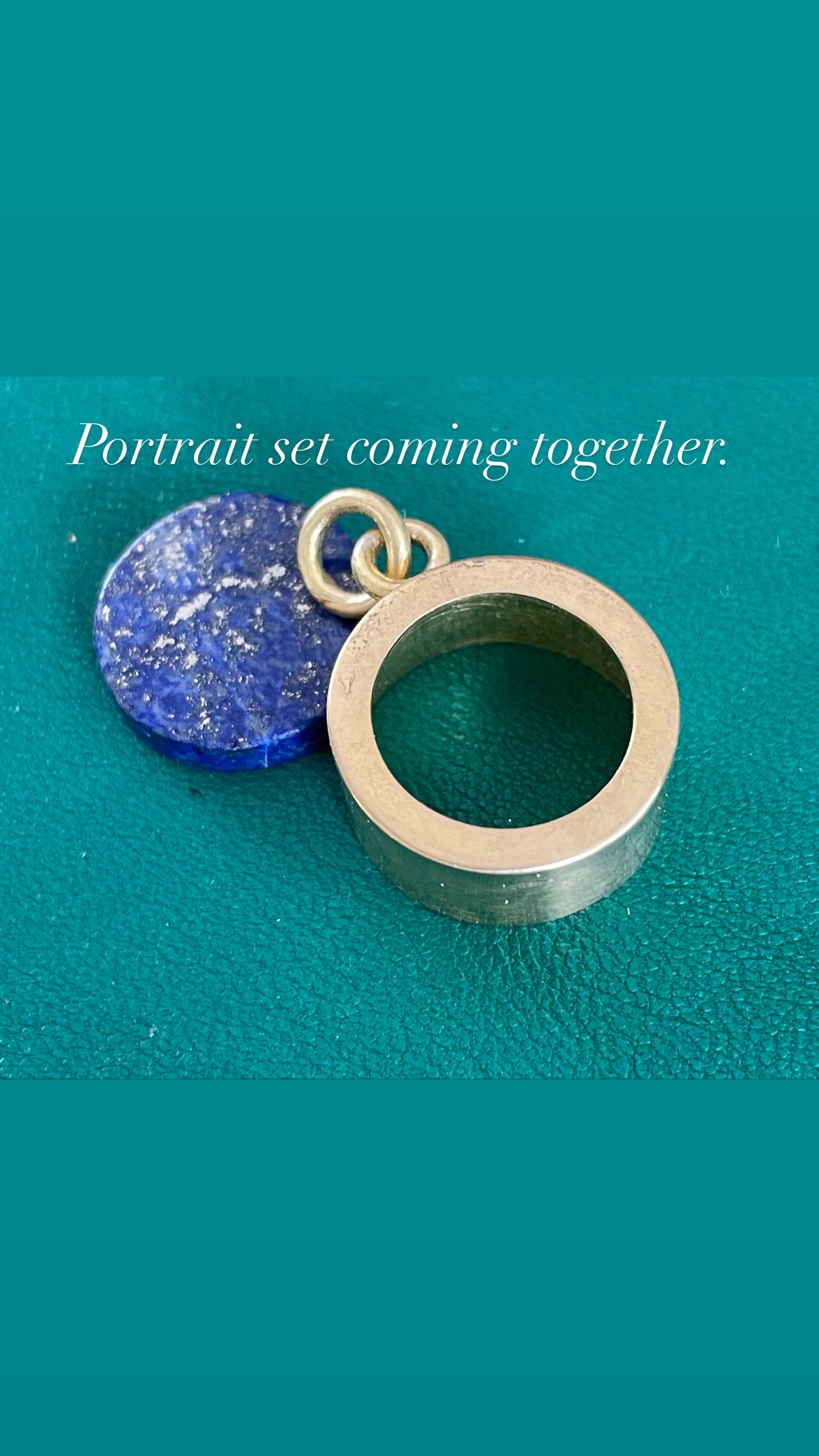
Lapis has a hardness of 5 to 6 on the Mohs scale, so it scratches more easily than most gemstones. It is well suited to pendants, earrings, cufflinks and beads. In a ring, a flat plate set flush in a bezel works well: it is the classic choice for a signet ring. Expect the polish to soften with years of wear; it can be repolished. See which stones can be worn every day.
Care
Lapis is porous. Keep it away from household chemicals, perfume and acids, and never use an ultrasonic or steam cleaner. Wipe it with a soft, damp cloth.
Besides Afghanistan, lapis comes from Chile and Russia. See lapis lazuli jewellery.