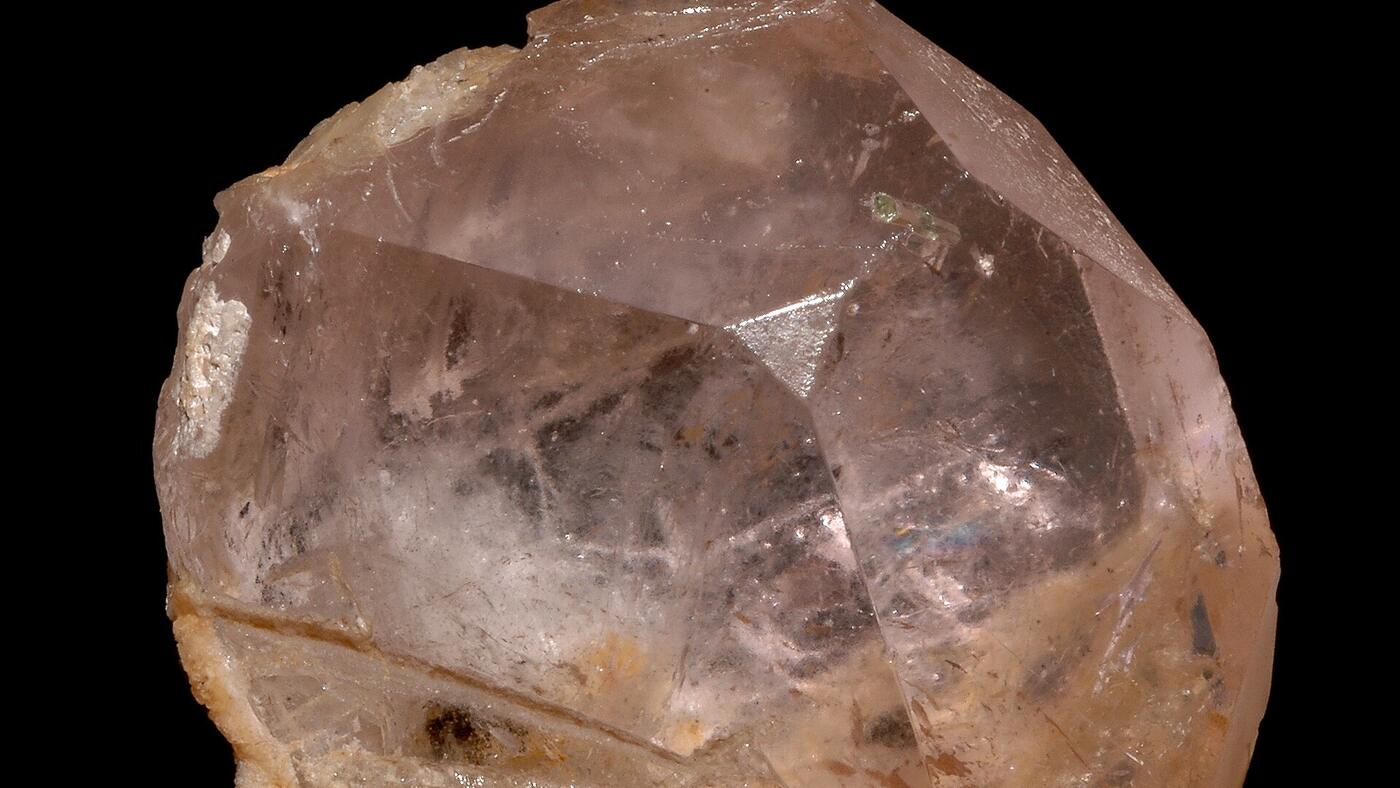
Morganite is pink to peach beryl, related to emerald and aquamarine, and manganese gives it its colour. It was found in Madagascar and California in the early 1900s and named in 1911 after the banker and gem collector J. P. Morgan, at the suggestion of the Tiffany gemmologist George Kunz. A century later it became one of the most popular centre stones for engagement rings, because it gives a large, clean, softly coloured stone for a fraction of the price of a pink diamond or sapphire.
Colour and size
Morganite is a pastel stone. The colour ranges from soft pink to peach and salmon, and it is usually light. Because the colour is delicate, it shows best in larger stones; small morganites can look nearly colourless, and a morganite under a carat is rarely worth setting as a centre stone. Fortunately morganite forms large, clean crystals, so stones of three, five and ten carats are easy to find and affordable compared with other pink stones.
A stronger pink is valued most. The peach and salmon tones have their own following, especially set in rose gold, which deepens the colour; in white gold or platinum a pale morganite can look washed out, so try the stone against the metal before deciding.
Heating
Morganite is often heated to remove yellow and orange tints, which leaves a purer pink. The result is stable, the treatment is accepted, and a seller should mention it. There is no synthetic morganite on the market to speak of; glass and pink cubic zirconia are the imitations, and both are easy to tell apart.
What decides the price
Colour first: a saturated pink costs several times a pale one. Then clarity, which is usually good, and size, which adds less per carat than with most stones because large crystals are common. Brazil (Minas Gerais) and Madagascar are the main sources, with Mozambique, Nigeria and Afghanistan; origin does not change the price.
Wearing it
With a hardness of 7.5 to 8 and no cleavage, morganite is suited to rings that are worn every day, in any setting. See which stones can be worn every day.
Keep it clean
This is the one thing to know about morganite. A pale, transparent stone shows everything that collects behind it: soap, hand cream, dust. A morganite that looked lively in the shop can look dull and grey after a few months. It is not damaged, only dirty. Clean it regularly with warm water, mild soap and a soft brush, also from behind, and the colour comes back; the ultrasonic cleaner is fine for a clean stone. See morganite jewellery or describe your piece.